

Stop Wasting Dryer Lint — Reuse It To Help Keep Weeds Out Of The Garden
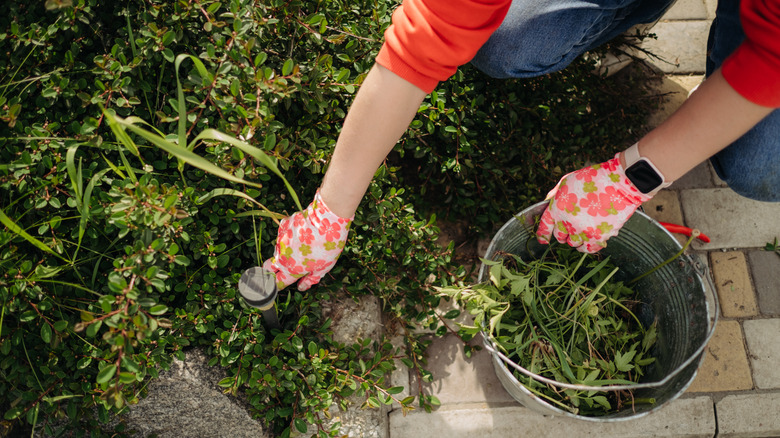
If you're like most people, you probably toss the debris from your dryer lint trap without a second thought. Yet, could that dryer lint have other uses around your home rather than simply accumulating somewhere in a landfill? It turns out that the answer is yes — and you might even be able to use dryer lint to prevent weeds in your garden. Before you start throwing dryer lint all over you garden beds, though, it's important to know how this method purportedly suppresses weeds, along with important safety precautions.
First, it's worth noting what dryer lint is made of. That soft and fuzzy debris you regularly clean from the lint trap and dryer vent mostly consists of fibers from clothing, towels, and linens after they've run through a cycle in your dryer. Due to the high flammability of lint, it must be removed regularly to prevent dryer vent fires.
If you have a garden, some might argue that lint can be an eco-friendly method of inorganic weed control. It purportedly reduces the amount of sunlight weeds need to successfully grow in your yard and garden beds, similar to the way a commercial landscape mat or a layer of organic mulch might work. This can certainly be a win-win for environmentally conscious gardeners. Not only does dryer lint offer a potential biodegradable solution and a safe and natural form of weed control, but you could also theoretically reduce the amount of waste from your household if you regularly use lint for such purposes. With enough lint in tow, one could argue that you might even be able to save money from buying weed mats.
How to use dryer lint for weed suppression (with some caveats)
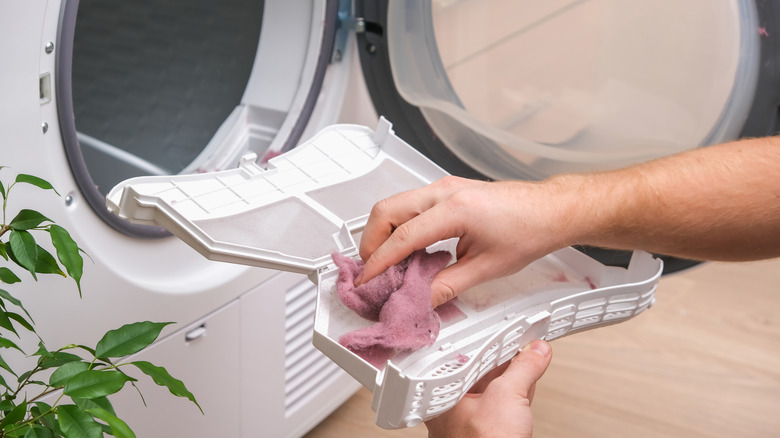
Before you try using dryer lint in your garden, make sure the lint is derived from natural fibers only — steer clear of polyester and other synthetics that contain microplastics you don't want to add to garden soil. You also should avoid lint that might be contaminated with chemical based detergents, as well as dryer sheets or softeners. Such residues can even harm birds if they accidentally pick up these bits of lint for nesting purposes, says the National Park Service.
Once you've started reserving natural fiber-based lint from your dryer for weed control, the first step is to determine how much to apply. One option involves using the lint as a sort of spot treatment around your garden, rather than an all-over layer of mulch that might suppress other plant growth. However, if you have large patches of soil that can use some weed control, feel free to apply a thicker layer of lint. Mixing in the lint with other types of mulch or rocks can reduce the chances of the lint blowing away in the wind, and it helps from an aesthetic standpoint, too.
Know that despite existing anecdotal reports, dryer lint isn't specifically recommended by any university extensions for suppressing weeds in the garden. This doesn't mean the method will necessarily fail. Just know that dryer lint might not be totally foolproof if you're trying to prevent weeds around your garden. It's likely that lint can instead work to your advantage when other tried-and-true weed control measures are in place, which includes keeping existing plants and grasses healthy enough to suppress weeds.