

4 Ways To Use Aluminum Foil For Fewer Pests And Healthier Plants
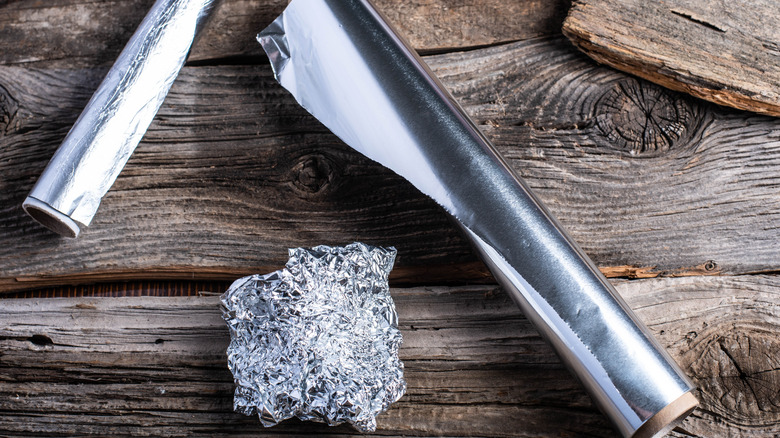
If you're looking for a budget-friendly way to grow healthier fruits and vegetables and send annoying pests packing, you might be surprised to learn that a roll of aluminum foil is one of the best things you can own. Most people immediately associate this shiny kitchen staple with covering casseroles or wrapping up leftovers. However, aluminum foil is heavy duty and reflects light, making it perfect for safeguarding plants outdoors.
From guaranteeing legumes receive sufficient sunlight to managing garden pests, aluminum foil provides a completely non-toxic solution to common gardening headaches. It's very easy to work with, molds easily to fit around whatever stems and pots you're trying to protect, and is safe for all types of soil. With a little creativity, you can incorporate this everyday household material into your planting and gardening routine to create a controlled, pest-free, and thriving environment. Keep reading to explore some of the most effective ways foil can help your favorite fruits, veggies, and flowers flourish this season.
Foil mulch reflects sunlight and retains necessary ground moisture
Wood chips, shredded bark, compost, and straw are the different types of organic mulches for gardening. Mulch is spread on top of soil and in flower beds to help retain moisture, to prevent soil from washing away during heavy rains, and to add curb appeal. If you live in a particularly hot climate, mulch can also help lower soil temperatures in the summer by creating shade and insulating the soil in the winter, protecting plant roots.
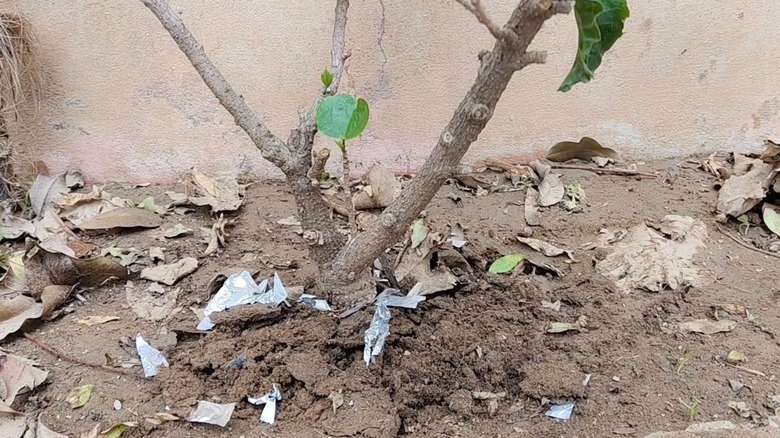
Aluminum foil is a type of inorganic mulch, or non-plant-based mulch, that can be used the same way as organic mulches. It's the perfect alternative if you want to say goodbye to traditional mulch. When added to gardens, foil creates a permanent barrier to maintain moisture in the soil, especially when the hot summer sun beats down. Keeping the soil moist and slightly cooler helps create an environment for plants to establish deep root systems. Also, when you lay strips of foil on the ground around the base of your plants, it acts as a mirror to bounce the sun's rays back upward. The redirected light can reach underneath leaves where light rarely penetrates. This helps speed up photosynthesis, improving vegetation and increasing crops.
Flashing foil discourages deer, squirrels, hungry birds, and other animals from your harvests
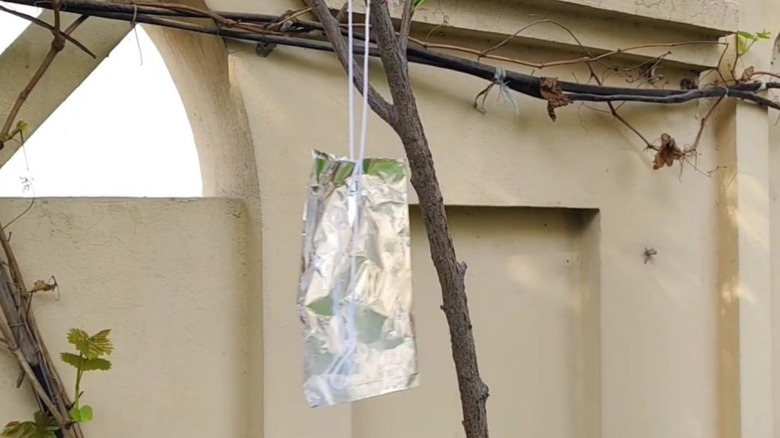
Animals look for food wherever they can find it, and your backyard garden is basically a convenient smorgasbord of tasty treats. If you live in the country, you probably get many different kinds of visitors, like deer, foxes, raccoons, and squirrels. Most of these wild animals are extremely skittish, meaning any unexplained flash of light can cause them to run. Simply hang long strips of foil from the limbs of your fruit trees or along the top of your garden fence or stakes. When these strips catch the slightest breeze, they mimic the quick movements of predators, causing confusion and making them very reluctant to even approach your garden.
If you're dealing with smaller animals, like squirrels and birds, the noise from the foil is also a major deterrent. Even the smallest unexplained noise can put these pests on high alert. To keep climbers out of the tops of your fruit trees, wrap the trunks in a smooth layer of foil to create a slippery and noisy obstacle that discourages them from reaching your fruit. It's important to note that wild animals can get used to these noises and the light when they realize there's no threat, making it less effective over time. You may have to move the foil around to different locations if you want to keep critters out of your garden.
Foil collars and ground covers repel cutworms and aphids
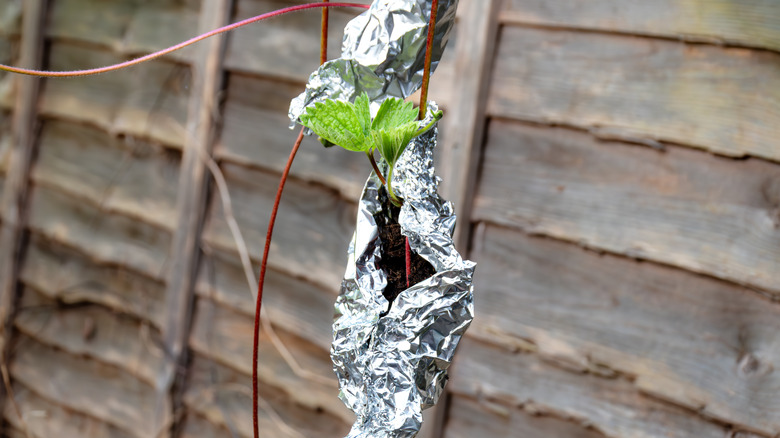
Cutworms are the larval stage of many kinds of moths and just one of many of the most common garden pests. When you touch them or bother them, they curl into a little ball. These little insects are a vegetable gardener's absolute nightmare. They feed overnight, devouring plants by the stem. One way to prevent overnight destruction is by creating a plant collar with foil. Simply wrap a small piece of aluminum foil loosely around the base of your plant stems, taking care to bury about an inch of the foil below the surface. This creates a tough metallic barrier that cutworms can't chew through.
Foil also works to protect the tops of plants from annoying aphids. These insects have a needlelike mouth that's used to suck the sap from tender stems and new plant growth. You can usually tell you have an outbreak of aphids by the appearance of yellowing and curling leaves. To repel them, lay foil on the ground around your plants. The light reflected from the foil baffles the insects . Aphids think the light is both above and below them, which can prevent them from finding a safe place to land.
Foil enclosures help fragile seedlings grow straight and strong
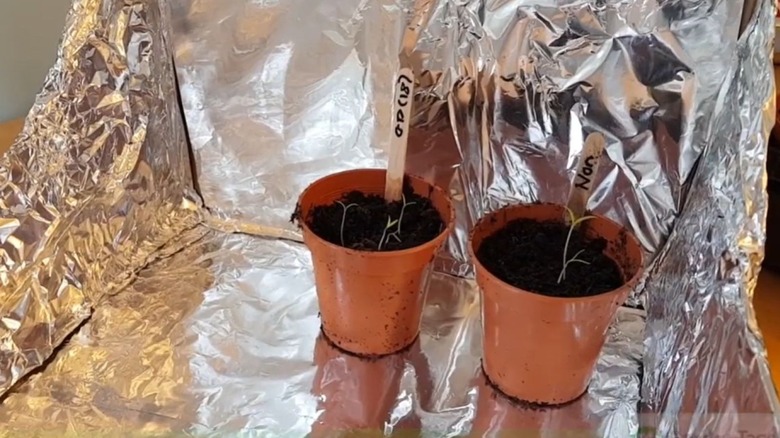
If you like getting a head start on your garden before planting season actually starts, you probably start germinating and planting vegetable seeds indoors. Unfortunately, if you aren't careful, a lack of adequate light will often result in weak, leggy seedlings. This frequently happens when you try to cultivate plants on a windowsill. The growing seedlings reach and stretch for the sun, creating thin and fragile stems that rarely survive when they are moved outdoors to the garden. One way to fix this problem is to create a reflective light box with aluminum foil.
Place a foil-covered piece of cardboard behind your indoor seed trays. The incoming light will bounce off the foil and onto the underside of the plants. Instead of just getting light from one angle, the reflective barrier casts light from 360-degrees. The increased light helps encourage young plants to grow straight up instead of leaning to one side or another and creating thicker stems. The foil also provides insulation, keeping your plants warm as they grow.