

Why You Should Use A Cut Onion And Vinegar To Clean Burnt Pans

When you're cooking and discover that food has burnt onto your pan, you might be worried that you've ruined it. Luckily, there's a simple, natural trick to make your burnt pots and pans sparkle again. A red onion and a bit of white vinegar could be a helpful tool for cleaning cookware with stubborn burnt-on stains. A few social media posts have shown off this hack, claiming that the acidity of both the onion and the vinegar are responsible for the power of this cleaning solution. While there's no scientific research about onions cleaning burnt pans, vinegar is often recommended for cleaning cookware.
The acetic acid in vinegar is what makes it so good as a natural cleaner. Though there's not a lot of scientific evidence supporting the onion method, these popular vegetables are slightly acidic. Red onions specifically have a pH around 5.3 to 5.8. Plus, rubbing onions on the grill is frequently recommended to eliminate the grease and grime from dirty grates. Some claim that enzymes and acids within the flesh of the onion help it to clean greasy, burnt foods. Because of this, onions could also prove helpful for your burnt pots or pans when combined with vinegar. If you're struggling with a particularly tough pan, try this method on your cookware, but check that the acidity of vinegar is safe for your specific pan.
Remedying burnt pots and pans with a red onion and vinegar
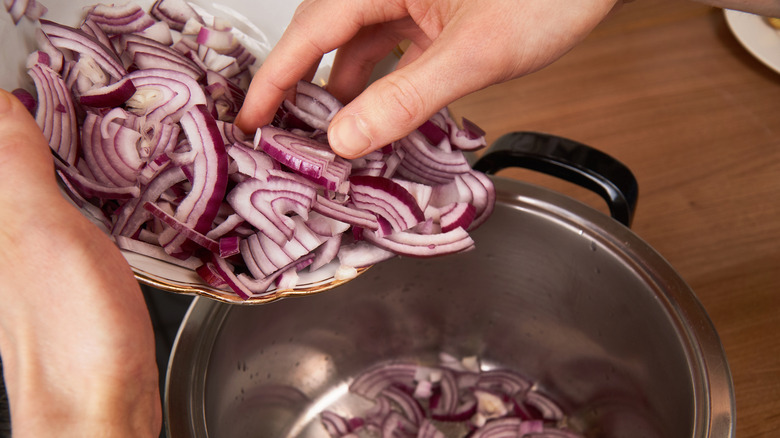
To clean burnt pans with onions and vinegar, you'll first need to roughly chop up the onion. Since you won't be eating the onion, you can leave the peel on the vegetable, making this trick quick and easy. Toss the onion into the burnt pan with water and a bit of vinegar. Alternatively, skip the water and only use white vinegar and onions for a stronger solution. Turn on the stove and let the liquid come to a boil. If the burnt food is really stuck onto the cookware, you can also use a wooden spoon to scrape the sides and bottom of the pot as your mixture boils.
After it's boiled for a while, remove the pan from the heat and let the liquid cool a bit before dumping the onions and vinegar out. Scrub away any burnt food pieces still inside the pan with a sponge or scouring pad. If you're not sure whether a scouring pad will scratch up your pan too much, test it on a small area first. Though vinegar is safe for a lot of surfaces, including aluminum and copper cookware, it can damage pans made of stainless steel and cast iron since the acetic acid in vinegar can be corrosive to metals. If you're concerned, consult the manufacturer's cleaning recommendations for your pan before trying this onion and vinegar hack.