

Skip Concrete — There's A Stylish, More Durable Alternative For Your Sink
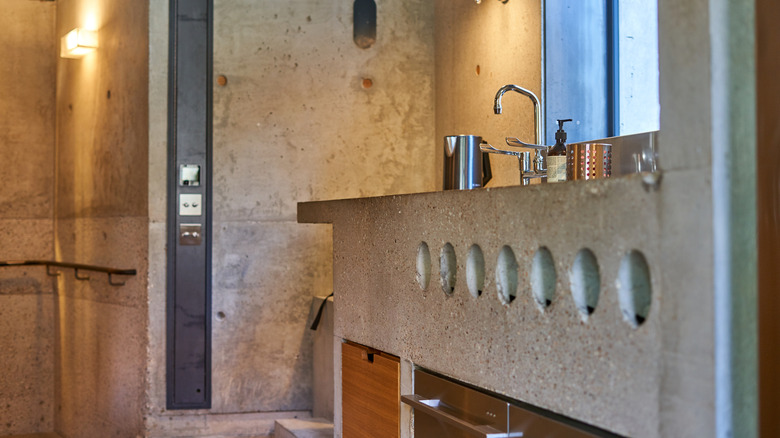
Concrete is known for its durability and modern, industrial style, and it's the go-to material for various home projects. From concrete kitchen countertops, to sleek custom flooring, to sinks, this material is ubiquitous in our homes. But as popular as concrete is, using it for surfaces that get wet can be problematic, since concrete is porous and tends to stain if not sealed properly. For a kitchen or bathroom sink, where water is the name of the game, maintaining concrete can mean the hassle of frequent re-sealing. If you want a stylish look for the place, check out a much lower-maintenance material with a similarly modern design vibe: Corian.
Corian is the brand name of a product developed by DuPont in the late 1960s. It is a solid-surface material made of a mixture of acrylic resin and natural minerals. Corian's smooth surface looks contemporary, but its utility isn't limited to ultra-modern spaces. It comes in a variety of sink styles, ranging from an apron sink for your farmhouse kitchen to vintage wall-mounted sinks for your bathroom. The basins come in different shapes and sizes, including rectangular, square, and oval; double sinks are also available. These can be installed to integrate seamlessly into a kitchen island or vanity countertop, which is a handy feature for cleaning. In terms of color, Corian sinks come in neutral shades, from bright white to beige hues.
Corian is a durable and low-maintenance sink material
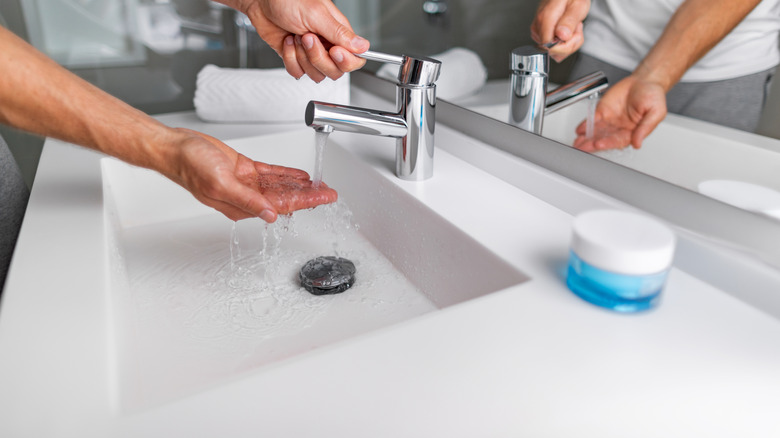
Corian is known for its durability and easy maintenance, which makes it a hygienic choice for a sink. Since it isn't porous like concrete, it never has to be resealed. The material is relatively stain-resistant, so cleaning and sanitizing your sink is straightforward — soapy water, common household cleaners, or even diluted bleach can be used on a Corian basin. That's not the case with sealed concrete, which can sustain damage from bleach and other harsh cleaners.
That said, you do need to be more careful with heat around Corian. The manufacturer recommends letting hot pans cool before putting them in the sink and running cool water if pouring boiling liquid into the basin. This product isn't immune to scratches, either, which will be particularly obvious on darker colors. A scratch won't jeopardize the seal on Corian, however, like it will on concrete. And if scuffs or scratches do appear, they can be easily buffed out, as demonstrated by countertop specialist Andy Graves on YouTube.
Pricewise, Corian is a relatively budget-friendly material, with sinks ranging from $300 to $800. Pre-made concrete basins are usually significantly more expensive, and you can spend thousands on custom pours. Overall, Corian may be a more practical choice than concrete for a part of your home that gets a lot of messy use all day long.