

Not Paint: The Easy Way To Fix Scratched Or Chipped Kitchen Cabinets
We may receive a commission on purchases made from links.
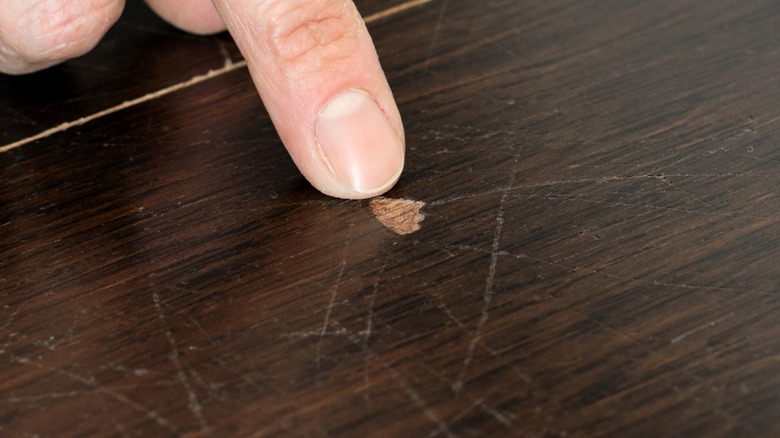
If you have wooden cabinets in your kitchen, it's pretty much guaranteed that you'll have to deal with small nicks and scratches at some point. If you fill them with conventional wood filler, you'll also have to touch up the paint or stain, and the repair can look worse than it did before if you aren't able to get an exact color match. Fortunately, there's an easier repair method for small scratches: a putty stick.
You can buy putty sticks almost anywhere, either individually or in sets, and they tend to be affordable. For example, this 16-color set of Lifreer wood filler sticks from Amazon costs about $17. Putty sticks aren't the same as wood markers, which camouflage a scratch by coloring it in. However, the markers don't fill in the missing wood, so the scratch remains visible. Putty sticks provide both the color and the filler.
The fill material is wax, which technically makes a putty stick a type of crayon. In fact, you can use crayons to fill in scratches on wood if you already have some on hand. They're not as effective as putty sticks, though — the sticks have a higher pigment concentration and a better selection of wood tones for a perfect color match. Wax isn't the toughest of materials, but it's usually fine for small nicks and scratches. If you need something more durable, you can use lacquer-based burn-in sticks that you apply with a hot knife.
Putty sticks make super easy repairs on finished wood
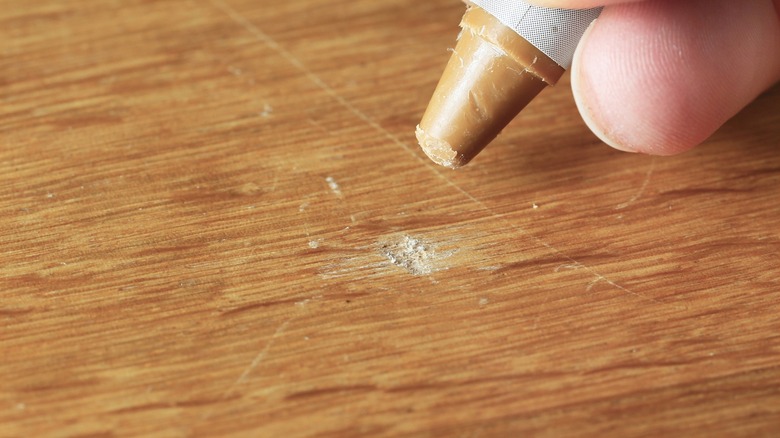
Wood filler sticks aren't just for cabinets; you can also use them to repair scratches on hardwood floors, or to cover nicks on wood furniture. You won't need any other tools except a rag and the stick itself. Simply rub the stick over the scratch until it's completely covered, then use a rag to wipe away excess wax. If any stubborn wax remains, a dab of mineral spirits on your rag should take care of it.
A word of caution: You should only use a putty stick on finished or painted cabinets. If you use it on bare wood, it can discolor the wood and leave a layer of wax that interferes with sanding and could inhibit the drying of any finish you apply later. Moreover, wax won't accept stain, so if you stain the wood after using a putty stick, the repair will be visible unless you have an exact color match. Even though putty sticks come in over 70 colors, an exact match is often difficult to achieve. In general, you should use a stainable, sandable wood filler for repairs on bare wood.
It's also important to remember that filler sticks are meant only for minor gouges, cracks and holes. You can use two-part wood putty to fill larger defects, but if you want them to disappear, it's better sand down to the bare wood, fill them with a wood filler that hardens, and touch up the finish.