

Not Landscape Fabric Or Herbicides: An Easier Way To Prevent Weeds In Flower Beds
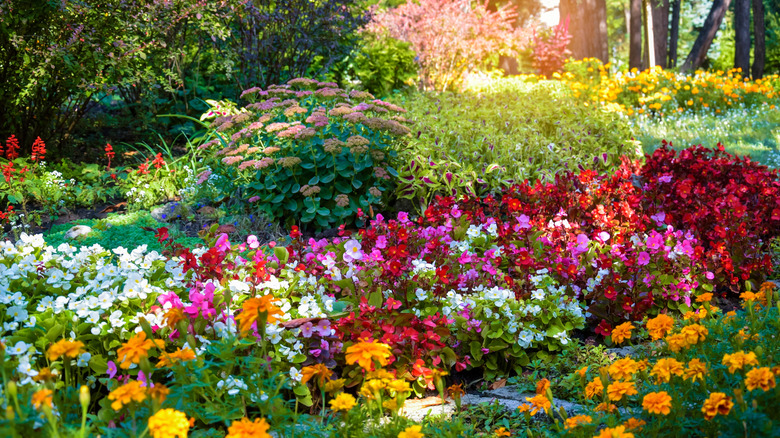
You've got marigolds, petunias, elderflowers, and other beautiful flowers growing in your garden. But what are those dandelions doing there? You definitely didn't plant them. If you've tried numerous ways to kill weeds in the garden only to find they just keep coming back, know that there's an easier solution — and you probably have it lying around your home, just waiting to go out with the recycling.
Cardboard can be an effective weed suppressor, particularly when combined with mulch and left alone on the garden bed. The cardboard keeps sunlight from reaching the soil, meaning weed seeds can't germinate. Any weeds that have started to grow will also be smothered and crushed.
This weed-killing technique packs a one-two punch, as the cardboard provides food for the soil as it breaks down. The mulch on top also does double duty, as it helps the cardboard stay moist and adds some aesthetic appeal. So, instead of getting down on your hands and knees and pulling out stubborn weeds with a fork, spread some cardboard over the soil, sit back, and let nature do the hard work for you.
How to smother weeds with cardboard
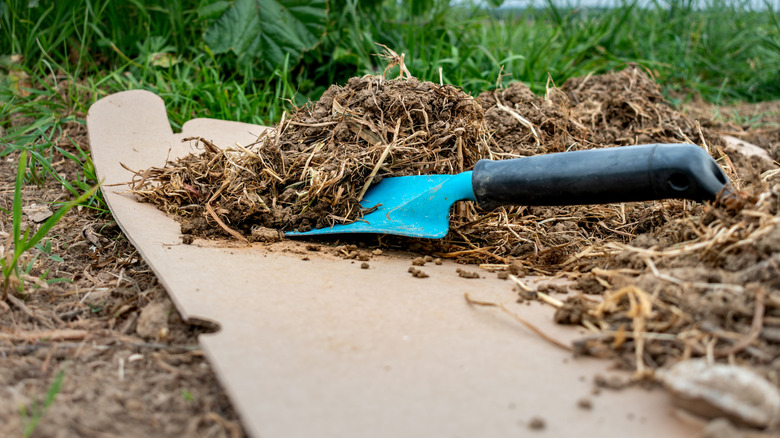
Sheet mulching with cardboard works best in garden areas with perennial plants or near shrubs or trees. You can use it in an annual flower bed, but you'll need to cut holes or leave gaps in the cardboard to give your annuals the room they need to grow; some weeds may still poke through in this case, although the cardboard should at least decrease the amount you have to worry about. Another option is to use the cardboard to create "lasagna compost," layering compostable materials on top of cardboard to make a garden bed.
The type of cardboard you use in the garden matters, as glossy coated types won't break down. Pick plain, uncoated cardboard, such as basic, brown shipping boxes or used pizza boxes. The bigger the cardboard, the better — but if all you have are small boxes, that's fine, too. You'll just need more of them to cover the same area. Flatten the boxes, removing any tapes, staples, or other materials that won't decompose.
Soak the cardboard with water, then spread it across the flower bed, overlapping the edges. The goal is to completely cover the soil with cardboard. If you have plants installed in the garden already, you might want to install a drip irrigation system before you lay down the cardboard, as it could prevent water from reaching the soil beneath. Layer several inches of mulch on top of the cardboard, and consider staking it into the ground if it's particularly windy in your area.