

9 Plants To Prune In June For A Healthy, Flourishing Garden All Summer Long
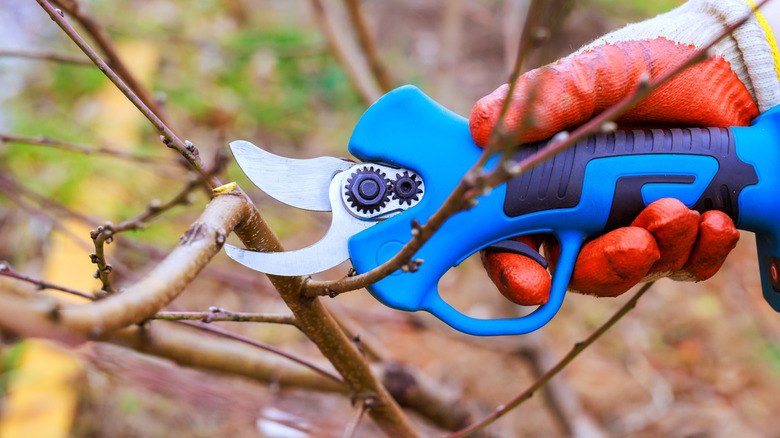
With many plants, pruning is done in late winter or early spring. However, some perform best with a good trimming in June. By early summer, many spring-blooming flowers, trees, and shrubs will wrap up their flowering season. If you wait too long to prune some of these species, you risk cutting off new flower buds, which can hamper flowering in the following season. Additionally, once the flowers have faded, you may be left with bare stems, leggy branches, or overgrown plants. Not only will they be an eyesore in your garden, but unkempt growth can reduce airflow and lead to fungal issues. Regular pruning can be crucial for preventing disease and pest damage.
Just because many plants benefit from a summer pruning, however, doesn't mean every plant needs it. The proper way to prune trees, shrubs, and flowers depends on the types of plants you have in your garden. Each plant has different tolerances and requirements, and different species may require different techniques. If you aren't sure which of your plants would benefit from an early-summer haircut, the list below will guide you through the plants to prune in June — and how to prune them correctly.
Bigleaf hydrangeas
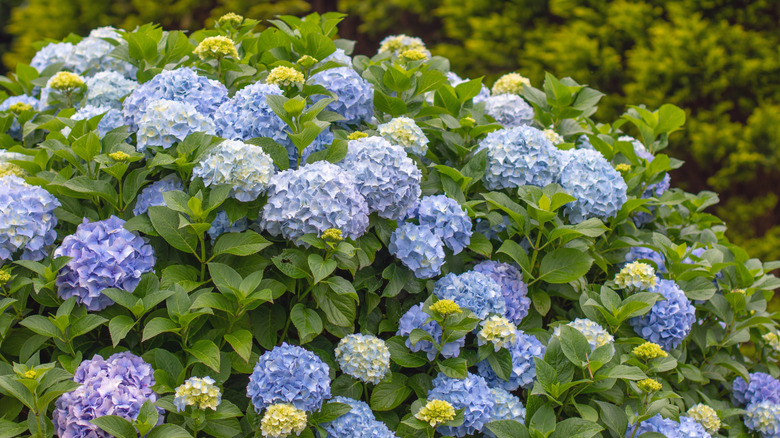
Knowing when it's too late to cut back hydrangeas is key for protecting the next season's flowers. However, the best time to prune hydrangeas depends on the type, as some species bloom on old wood while others bloom on new wood. Bigleaf hydrangeas (Hydrangea macrophylla) are among the most popular varieties, and they form flower buds on growth from the previous season. So, the best time to prune them is when they finish blooming. In June, remove spent flower heads and lightly cut back select shoots to encourage branching and fuller growth.
Forsythia
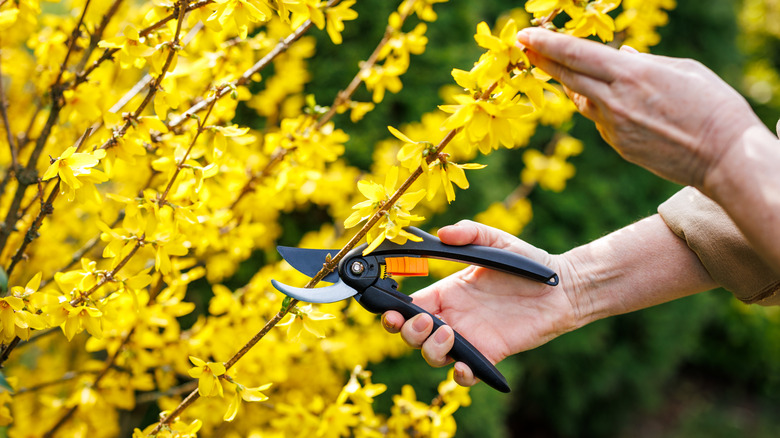
If you want to grow forsythia (Forsythia spp.) and enjoy the flush of bright yellow flowers year after year, then annual pruning is a must. Because the flower buds grow on old wood, pruning too late in the summer can greatly reduce next season's blooms. In many regions, the flowers last through May, so June is the perfect time to trim the old growth. Use a clean pair of shears to remove a quarter to a third of the oldest branches, which will be the larger stems at the bottom of the plant.
Lilacs
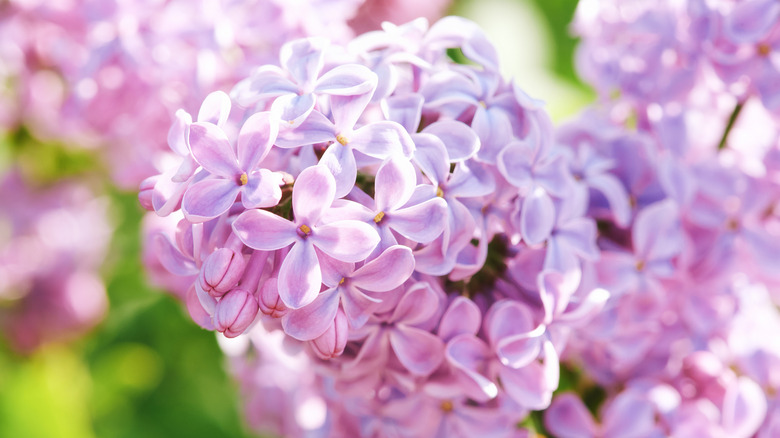
Nothing welcomes spring quite like sweet-scented lilacs (Syringa vulgaris) in bloom. Once summer approaches and the flowers fade, that's your cue to grab the shears. Not only do the leggy branches take away from the landscape, but dense foliage can increase the risk of powdery mildew. Remove any dead, broken, or diseased branches, making sure at least 12 healthy, established canes remain. It's also a good idea to remove the suckers to prevent overly dense growth. In addition to looking better and preventing disease, pruning your lilac bushes immediately after flowering encourages a lush bloom the following spring.
Weigelas
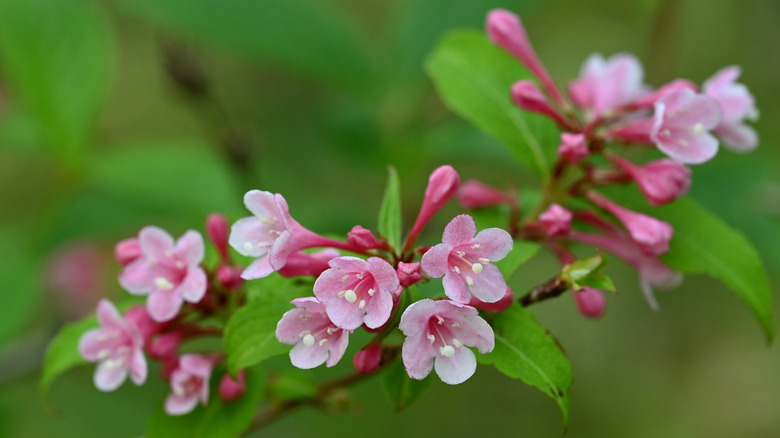
Weigelas (Weigela florida) are gorgeous spring-blooming shrubs that benefit from a light pruning immediately after flowering. In many regions, the blooms will begin to fade toward the end of spring or early summer, so June is often the best time to give your weigelias a haircut. Before reaching for your shears, take a moment to mentally map out which branches you want to trim. Note the overall shape as well as where the shrub has dense growth. Then, cut any excessively long, weak, or awkwardly crossing branches.
Camellias
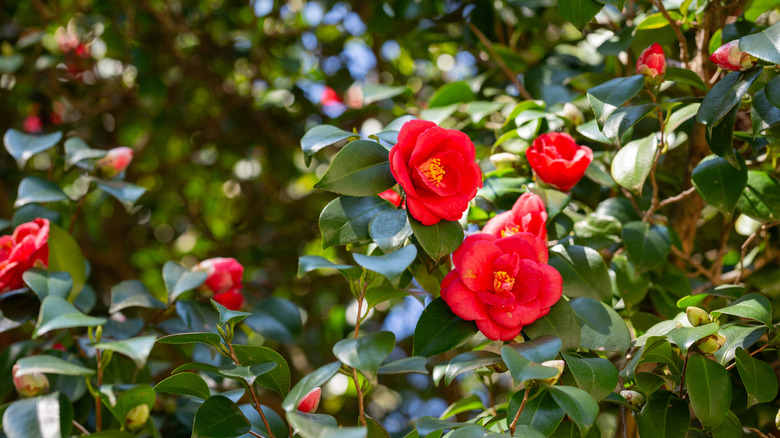
Camellias (Camellia japonica) are one of the few shrubs that can start blooming as early as fall, and the blooms often last through spring. While there are a range of varieties with different requirements, it's generally recommended to prune camellias once the blooming season ends — but before July. Thin out the bush as needed and remove any damaged or diseased branches. Camellias can withstand quite a bit of pruning, but removing any more than a third of their branches may result in reduced flowering for a season.
Joe Pye weed
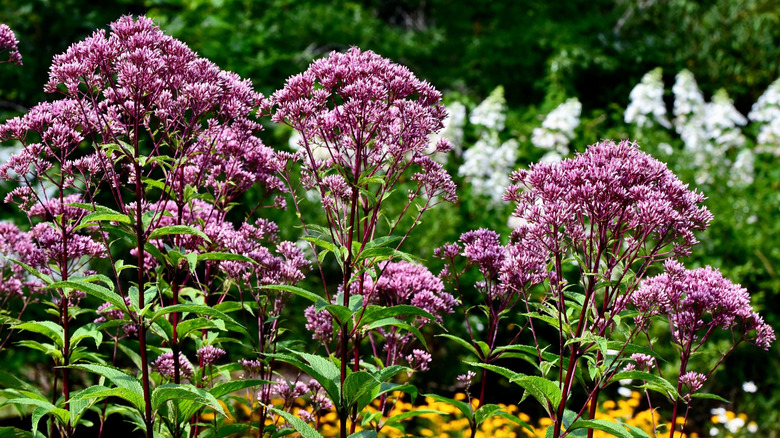
If your garden is filled with plants that help pollinators do their job, then you may have planted Joe Pye weed (Eutrochium purpureum). It may seem counterintuitive to remove some of the valuable flower heads of this plant, but cutting back the blooms can be beneficial for you and your garden visitors. The flowers will be smaller at first, but the plant should produce sturdier stems that don't flop as easily. In June, cut back your Joe Pye weed by half to encourage stronger, bushier growth.
Wisteria
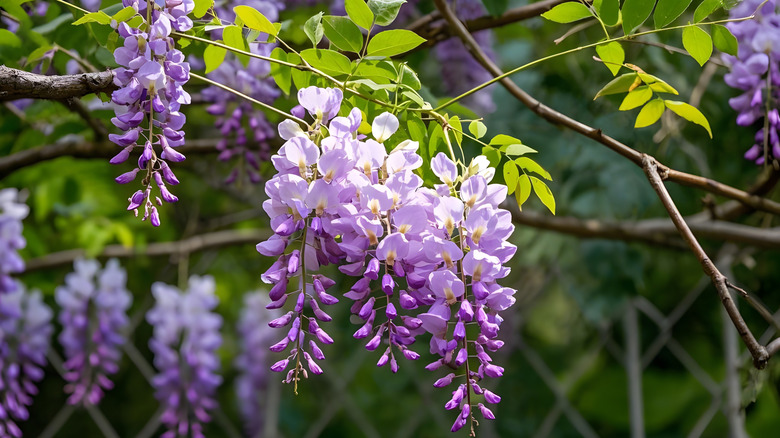
Wisterias (Wisteria frutescens) often grow incredibly fast — which can be a good or a bad thing, depending on how you look at it. While it's hard to deny the beauty of the showy purple flowers, this vine can quickly grow out of control. As such, it's recommended to prune wisterias twice a year. In most regions, June is the perfect time to control its spread. Once the flowers fade, remove any unwanted suckers or shoots. Not only will your plant look a lot cleaner throughout the summer, but thinning it in June will also make the winter pruning session much easier.
Rhododendron
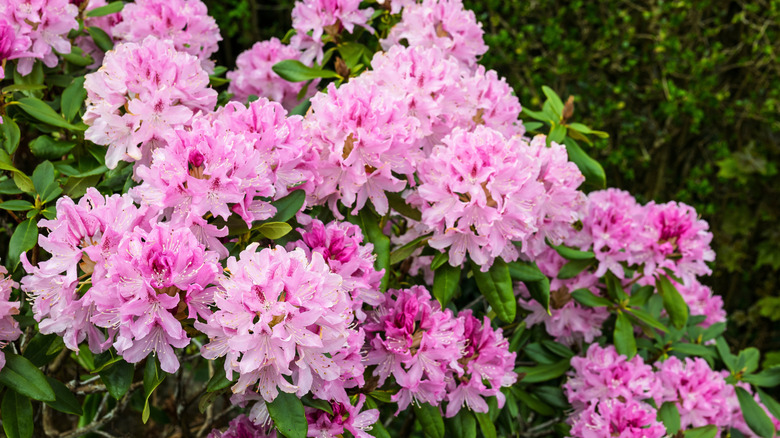
Rhododendrons (Rhododendron spp.) typically aren't too picky about when you trim them, though June is one of the best times to do it. By pruning your plant in early summer, you get to enjoy the gorgeous blooms before they naturally fade. Shaping at this time also reduces the risk of cutting off fresh flower buds. Within a few weeks after the blooms have faded, shape the plant as you like and remove any leggy, damaged, or awkwardly growing stems. However, if your plant requires a heavier prune, it's best to wait until late winter or early spring to do so.
Coniferous evergreen trees and shrubs
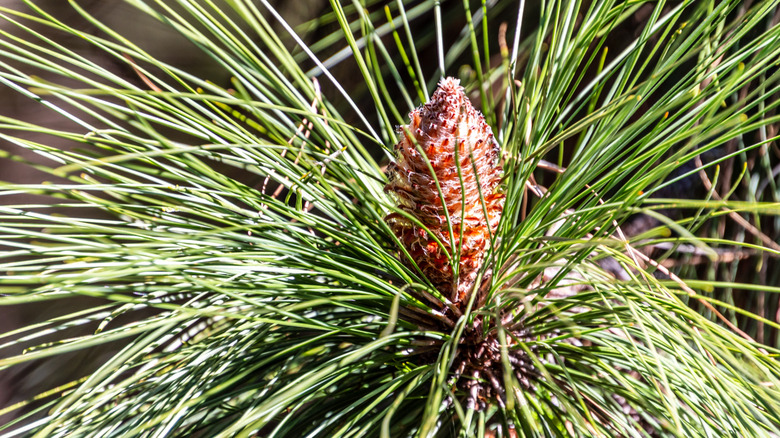
Narrow-leaved evergreen trees and shrubs — like pines, spruces, hemlocks, yews, and firs — usually don't benefit from heavy pruning. In fact, many of them naturally grow into a beautiful shape. However, June can be a great time for a light trim if you want to control size, remove wayward growth, or encourage a denser or more compact habit. Each evergreen has slightly different pruning tolerances and recommended techniques, so make sure to identify the species before making any cuts.