

Goodbye Traditional Concrete: There's An Eco-Friendly Alternative That's More Durable
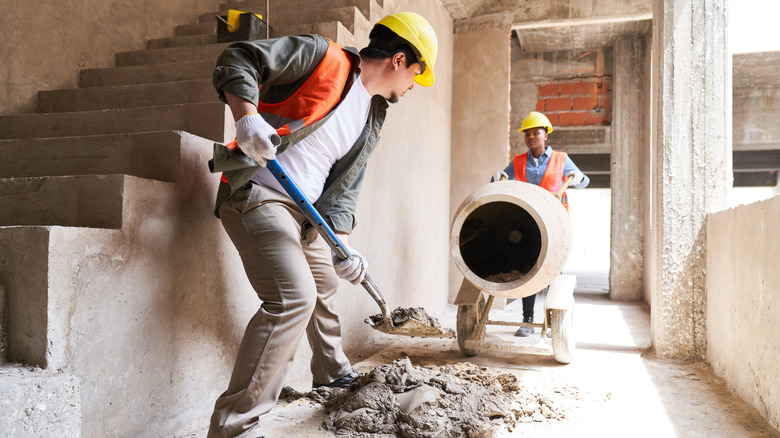
Concrete is the most common building material in the world, but it's also one of the worst offenders when it comes to environmental impact. According to Fair Planet, traditional concrete accounts for over 7% of all carbon emissions globally. You probably don't think much about the material when mixing up a few bags from your local home improvement store and embarking on DIY concrete projects around the house. But making concrete produces massive amounts of carbon dioxide and uses vast amounts of water, which is an increasingly limited natural resource. As the construction industry moves toward sustainable building practices, builders are starting to say goodbye to traditional concrete in favor of green concrete, a more durable and eco-friendly alternative.
So, what is green concrete? And why is it so much better for the planet? It might help to understand the basics of concrete. Unlike traditional concrete, most of the ingredients in green concrete are recycled materials. The traditional type is usually made from a mix containing Portland cement, a mineral-based ingredient that's heated to extreme temperatures; this is what causes the release of all that carbon dioxide into the air. It's then cooled back down again, a process that uses tons of water. Green concrete relies on fly ash and blast-furnace slag instead, two by-products created during coal and steel production. Using these materials creates a unique chemical structure that provides plenty of strength without so much waste, emitting of greenhouse gases, or consumption of natural resources.
Green concrete is more durable (and more expensive)

Contractors are fond of saying that there are two kinds of concrete: "cracked and gonna crack." Along with the lower environmental impact, this is one of the reasons why the construction industry is embracing green concrete. Its unique composition makes it less permeable to water and produces less heat during the curing process, which means it's less likely to crack over time. Fewer cracks means greater overall durability, even when you use it for high-traffic areas like a driveway or patio.
Although the performance of this eco-friendly alternative means you're likely to spend less on maintenance and repairs over the long run, it does cost more up front. Several factors contribute to the green concrete premium, but it's largely due to the fact that it's relatively new technology, which means its availability is more limited. If you only want to experiment with a small amount — to DIY a set of geometric concrete bookends, for example, or create a unique fountain for your backyard — the price difference probably won't be an issue. But if you're thinking about going green with a new foundation or driveway, expect to pay 20% to 30% more than you would for traditional concrete.
Despite costing a little more, green concrete is quickly becoming a billion dollar industry. As governments mandate sustainable building practices and the Global Concrete and Cement Association continues to pursue its goal of decarbonizing the entire industry, those costs are likely to equalize. Expect prices to go down as more companies, tradespeople, and consumers realize the benefits of green concrete as a long-lasting and eco-friendly alternative.