

Ditch The Solid Concrete: The Affordable Patio Alternative That's Stunning To Look At
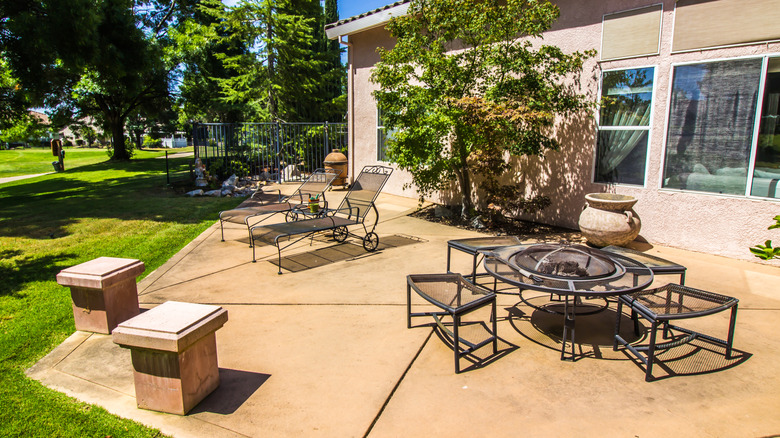
If you're planning a new concrete patio, get ready for all the problems that come with a solid surface, including pooling and erosion from water runoff, cracking from soil movements, and slip hazards in the winter. You won't have to worry about this if you use a permeable material like gravel, but you'll have other messy problems with gravel, like weed growth, constant gravel displacement, and distress for bare feet. Replacing a whole concrete patio can get pricey, running as much as $5,000. TikTok user madelynelou has an elegant, inexpensive patio solution that's easy to install and won't break the bank: Combine gravel and concrete pavers.
This idea works for several reasons. Gravel allows water to soak directly into the ground instead of pooling or running off into the yard, while pavers provide solid surfaces for walking and supporting patio furniture. What's more, the pavers help lock gravel into place, while the gravel eliminates the need to fit pavers together tightly, and avoids uneven edges if one of the pavers moves. If a paver breaks, it's easy and affordable to replace, often costing just a few dollars each at a home improvement store.
Aesthetically, this approach allows you to turn your patio into a compelling landscape feature rather than a mere utilitarian addition to the yard. You can have fun with pattern and design, because there are many possibilities depending on the size and shape of the pavers you use. Madelylou used large, 24-inch square pavers and arranged them corner-to-corner to create a checkerboard effect. The result looks as solid as concrete without the drawbacks of an impermeable, difficult-to-replace surface.
A low-cost project you can DIY
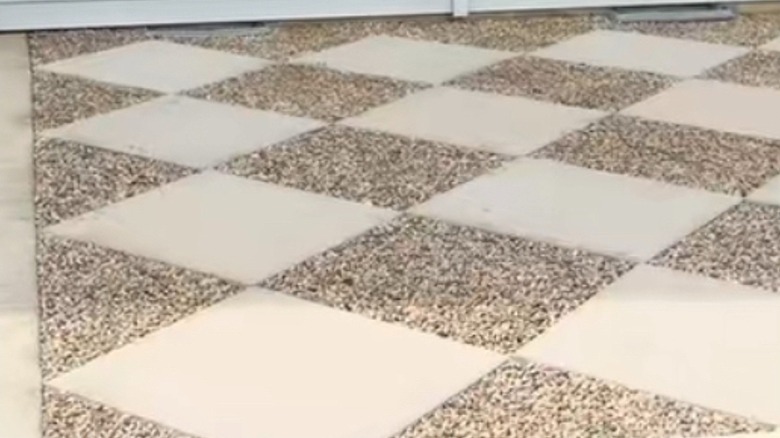
The two main components of this patio are concrete pavers and gravel. Pavers the size that TikToker madelylou use cost about $10 each. Pea gravel, more decorative than crushed rock, runs around $46 per cubic yard. For a 100-square-foot patio, you'll need about 12 pavers and one cubic yard of gravel. You may need an extra paver base layer under the sand if your patio will see high traffic or a lot of moisture and freezing. Even when adding the cost of a yard of fill sand ($15 to $40) and weed-blocking landscape fabric (about $60) to put under the sand, this is an inexpensive patio compared to other options.
@madelynelou PAVER PATIO COST BREAKDOWN 🏡✨ Okay... everyone's been asking, so here's the real breakdown of what it cost us to build our 12ft x 12ft paver patio 👇 If you've been thinking about upgrading your backyard without dropping thousands... this is your sign 👀 Here's exactly what we used: • Weed Barrier Fabric (2-pack): $40 • 1 Yard of Soil: $20 • 1 Gallon of Paint (Bone White): $20 • 1 Yard of Sand: $20 • 24" Concrete Pavers (12 total): $150 • 1 Yard of Boise River Pea Pebbles: $65 • 1 Gallon of Mulch Glue: $50 Total Cost: ~$365 Yes... a full patio for under $400 🤯 And honestly? The biggest win... We scored the wood for the garden beds + siding for FREE, which saved us a ton. ⸻ What made the biggest difference: It wasn't just the materials... it was the layering 👇 Leveling the ground, adding sand, spacing the pavers evenly, and finishing with pebbles + mulch glue to lock everything in. That's what gives it that clean, high-end look without the high-end price tag. ⸻ If you've been waiting to upgrade your backyard... Stop overthinking it. You don't need a $5K+ patio to create a space you love. You just need a plan, a weekend, and a little creativity 💡 ⸻ Save this for later 🛠️ And send it to someone who needs a backyard glow-up 🙌
The most difficult part of installing this patio is going to be clearing and digging the area down to a depth equal to the thickness of the pavers plus a 2-inch layer of sand — about 4 inches total (add another 3 inches if you're adding a crushed rock paver base). Once you've dug the ground and leveled it, lay landscape fabric so it comes up the sides of the excavated area (overlap any segments by a foot or more), cover that with sand, level the sand, and install the pavers.
The last step is to drop 2 inches of gravel into the spaces between the pavers. Pea gravel looks attractive, and it comes in different colors, but because it has rounded edges, it isn't very stable. Even though the pavers help hold it in place, madelylou added mulch glue as insurance. It's a water-based adhesive that you apply with a garden sprayer, and adds about $45 to the cost of the project. Alternatively, you could add plastic or metal landscape edging to your new patio for another $60 to $200.