

Not Pyrex, Not Tupperware: The Colorful Kitchenware Brand To Look For At Thrift Stores

Let's face it — gone are the days when finding a rare Fire-King jadeite mixing bowl or pristine primary color set of Pyrex mixing bowls was easy and cheap. Even vintage Tupperware has had a resurgence, making collectors and plain old kitchen organizer enthusiasts balk at the prices. Luckily, there's still a brand out there that's durable, comes in hundreds of patterns, and hasn't been scooped up by flippers: Noritake.
Noritake is one of the best dinnerware brands out of Japan. It's a brand that's now over 120 years old and is known for having durable-but-elegant bone china dinnerware, serveware, drinkware — you name it. Plus, they're one of the few manufacturers that have a generous replacement program for broken pieces, so long as it's a pattern they still carry. But even if you stumble on an out-of-print pattern, you're in luck. Because their designs are so plentily available, you'll likely be able to cobble together a full set. Plus, Noritake offers a unique service where they'll give you the details about the status of the design you found and let you know what pieces are still available in that set through their "Register Your Pattern" program. In a world where fighting for a Pyrex Cinderella mixing bowl with a faded and chipped Butterprint pattern is exhausting, it's refreshing to see a company help collectors or just happy thrifters appreciate their new — to them, at least — dinnerware set.
What makes Noritake worth searching for in thrift stores (and how to identify it)
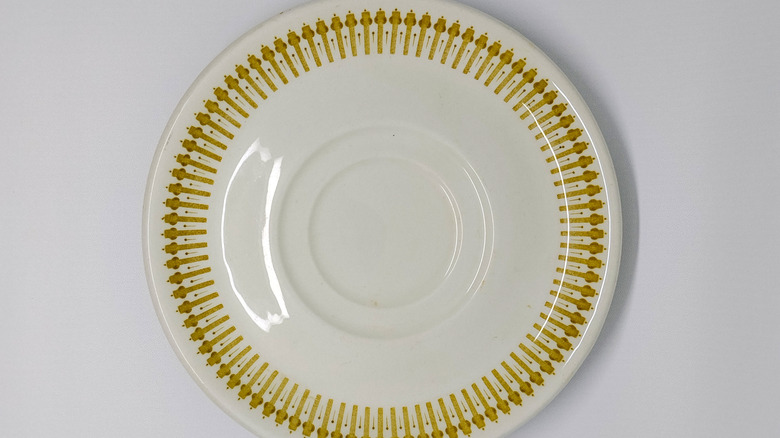
The benefits of picking up some Noritake plates, bowls, mugs, or serveware somewhat depend on the design. The handcrafted vintage designs are stunning to study, as the more you check out the design, the more you'll notice the care taken by the artists. Noritake's official website has a breakdown of which patterns are dishwasher- or microwave-safe and there are some gold-accented pieces that can handle being microwaved and should be stamped on the underside. No matter which pattern you choose, the bone china construction of these pieces is less brittle than porcelain thanks to the bone ash incorporated into its mix, so all of your pieces should last with proper care.
Identifying Noritake-made pieces is pretty easy, as they've stamped "Noritake" on the undersides of their products since 1908. However, if you find a stamp that says "HandPainted Nippon" then you may have one of their earliest patterns, as that's the stamp they used before officially incorporating as the Noritake Company. Finding "RC" on the stamp will also indicate it's an older piece, most likely from the early 20th century. Finding an "M" (for Morimura, the founding family) with a wreath means your piece was made around 1911 to 1940. The M was replaced with an N after 1953, when production resumed following WWII. The most recent patterns will often have "Noritake Bone China" over a Grecian urn flanked with two sprigs and the word "Japan" underneath. Keep in mind that over the years, Noritake has used hundreds of different stamps, so visiting an antiques appraiser is the best way to verify dates.