

The Perennial Rose You Should Avoid Planting, Despite Its Beauty

Roses: These beautiful flowering plants are beloved by gardeners all over the world, and there are technically thousands of varieties to choose from. Depending on what features you're looking for, there are several types of roses that grow as trees, container plants, and even as small shrubs. The latter can offer homeowners beautiful, fragrant blossoms along with potential privacy, depending on the type. Yet there's one non-native plant in the Rosaceae family you'll want to be wary of when you're selecting roses for such purposes. As a rule of thumb, you should always avoid planting multiflora rose (Rosa multiflora) because its invasive qualities can lead to several issues in your yard or garden.
Like all types of roses, multiflora roses are woody perennials. Yet this plant has several characteristics that distinguish it from other members of the rose family. For one, the shrub produces numerous small flowers that are typically white (and sometimes very light pink), compared with many native North American wild roses that are pink and produce fewer (albeit larger) flowers. These fragrant blooms show up in the spring and early summer months, and may also attract pollinators like butterflies and bees during this time.
Multiflora roses were introduced to North America from Asia in the mid-19th century as rootstock. Not only did the dense, fence-like features of this rapid-growing plant provide for farmers to contain livestock, but it was also initially admired for its ability to help control erosion. Unfortunately, multiflora rose's rapid growth, combined with its pretty flowers and ability to provide some privacy and erosion control, has regrettably led some people to choose this plant for their yards and gardens.
Why it's best to avoid multiflora rose in your garden
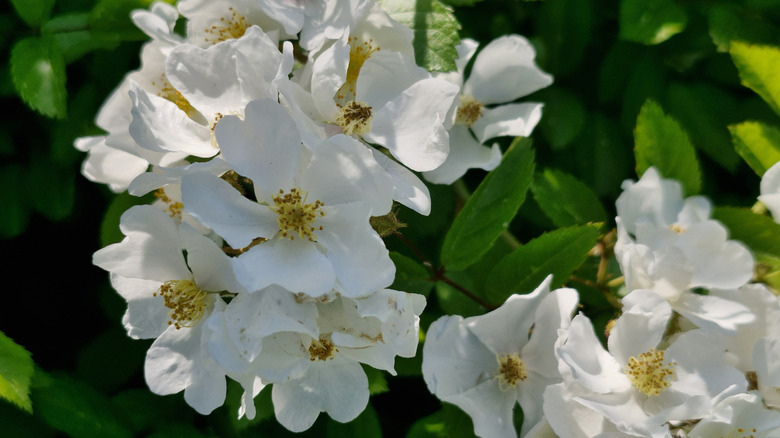
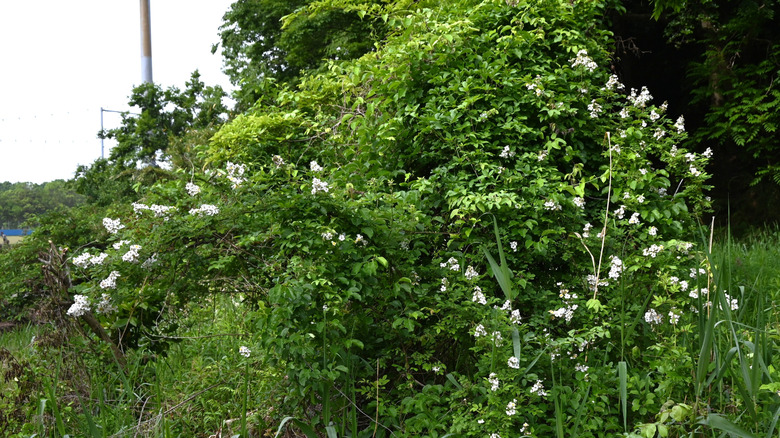
Unfortunately, unlike other rose species that are safe for home gardens, multiflora rose is a noxious weed that poses many risks to local habitats. This plant grows rapidly into thickets, and can outcompete native plants for resources as it spreads. Each plant can produce 500,000 seeds per year, notes North Carolina State Extension, and their seed banks can be viable for as many as 20 years. This makes complete eradication of multiflora rose in an established garden difficult, and the process requires constantly looking out for self-seeding. Wildlife, such as birds, can also spread the seeds, making control on large properties all the more challenging.
Each spring, multiflora rose tends to transition out of winter dormancy sooner than its native counterparts, which can put the latter plants at a disadvantage. What's more, its rapid growth can make multiflora rose difficult to control as it quickly grows up to 15 feet tall and wide, with each plant growing more than 1 foot each year. With all these risks in mind, it's easy to see why multiflora rose is among the list of perennial plants to avoid in your garden.
Preventing and eradicating multiflora rose plants
Now that you are aware of the risks associated with multiflora rose, it's crucial to avoid planting these invasive garden plants at all costs. If you're still looking for the attractive qualities of multiflora rose without its associated downsides, there are indeed several alternative plants to consider that also happen to be native. One example is black chokeberry (Aronia melanocarpa), which is a large shrub that produces numerous clusters of white flowers in the spring. A smaller alternative is Carolina rose (Rosa Carolina), which can grow up to 5 feet tall and wide as hedges while also benefitting local pollinators.
On the other hand, if you already have multiflora rose around your yard or garden, you may need to consider getting rid of this plant if it's already causing issues for other plants. This process may involve cutting down its thorny branches and digging up all roots in hopes of preventing its spread. You might still need the help of herbicides like glyphosate or triclopyr to get rid of the problem for good, though. Cutting and mowing the infested area several times beforehand can also improve the efficacy of any herbicides you might choose. When using chemical controls for multiflora roses, be sure to follow all product instructions carefully, and wear protective gear before use. Dig up any future seedlings ASAP to help prevent further issues with this plant.