

The Stunning Flower That'll Have Hummingbirds And Butterflies Flocking To Your Garden
Every gardener dreams of having a lively garden filled with an array of winged visitors. After all, they aren't just fun to watch: Hummingbirds and butterflies are good to have around. These beneficial creatures can help pollinate crop blooms for a better harvest, and birds can be a natural pest control remedy. Though we know them for their love of nectar, hummingbirds feed on bugs for protein, so they'll happily swoop down to snack on all the pesky, unwanted insects lurking near your vegetables and flowers. If you're looking for a beautiful flower that'll turn your garden into a hummingbird and butterfly hotspot, look no further than the beloved petunia (Petunia x hybrida).
Petunias are tender perennials, though they're grown as annuals outside of hardiness zones 10 and 11. If you have a favorite flower color, you'll have no trouble finding a petunia shade you like. Their showy, tubular blooms are like magnets to butterflies and hummingbirds. That said, you'll want to skip certain cultivars if your goal is attracting pollinators: Some petunias are bred for looks rather than nectar content, particularly double-flowered varieties. Meanwhile, some hybrids and species are particularly popular with these garden visitors. One of the most popular hybrids, Wave® petunia, is a great option. It produces an abundance of flowers, and hummingbirds and other pollinators can't get enough of these large, long-lasting blooms. The plant spreads a bit like ground cover, and looks beautiful cascading over the edge of hanging baskets. Better yet, any petunias planted in elevated containers puts them in the perfect eyeline for pollinators and keeps them safe from cats and other ground predators.
How to grow petunias to attract more butterflies and hummingbirds
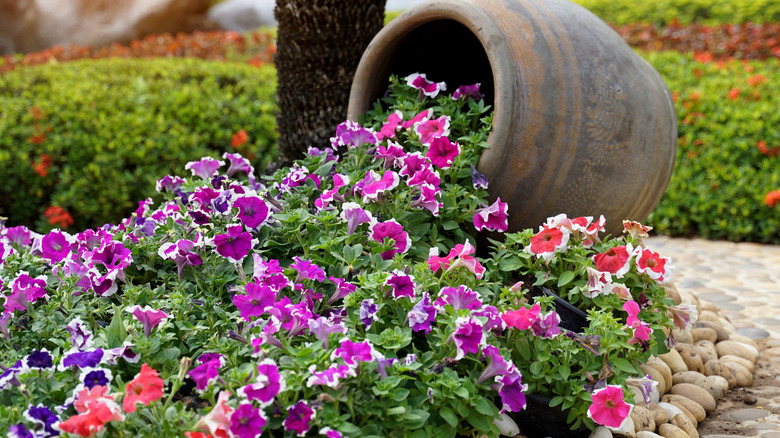
Luckily, petunias are one of the all-around easiest flowers to grow. Plus, they're rapid growers, so you — and your visiting pollinators — won't have to wait long to enjoy their pretty blooms. Plant them in a sunny flower garden with well-drained soil. Although they can tolerate shadier conditions, you won't get the best blooms. Plus, butterflies especially prefer sunny, but wind-protected, spots to feed. Ideally, plant at least three petunias together so there's enough color to catch the eyes of any hummingbirds or butterflies. Petunias are readily available in garden centers if you'd prefer to start with young plants. Growing them from seed is a little trickier, but not impossible. You can sow seeds in late winter if you have a greenhouse or similar setup. Otherwise, you can start seeds indoors 10 to 12 weeks before you're ready to plant.
While petunias are beginner-friendly, it doesn't mean they don't have issues. One common petunia problem to know about is pests, particularly aphids and flea beetles. Snails and slugs may also be interested in snacking on these flowers. And while hummingbirds eat aphids, it's likely not a primary reason they're attracted to a petunia's blooms. Also, some short-tongued butterflies, like the many brush-footed species, can't access nectar from deeper, more tubular flower varieties and will probably pass them up. Some birders have also found hummingbirds prefer nasturtiums rather than petunias.
Petunias can also be susceptible to diseases like root rot, tobacco mosaic virus, and gray mold. Still, if you grow them in the right conditions, properly space them out, and avoid overhead watering, they're likely to produce flowers all summer long. That said, stay on top of deadheading on a regular basis to extend the blooming season.