

Keep Wasps Away Using One Natural Fragrance They Can't Stand
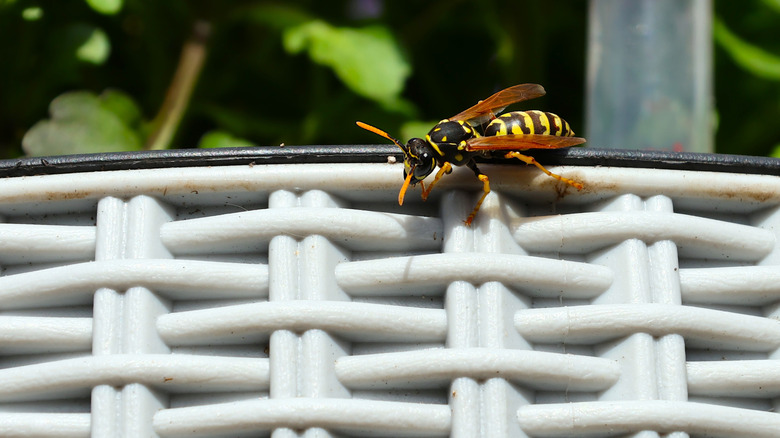
Plenty of household pests are annoying, but wasps are among the worst. The little winged insects will happily make themselves at home in any nook or cranny that keeps them protected from the elements. That's why you can often find wasp nests underneath your roofline, tucked near a gutter, or hanging from a doorframe. Some species make large papery ones. Others live inside tubular chunks of dirt stuck to the walls. But no matter the types of wasp nests you find, getting rid of them can be a serious hassle. Hiring a professional exterminator is one effective approach, but they typically rely on powerful insecticides that you may want to avoid due to their very real potential to cause serious health issues. It turns out there's a trick to keeping wasps away, since tea tree essential oil is one natural fragrance they can't stand.
Made from distilling an Australian plant called Melaleuca alternifolia, tea tree oil is a common ingredient in a wide variety of beauty and health products, from shampoos to toothpaste. Looking beyond its antimicrobial and antifungal properties, a group of Argentinian scientists explored whether the sharply scented oil could be used in other ways. According to their research findings published in Austral Entomology, tea tree was among several essential oils effective at repelling German Yellowjackets. Another study published in Pest Management Science confirmed that other essential oils, including clove, geranium, and lemongrass, are also effective against paper wasps, especially when mixed together. Although you need to handle them carefully, using essential oils as a natural pest control method can be highly effective if you're dealing with a wasp infestation.
Use a tea tree oil spray to naturally deter wasps
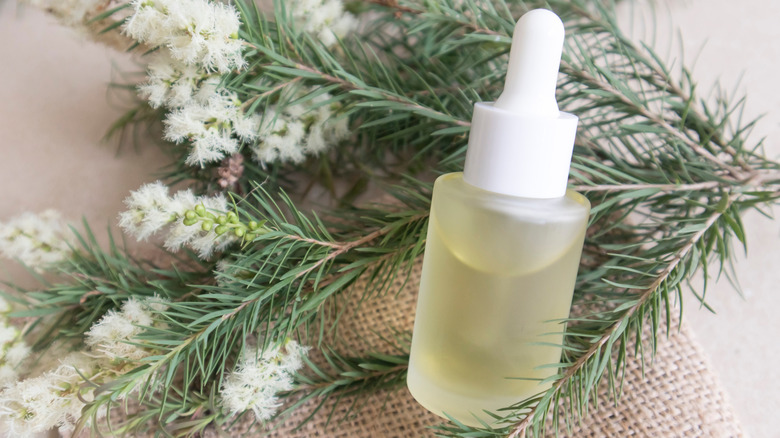
If you get swarmed the second you step outside, recreating careful laboratory conditions isn't a practical way to keep wasps away using tea tree oil. Instead, there are two simple approaches worth trying. Before working with any essential oil, it's important to understand that, just because they're derived from seemingly harmless plants, it doesn't mean you should disregard important safety precautions when using them. Tea tree oil in particular can be highly irritating to the skin and cause respiratory distress when inhaled. You should wear a pair of gloves and work in a ventilated space while using it.
Creating a tea tree oil spray is one of the easiest ways to apply the oil as a deterrent in the corners where wasps have taken up residence. Simply mix 5 to 15 drops of oil in 100 milliliters of water before spraying it liberally on nearby nests. This is another time to use caution so that you don't get stung! An alternative method is to soak a rag or cotton balls in undiluted tea tree oil, placing them near any nesting spots, along window frames, or hidden inside front door wreaths.
Getting rid of wasps isn't always easy, so you may need to repeat the process a few times. The Argentinian scientists confirmed this in their study, noting that when wasps were allowed to forage before essential oils were applied to the area, it became even more effective at deterring them. You may also want to try combining tea tree oil with lemongrass or clove essential oils to dramatically improve the effectiveness of this natural wasp deterrent method.