

The Overlooked Alternative To Heavy Curtains For Your Sliding Glass Doors
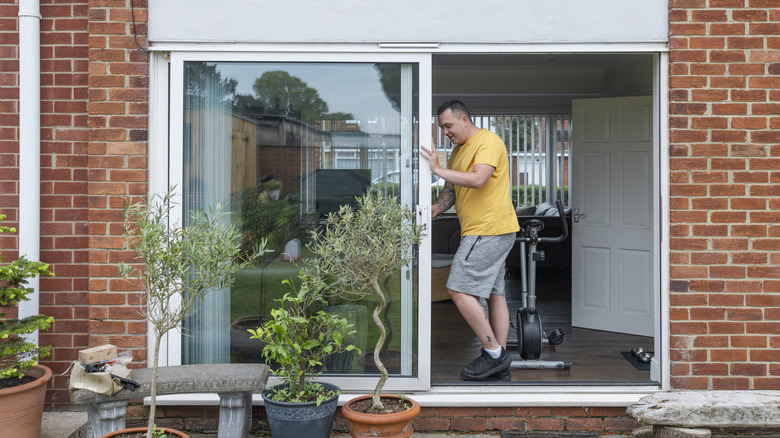
Basking in the sunlight streaming through your sliding glass doors can feel amazing, especially when the temperatures dip during the fall and winter months. You can give your thermostat a break as well as remain cozy. However, as the cold, dreary days make way for hot and humid late spring and summer months, you'll have to reach for heavy curtains to block out the sun's glaring rays (when you aren't busy working on your tan). But then you'll have to rely on artificial light sources to brighten your interiors, which will negatively impact your utility bills. The way out? Solar shades. They're an overlooked alternative to heavy curtains that will let in ample natural light in your home without turning it into a stifling sauna.
These shades are often made with woven mesh, using synthetic materials, like HDPE, PVC, or polyester. So, you can enjoy the advantages of natural light, but the sun's rays will be filtered. Plus, unlike heavy drapes, they're transparent (the level will depend on your shade's openness factor). Moreover, they're easily available in multiple colors and designs, and you get to choose between standard, double, and motorized solar shades. Unfortunately, they aren't without their cons. For instance, they aren't effective at keeping noise and cold drafts out on their own. They don't provide much insulation benefits, either.
Reasons you should choose solar shades for your sliding glass doors
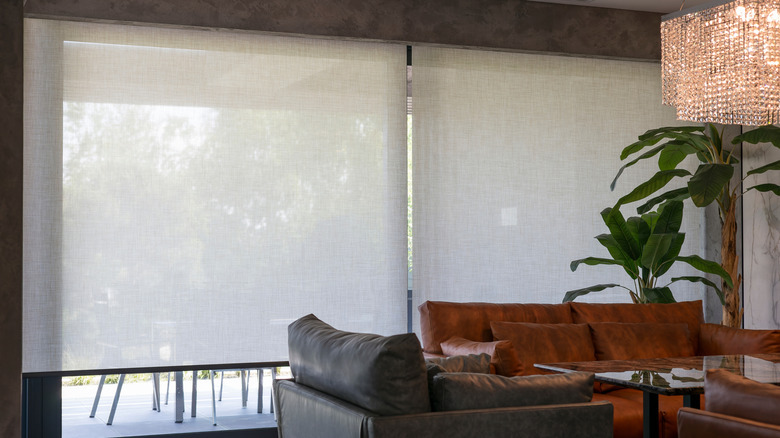
The primary reason you should switch out your heavy curtains with solar shades is their ability to keep harmful UV rays out of your home without entirely blocking your view of the outside world. So, you won't have to choose between not having any natural light come in or allowing your laminate flooring to sustain sun damage. They'll also prevent it from slowly leaching color out of your vibrant furniture and other furnishings. A lack of excess sunlight flooding your interiors will also put less strain on your HVAC, helping reduce your electricity bills, particularly in summer. Working by the window, especially if you're hoping to beat the chill naturally during winter, will be possible, too. It's because solar shades minimize screen glare, as sunlight doesn't have unfettered access to your home.
Better yet, you get to control the amount of light entering through your sliding glass doors. Since solar shades are categorized based on their openness factor (depending on how tightly a material is woven), you get to dictate how much natural light you want in your rooms and the level of transparency you desire. To illustrate, a shade with a 1% openness factor will keep 99% of sunlight out but will also offer the least amount of transparency. Similarly, a 3% model will stand firm against 97% of the sun's rays and offer comparatively better views of the outside world. As the percentages go up, the level of heat and glare protection goes down but visibility increases. Whatever the transparency, know that nosy neighbors or lurking thieves won't be able to see inside your home during the day. Additionally, they aren't too high-maintenance; vacuuming them with a soft brush attachment works wonders.
Cons of solar shades for your sliding glass doors

Though solar shades are a type of door and window covering that will help beat the heat in your home, consider their cons as well before investing in them. For starters, they don't offer ample privacy at night. It's so bad that even if someone is pressed against your sliding glass doors, you won't be able to make out anything further than their shape. The logic behind this is simple. During the day, the outdoors are brighter than your interiors, so you can view the outside world sans obstructions. However, it's the opposite at night: Your artificial light sources will be brighter than the spaced-out street lamps. Given this, you can't use solar shades on their own. You must pair them with other drapes and curtains to maintain your privacy.
Even your daytime view will depend on the color of your shade. While light-toned materials will put up a better fight against UV rays, they'll stifle your view somewhat when compared to their dark-hued counterparts. Moreover, they won't be a good fit for your bedroom if you prefer a pitch-dark zone when sleeping. Remember that solar shades are made for letting in filtered sunlight. So, even if you outfit your glass doors with a product with 1% openness factor, it'll still let in some light from outdoors.