

Designer Weighs In: Should Kitchen Island Countertops Match Or Stand Out?
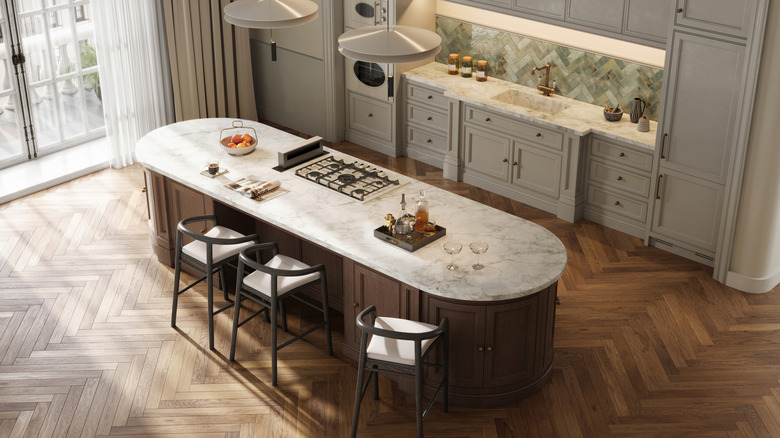
Picking the best kitchen countertop material can be one of the trickiest parts of designing your space — and if you have a kitchen island, you need to decide if you'll use the same material on that, too. Is it better for kitchen island countertops to match the rest of the surfaces, or to stand out? Speaking exclusively to Hunker, Beth Diana Smith, owner of Beth Diana Smith Interior Design, provides the answer — which is that, actually, it all depends! "It's really a matter of aesthetic preference, not a hard design rule," Smith says. "So it's less about whether they should match and more about whether they could make a statement. Both approaches can work beautifully depending on the overall vision for the kitchen."
So, if things feel clashy and chaotic in your kitchen, contrasting countertops aren't going to land well aesthetically. Instead, Smith encourages homeowners to step back and think of the bigger picture when designing their kitchen. Ask yourself if you want the island to be a real focal point, or whether its purpose is simply functional. Also, are you someone who likes to go bold at all costs, or do you prefer a more subtle contrast? Armed with these answers, you're ready to make the choice that works best for you.
How to pull off mix-and-match kitchen countertops
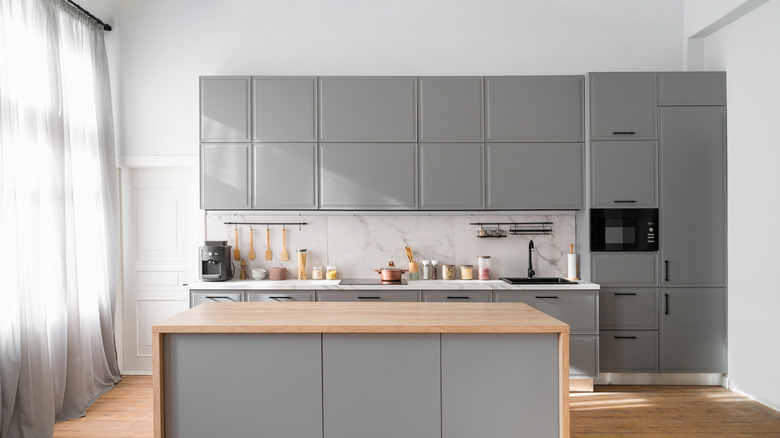
If you'd like to go for a bolder statement by selecting a contrasting material for your kitchen island, Beth Diana Smith recommends honing your pattern-mixing skills, so you don't make yourself dizzy. "The key is making sure the materials complement each other rather than compete," she warns in her exclusive interview with Hunker. "You want the mix to feel intentional and balanced, not busy or visually chaotic. For example, I would avoid pairing two highly active surfaces together, like a heavily veined marble with a busy granite pattern." Instead, consider a section that's just one color throughout — perhaps a solid slab of quartz — to offset the business of the other pieces. This way, the contrast is doing all the heavy lifting.
With these guidelines in mind, some might worry that mix-and-match countertops might be too bold of a design choice, or that they're inherently harder to work with. Yet Smith disagrees. "In many cases, it actually creates a more curated and thoughtful feel," she says. "I've mixed butcher block on an island with Caesarstone on the surrounding countertops and backsplash, and it remains one of my favorite kitchen designs because of the warmth and layered character it brought to the space." As long as the rest of your kitchen supports your choice and feels cohesive overall, you can't go wrong.
You can still make a bold statement with matching countertops
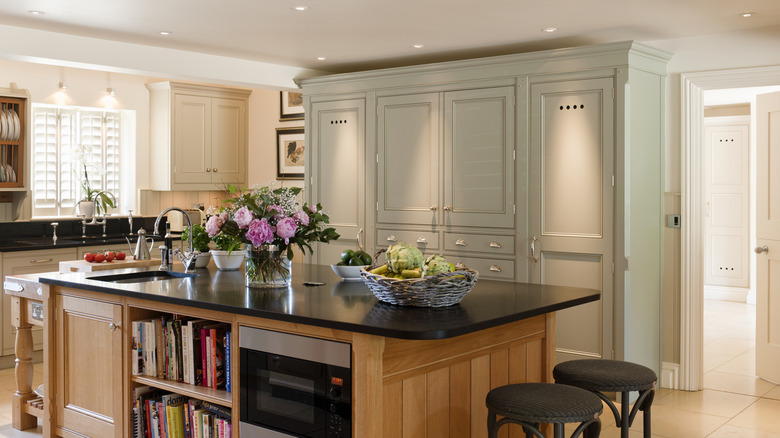
If you're not sold on the mix-and-match countertop idea and you'd rather keep them matching, Beth Diana Smith has a few suggestions to help things pop regardless. "There are so many opportunities to add personality elsewhere," she tells Hunker exclusively. And the list of options is nearly endless: "Consider going bold with cabinet color, incorporating statement hardware, adding impactful lighting, or using oversized art and accessories to create visual interest and individuality within the space."
A great way to incorporate the spirit of contrasting countertops without swapping out any stone is to set the island apart visually. For example, there are plenty of kitchen cabinet ideas that will quickly refresh your space; one of them is having the bank attached to the island be a different color to the rest of the room. Just remember to go for cohesion rather than chaos, and try to choose a complementary color combination. If the difference is too garish, you run into the same issue as mixing two loud types of stone — it can look tacky. You could also try your hand at mixing metals to add personality. Selecting two or three tones for finishes that repeat throughout the kitchen, both on and off the island, is a trendy way to add some contrast to your kitchen's style.