

Not Paint, Not Stain: A More Creative Way To Give Old Baseboards A Stylish Refresh
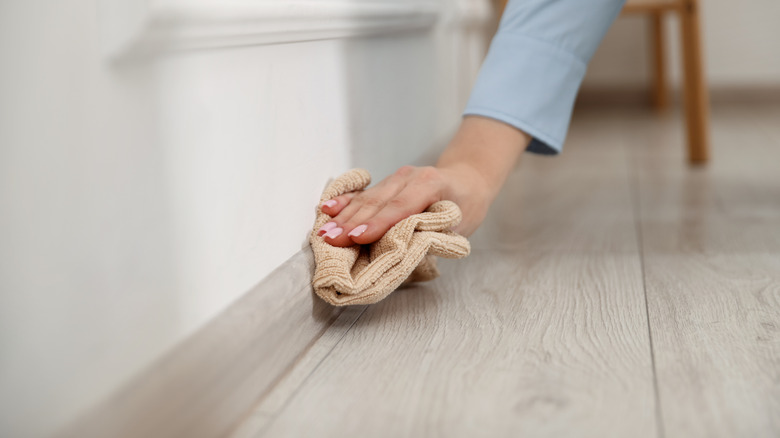
A room would look strange without the baseboards, but why do they have to be so boring? It's common to see various shades of stain or white paint on the skirting boards. Of course, you can restain wood baseboards to change the wood tone or paint them a different color to make it a better fit for your style. But Instagram creator @interiormotivescottagestyle decided to think way outside the box by decoupaging floral tissue paper onto baseboards. It's a fun, quirky update to the trim in any room, and it's a lot less work than hand-painting or stenciling designs on the wood.
Baseboard trim is an important part of a room — it protects the bottom of the wall from dents and scuffs, and it hides the area where the floor meets the wall to give it a clean finish. It also allows you to leave a little gap between the floor and the walls to allow for settling and expansion. Since they're heavily focused on the function, baseboards are often overlooked as a decorating element. But that changes with this decoupaging idea.
To carry out this DIY, you'll need the paper you want to use and decoupage or PVA glue. The floral design used in the original project is perfect if you're looking for cottagecore living room ideas, but you can choose other prints or designs to better suit other styles. If you can't find tissue paper that works, look for decorative napkins, fabric, or rice paper.
Decoupage decorative tissue paper to baseboards
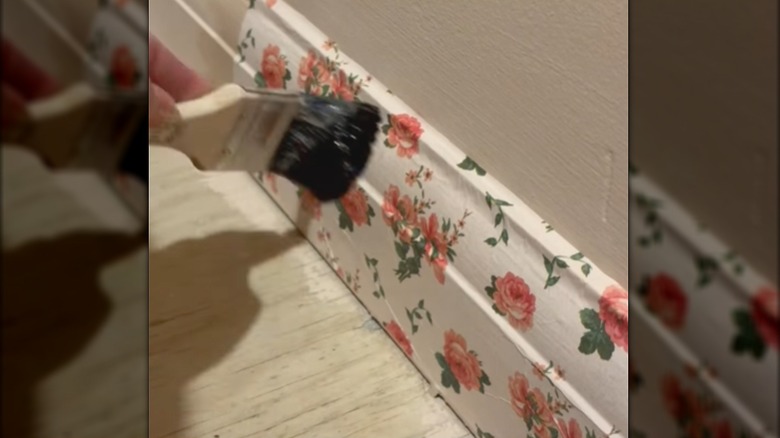
Before you start gluing paper onto your trim, make sure it's a look you want. It takes patience and careful application to get smooth decoupage results, and there could still be some texture. Starting with clean, smooth baseboard trim is essential. That often means sanding and washing the skirting boards. The good news is that the glues normally used for decoupage are water-based, so you can wet them to remove the paper if you don't like the look.
Cut strips of your selected paper to fit the baseboard, keeping in mind that the curves on the trim could increase how much paper you need to cover the wood fully. Brush the glue on a small section of the trim. Starting with one end of the paper strip, smooth it on a little at a time to prevent bubbles or bunching. Go over the paper with the brush to smooth it out more. Brush more glue over the top.
Cleaning the baseboard at this point has to be done carefully since the glue is water-based. Keeping dust off your baseboards with dryer sheets can minimize how much cleaning you need to do. Or, if you want to lock the design in and make it washable, apply clear varnish over the paper. If you're hesitant to decoupage your trim, start with a wood shelf or small piece of furniture to introduce the look into the room and see if you like it.