

5 Tips And Tricks For Spotting Valuable Vintage Pottery At The Thrift Store
We may receive a commission on purchases made from links.
Even if you're a seasoned collector, there are still plenty of tips and tricks to learn for spotting valuable vintage pottery at the thrift store. Knowing what brands (and what designs from those brands) are currently selling well for other collectors, plus what kinds of damage looks chic and what brings down a piece's value, are good things to know. Of course, spotting authentic works from valuable brands by their maker's marks is also an essential skill to have, as there are a lot of different ones out there. Yet all of these take practice and a little bit of studying up to master.
While you can use the lazy thrifter's online shopping guide to browse from home, there's just something so exciting about getting out there and searching for pieces in person. One of the best ways to practice spotting valuable vintage pottery at the thrift store is to go and do it! Armed with these tips, you'll likely come across some real gems (or at least some cool modern pieces from the ceramic makers you should be following, too).
Look for the maker's mark to verify authenticity
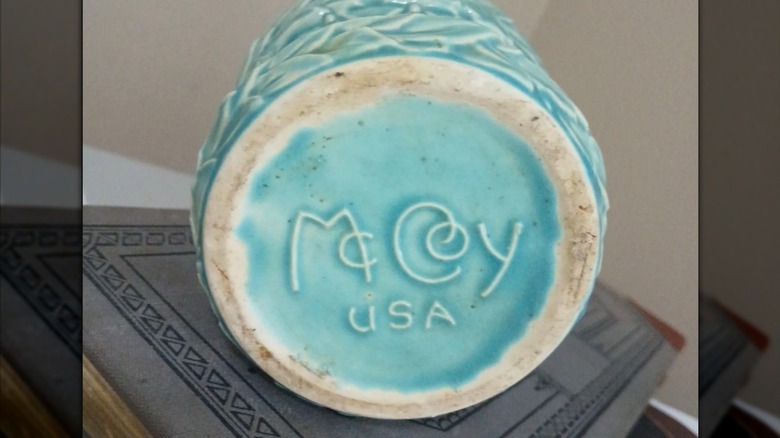
One of the first tricks to finding valuable vintage pottery at the thrift store is learning to identify the maker's mark of popular brands to verify their authenticity. If you're holding a real piece of McCoy pottery from the 1950s (and it has the stamp to prove it), it's likely going to have a higher resale value than an amateur piece from the same period. However, both are still likely to be aesthetically very cool. Valuable vintage pottery brands that you are likely to come across while shopping are McCoy, Roseville, Newcomb, and Rookwood, among others.
Authentic McCoy pieces tend to have some version of "McCoy USA" (sometimes just the initials) in a thin font etched into the bottom. Roseville items vary as well, but the Rozane wafer mark is a sign of an earlier work. This is a small circle on the underside of the pieces containing the word "Rozane." Newcomb is similar, as many artists created pieces in the collection and left their marks, but a common one to search for is "NC" with the letter "N" being nestled inside a larger "C." Even if there are some other markings on the bottom, if those letters are there, it's likely still authentic. Rookwood is easy to spot, with a variation of its logo (a "R" and "P" with decorative accents around them) present.
Consider the condition of the pottery
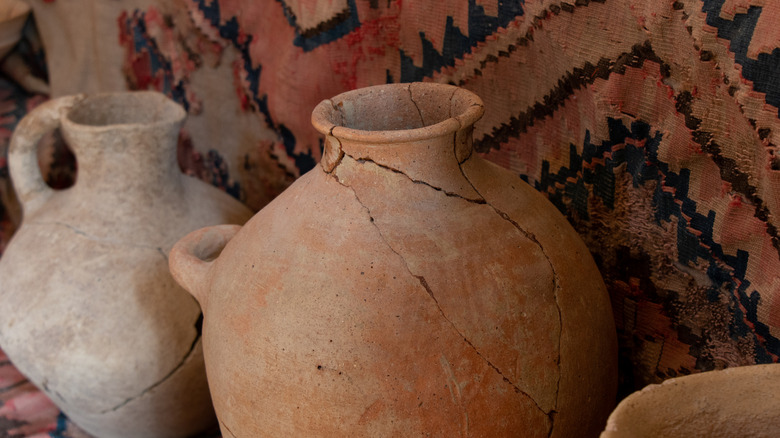
The overall condition of the vintage pottery is also important to consider when determining its value. When finding good pieces, it's important to have a sharp eye for imperfections that impact use or enjoyment. Of course, handmade pottery is always going to have a degree of variation. This is why people like it! However, there are still some significant red flags to watch for. The main one to watch for is big chips missing from the pottery that will lower its value against pristine pieces, particularly if it's a functional piece. You don't want to cut your lip on the cracked edge of a mug or have a wobbly vase with a broken bottom. Hairline cracks can be less of an issue, especially if it's meant to only be a display piece, but it's still worth checking for them.
It's also possible that a previous owner attempted to repair these problems, and it isn't immediately obvious. Check for evidence of glue or paint on the piece that doesn't quite match its surroundings. Serious collectors can also use a UV light to scan for previous restorations. Something small like the Lighting EVER Black Light Flashlight can be kept in your bag while you're out shopping for a discreet check.
Understand the limits of crazing's charm
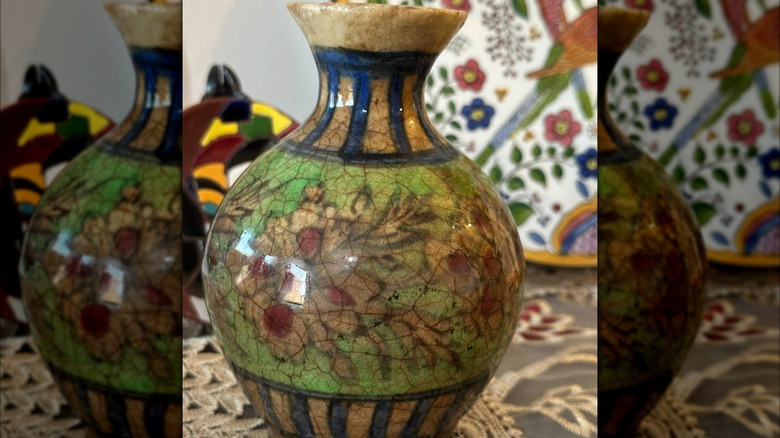
Even if the piece has no major defects, some pottery you come across is likely to have crazing. Crazing is the term for the tiny network of lines often seen on the exterior of pottery. It happens after firing in the kiln. Sometimes, the clay and its glaze don't shrink at the same rate as they cool, so the little cracks appear. It's a chemical reaction, so even the most professional of potters get the ratio wrong sometimes, and it impacts their pieces.
It's not a sign of age or real damage at all, but it can still impact the appearance of the pottery, which can, in turn, impact its price. The crevices can also sometimes harbor bacteria. But shallow crazing is thought to be very unique and sought after by some. Even so, only in moderation. If it has too much, it can obscure the piece's design, making it look old and dirty. Learning to differentiate this fine line between chic and shabby is essential.
Learn the difference between hand-painted and machine made
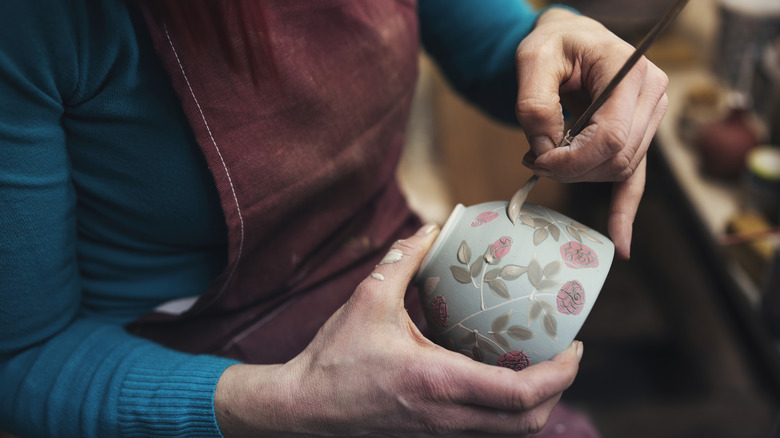
Knowing the difference between hand-painted and machine-made pottery is a good way to pick up more valuable pieces. Handcrafted ceramics usually go for higher prices because more time, effort, and skill went into creating them, rather than something spit out by a machine. To tell the difference between the two, you'll need to pick up the piece in question and take a very close look at it. The tiny variations in color and pressure, created only by a paintbrush, are the first thing you should look out for. This usually looks like outlines that aren't perfectly straight or variances in color within the same element.
On the other hand, pottery created by machines will be more uniform in appearance. It is often created using the same decal, which is then applied onto the pieces over and over again. There is little variation in color or texture, and you won't be able to see any unique brushstrokes, either. While most valuable vintage brands were crafted individually, in the absence of any other information about a piece's origin story, lean toward the options that you can tell are more individual.
Pay attention to the classic colors, patterns, and shapes that buyers seek
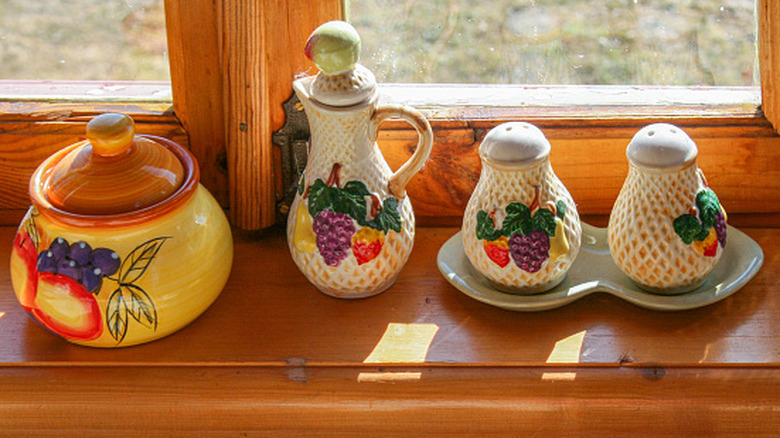
A key trick for spotting valuable vintage pottery is knowing what people on the resale market actually want to buy. Unless you also wish to grow your personal collection, there is no use taking on pieces that will just sit collecting dust. To get an idea of what folks are looking for, spend time on social media. Facebook groups and Reddit threads are great places to get information about what is currently being sought after or missed by nostalgic fans. You can also use eBay to get an idea of what's hot. Search up a few pottery brand names and see which auctions currently have a lot of bids, and which ones seem to have been sitting for a while. This can help you gauge the demand for the piece in front of you at the thrift store.
Of course, there are always a few general rules to follow when buying vintage pottery with selling in mind. If there is a matching set (like a salt and pepper shaker or a group of four dinner plates, for example), there is more inherent value in that because it's not missing its mates. People are often more apt to purchase a set instead of individual pieces. While unique or limited-edition runs of pottery also might go for more, sometimes a classic example of the brand, like the milky hue of a Newcomb piece, is all you need.