

Plant This Self-Seeding Flower In Your Garden For Healthy Soil & Nonstop Blooms
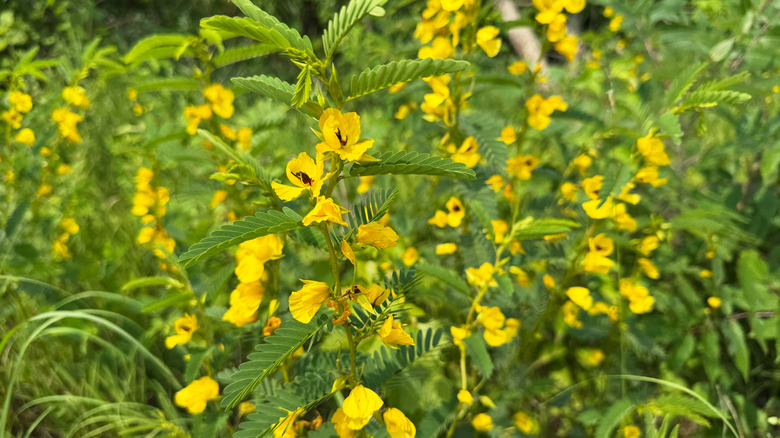
There are many fantastic self-seeding flowers you can add to your garden, but some of them come with more benefits than others. If you want a plant that will boost your soil and and treat you to years of beautiful flowers, consider growing partridge peas (Chamaecrista fasciculata)! These lovely self-seeding flowers are a member of the pea family, and like their cousins, they're nitrogen-fixing plants.
Partridge peas are a native wildflower with yellow flowers and delicate, fern-like leaves. They bloom nonstop through summer and into fall, giving you months of bright colors and attracting many different pollinators. If you're looking to grow an array of stunning yet easy-to-grow plants to attract butterflies and need a low-maintenance flower that will thrive where more fragile plants can't, this may be a good choice. Songbirds and game birds eat the seeds, and any remaining ones will easily self-seed for new flowers year after year. Plant it once, and enjoy the blooms each summer and fall!
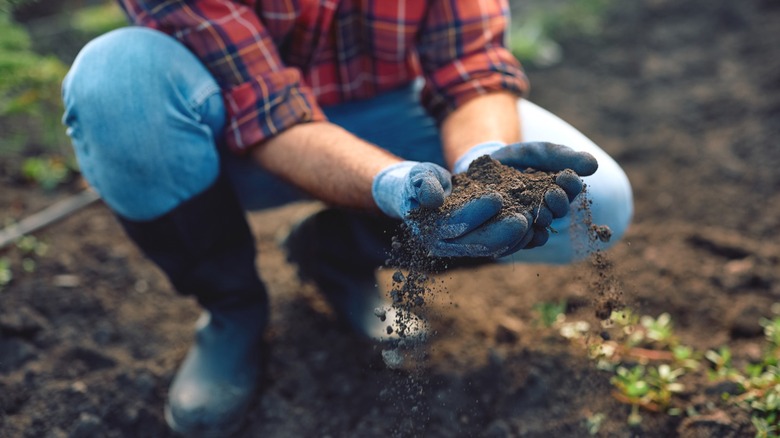
The roots of the partridge pea plant could help improve the quality of your soil. If it is low in nitrogen, growing partridge peas will have some benefits. Nodes on their roots convert nitrogen from the air and add a usable form to the soil over time, giving future garden plants a more nutritious foundation. Nitrogen is vital for a plant's development, as it ensures there's enough chlorophyll to absorb light and helps the roots take up water and other nutrients. Because it's relatively self-sufficient, partridge pea will tolerate poor soil quality. In fact, it grows well in dry, barren places, making it useful for controlling erosion.
Growing partridge peas to improve your garden
Since it's an annual and you don't need to worry about overwintering it, partridge peas can be grown in a wider variety of zones than you might expect. They generally grow well in zones 3 through 9. To ensure the best growth and the healthiest flowers, plant them in well-draining soil. Do your planting in the garden between winter and late spring, using scarification (mildly abrading the seed coat) and cold stratification to improve your seeds' germination rate. This plant is drought tolerant once established, but it will flower more reliably if you water it whenever the soil dries out.
During its many months of nonstop blooming, you should avoid using any type of pesticide. Since the flowers are highly attractive to a variety of pollinators, particularly bees, opt for organic pest control methods that are pollinator-friendly instead. When the flowers eventually fade in the fall, you have a few choices to make. Partridge pea won't create much competition for perennials established around it, but to control its reseeding, cut the stems back before the seed pods dry out. Just be sure to leave enough pods to reseed your garden! You don't want to miss out on next year's blooms.
Even after waiting for the seeds to be released, you can either cut the plant down to the base or leave it to provide shelter for wildlife through winter. However, one thing you shouldn't do is dig up the entire plant. The nodules on the roots are where the plant stores the nitrogen, so removing them from the soil prevents that nitrogen from releasing into your garden. For the healthiest soil for future plants to enjoy, leave the roots to break down naturally.