

10 Flowers And Herbs That Can Help Keep Rabbits Out Of The Garden
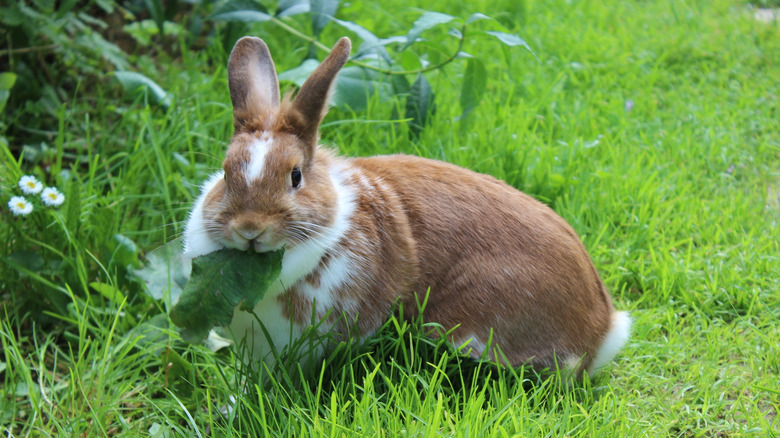
Few things are as heartbreaking as waking up to your prized plants disappearing overnight. Rabbis may be cute creatures, but their eating habits are anything but. Their uncanny ability to chew through seedlings, flowers, shoots, and vegetables is one nuisance most gardeners struggle with come spring. Fortunately, certain plants, with strong aromas, milky sap, toxic compounds, thick leaves, or prickles, can discourage them from entering the yard. Some such flowers that rabbits will not eat include begonias, spider flowers, periwinkles, blueminks, and blanket flowers, while pot marigolds, thyme, sage, oregano, and starflower round up herbs.
However, keep a few caveats in mind. Like us, rabbits have specific palettes that they have developed in accordance with their local and seasonal food availability. So, not all plants will be equally resistant to their browsing. Mixing up various flowers and herbs for variety can offer better control. Moreover, rabbits tend to go for soft, tender growth, new transplants, or well-fertilized plants. So, planting bigger or relatively more mature specimens can give you a better advantage in this battle with the pesky marauders. Finally, if they're really famished, there's quite nothing you can do — save for putting down a fence — to ward them away.
Spider flower
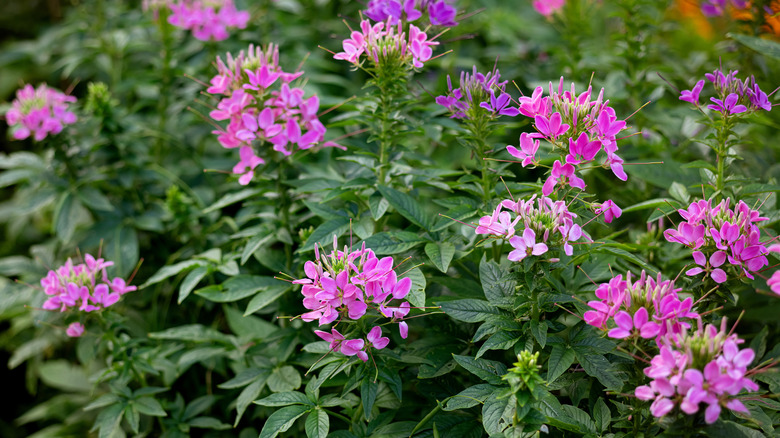
Also called grandfather's whiskers, spider flower (Cleome hassleriana) is a sun-loving annual that produces showy, star-shaped flowers all summer long, until frost kills it. Variable across variety, their leaves may be covered in prickles and spines, or in scores of hair that may make you question whether a skunk recently passed through your garden patch. This explains why rabbits may find them disagreeable and hence, keep out. Pollinators, including bees and hummingbirds, fortunately, share no such misgivings. Unless it's a hybrid cultivar that doesn't grow true to seed, spider flowers will reliably self-sow and dependably return next season.
Madagascar periwinkle
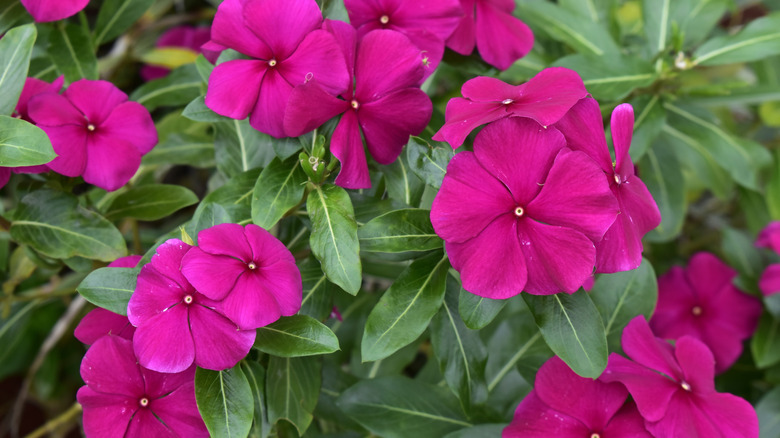
For a resilient beauty that deters rabbits and doesn't decline from heat, grow Madagascar periwinkle (Catharanthus roseus). Throughout the summer season, it'll regale you with waves of pink, white, or lavender, tubular blossoms, drawing in beautiful butterflies. All plant parts contain slightly toxic alkaloids, which explain why pests stay put, though this also means you may have to keep curious pets away to avoid harming them. Beyond zones 10 and 11, Madagascar periwinkle is grown as an annual in dappled or full sun. However, it is considered invasive in California and shouldn't be planted there.
Wax begonia
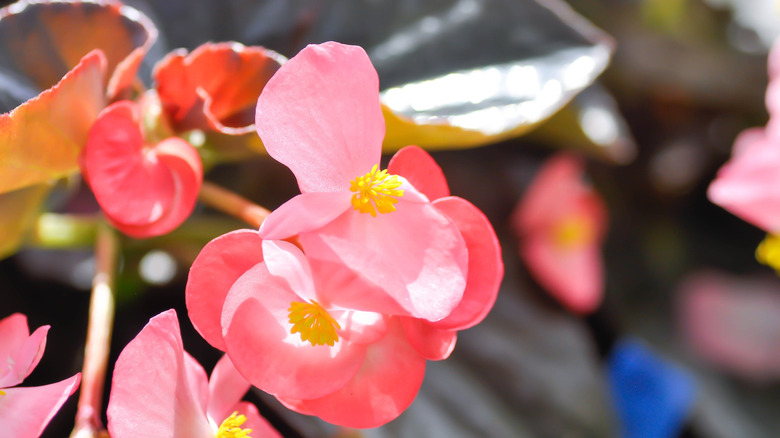
Wax begonia, or the Begonia Semperflorens Cultorum Group, is a highly popular bedding plant, grown for its heavy shade tolerance and attraction to butterflies. However, it can also assist in your fight against marauding rabbits and deer, who may avoid its waxy foliage and toxic sap. Except for zones 9 through 11, wax begonias are grown as annuals elsewhere. They prefer soils rich in organic content and may tolerate more sun — especially if they're the kind to produce bronze leaves — when consistently watered. Still, keep the beds mulched in summer to protect the roots from dehydration.
Floss flower
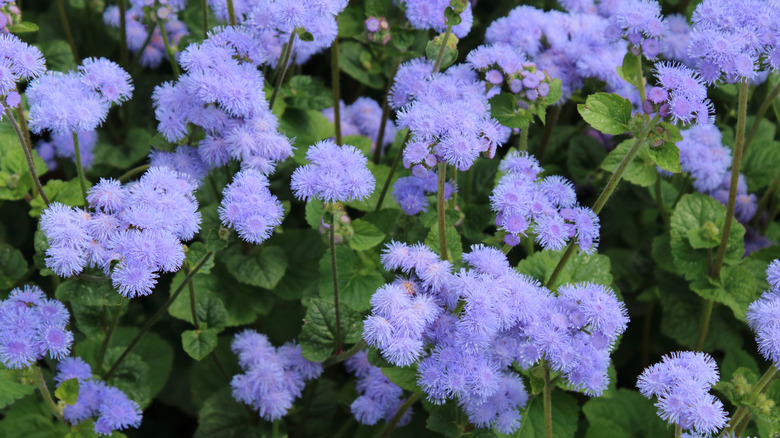
Floss flowers or blueminks (Ageratum houstonianum) maintain a profuse display of true blue petals from late spring through frost, making them some of the best flowers for long-lasting blooms. While you can do without deadheading them, doing so hastens the next flush and keeps the plant tidy. Moreover, it keeps their self-seeding in check. Use them to define borders, beds, or walkways where you may enjoy their pleasant fragrance and rabbit resistance. To further bunny-proof your garden, consider teaming them with pot marigolds or pink begonias. Keep them well-watered throughout the season for the best performance.
Blanket flower
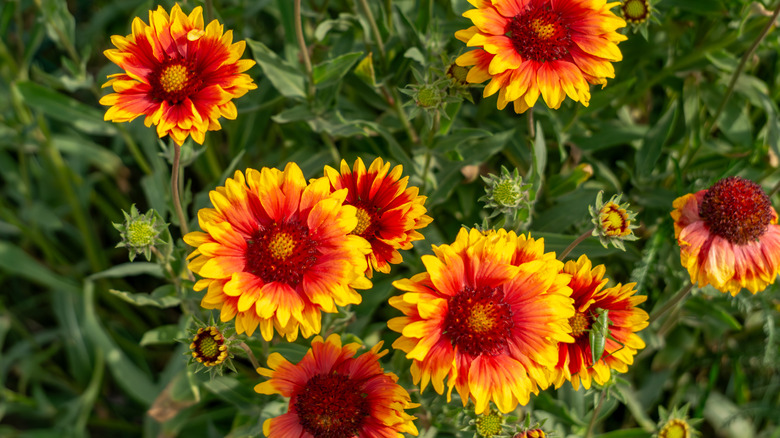
Comprising over 25 different varieties, native to different parts of the U.S., blanket flower (Gaillardia spp.) is a gorgeous plant with a poor reputation amongst rabbits, who tend to avoid it (possibly because of the hairy leaves). Pollinators and gardeners, in contrast, love the vivid, multi-colored flowers that deck its lobed foliage from spring through frost, without requiring much supplemental fertilization or irrigation. Grow it perennially in zones 3 through 9, provided your garden soil drains well. Otherwise, it may struggle during winter rains. Blanket flowers are short-lived, though frequent division and self-seeding enable a successful comeback. Direct contact with foliage may irritate skin.
Pot marigold
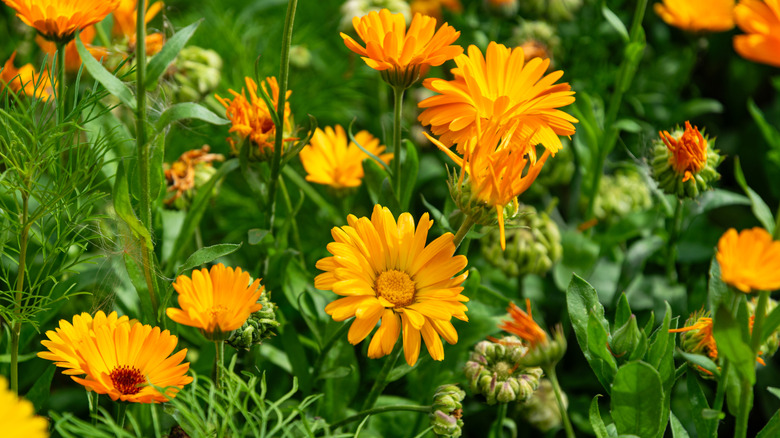
Generally, bunnies steer clear of pot marigolds (Calendula officinalis). This may be due to their leaves, which have a gummy texture and emit a strong aroma. Even their yellow or orange flowers, which bloom nonstop until hit by a hard frost, carry a bitter, spicy flavor. However, they're edible and add a solid color punch to salads and soups. Grow them in a full-sun, well-draining site to attract a variety of birds and pollinators to your yard, or cut a few for indoor arrangements. Although heat and humidity-tolerant, they may decline briefly in peak summer, bouncing back when it's cool.
Thyme
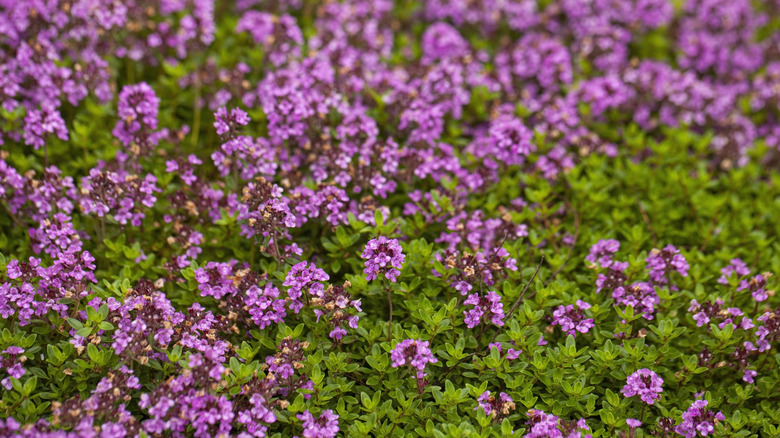
When you plant thyme (Thymus spp.), you can achieve over three objectives. You can cordon off your area to rabbits, as they despise its smell, without turning nectar-eating butterflies and bees. Given the abject variety, you can use thyme as a flowering groundcover or a low-growing evergreen specimen (in zones 5 through 9) in low-traffic areas, on rocky or sandy soils, or drought-prone areas. And if you're whipping up a Mediterranean diet or DIYing a fragrant poultice, you can harvest their leaves for it. Thyme thrives in full sun exposure and may require an occasional trim to remove legginess.
Starflower
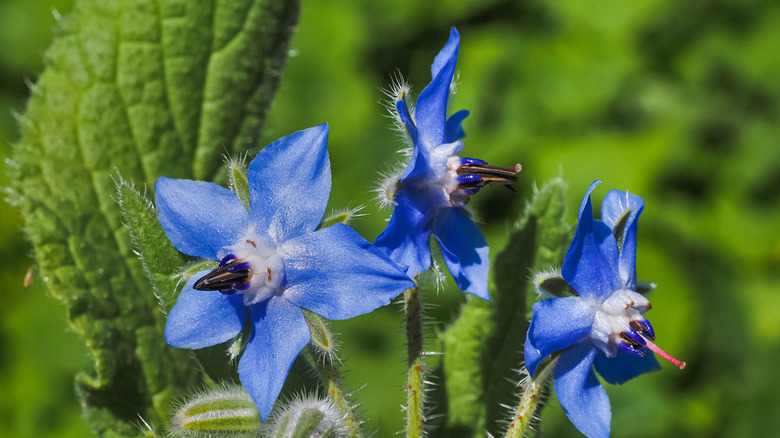
Starflower or borage (Borago officinalis) is a beautiful annual herb you, along with native, bumble, and honey bees, may like for the summer-blooming, blue, stellate flowers. However, rabbits may not enjoy its presence because of the hairy, heavily wrinkled leaves that resemble cucumbers in flavor and aroma. Starflowers are fairly adaptable, thriving even in nutritionally poor soils or short, dry spells. But they can be assertive about their territory due to self-seeding — you can control that by potting them up or pulling out the volunteers and composting them. Regular deadheading and cutting back the plant by ½ in mid-summer may spur regrowth.
Common sage
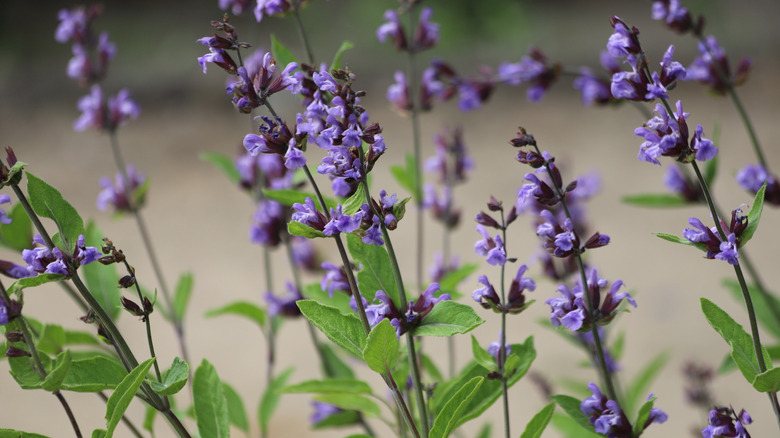
If you burn sage (Salvia officinalis) often as a part of a cleaning ceremony, you're already privy to its potency. As you can imagine, rabbits aren't big fans of it, and the fuzzy, leathery texture of the leaves further puts out any reservations. Fragrant, pinkish- or bluish-purple flowers, which bloom in summer, lure in pollinators. To minimize disease pressure, plant sage in a well-draining site where it's exposed to full sun. If you plan to harvest their leaves, stick to standard specimens, as breeders may not optimize for flavor.
Oregano
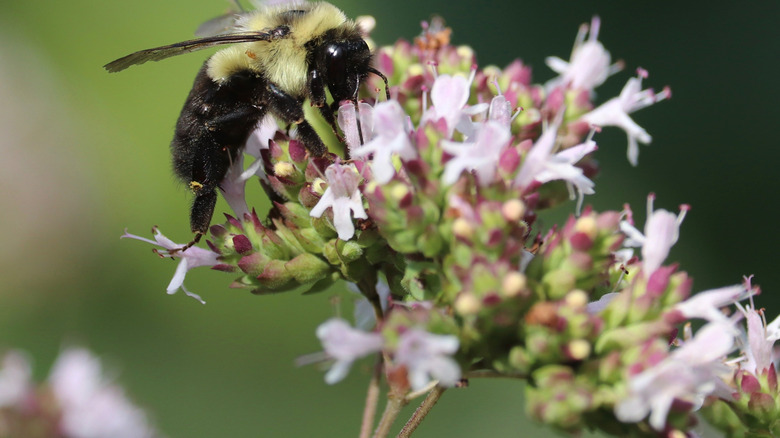
Those with alkaline soils may consider growing oregano (Origanum spp.). Its strong smell, apart from taking your pizza game to 10, conceals the presence of other plants in your garden that bunnies enjoy, creating an excellent protective barrier. Although oregano is highly versatile in that it can handle erosion, heat, drought, and soil leaching, it draws the line at drainage — like any other herb. Ensure good drainage to keep rot and fungal diseases at bay. It grows perennially in zones 3 through 10, and depending on the cultivar, may produce pink, purple, or white blooms in the summer.