

The Gorgeous Perennial That Loves Damp Soil & Attracts Hummingbirds & Butterflies
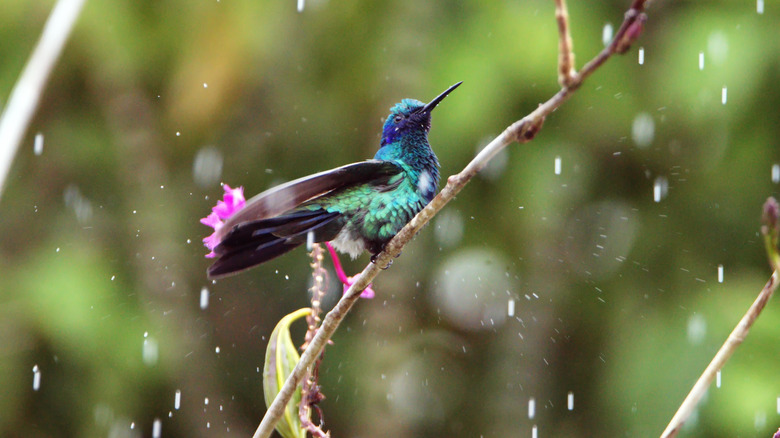
If bringing pollinators to your garden is a top priority, you'll want to plant perennials that hummingbirds and butterflies love to visit. Many of the most popular flowering plants recommended for pollinator gardens, like purple coneflower (Echinacea purpuria) and milkweed (Asclepias spp.), need well-drained soil and plenty of sun. Don't worry, though, if your garden is dominated by damp soil and lots of shade. There is still a flower that will thrive in your space while attracting tons of pollinators: ligularia.
There are subtly different types of plants within the ligularia genus, but the most common and effective for pollinators is arguably the summer ragwort, also known as the leopard plant (Ligularia dentata). This evergreen plant loves a shady, moist environment, is perfectly happy without direct sunlight, and is hardy in USDA zones 3-8. It can be a great addition to rain gardens for redirecting water, and works well with other shade-tolerant perennials like ferns and sedges.
Leopard plants have broad, shiny leaves that provide a lovely deep green understory all year round, but the real show begins in late summer. Ligularia dentata sends up tall spikes topped with yellow, daisy-like blooms, bringing bright color to your shady garden that lasts well into fall. Plus, hummingbirds, butterflies, and bees will appreciate the availability of nectar from these flowers late in the season.
Caring for ligularia is a breeze
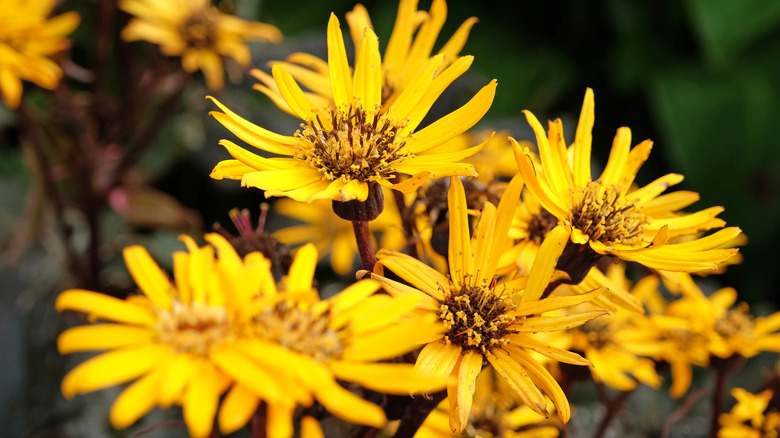
The leopard plant is very easy to care for, and doesn't suffer from disease issues or many pest problems; it's even considered deer-resistant. However, slugs and snails do like to munch on its big green leaves, but they can be stopped the traditional ways (by creating barriers or using iron phosphate).
This perennial prefers rich soil, so adding compost to your bed around ligularia will give it the nutrients it needs. Also, if you get a freeze, you may need to remove damaged leaves. Otherwise, this plant needs little intervention to continue to thrive. Just keep the soil around its roots nice and wet, watering deeply on warm days. Pollinators love water, too, so planting this perennial next to a birdbath or pond will bring in plenty of hummingbirds and butterflies. You can also encourage more flowers (and thus, more pollinators) by removing this plant's spikes once they are finished blooming.
Ligularia is not native to the U.S., coming from Asia, but this perennial is not considered invasive or a problem plant in any way. Many cultivars are available on the market, including varieties like "The Rocket," with its tall explosion of flowers, to a dwarf variety with shorter stalks known as the "Little Lantern." One popular variety is "Britt Marie Crawford," which has gorgeous purple stalks and leaf undersides. Whichever variety you choose, this perennial will bring its sunshine-colored flowers to even the wettest, darkest parts of your garden.