

The Colorful Bird You Don't Want To See In Your Yard
There are many common birds you don't want to spot flying anywhere near your yard, but one in particular is the ring-necked pheasant. A ring-necked pheasant (Phasianus colchicus) can cause plenty of damage to your plants thanks to its eating habits. As foragers, they finds food by scratching up soil with sharp talons, and are quite good at it. These birds can dig for dinner up to 3 inches deep, potentially wreaking real havoc on your garden and destroying roots in their search.
Because they are omnivorous, ring-necked pheasants are known to eat flowers, plant leaves, seeds, and the like, causing further damage to the current wellbeing and future success of your garden. They also eat organisms that help keep your soil healthy, such as earthworms. Although they might also consume things you don't want around (such as snails or certain insects), the upheaval they can cause while searching to both soil and plant structures leaves you with a net negative impact.
In addition, these birds also also quite noisy. Males in particular are known for the high-pitched squawks they let out throughout the day — just like a rooster's, but squeakier and more often. Luckily, encountering one in your yard is rare. Generally, these birds tend to prefer living in tall, dense grass or places with lots of overgrowth. If you have some acreage or live near farmland, you have a higher possibility of dealing with them than in a stretch of suburbia.
What to do if a ring-necked pheasant is in your yard
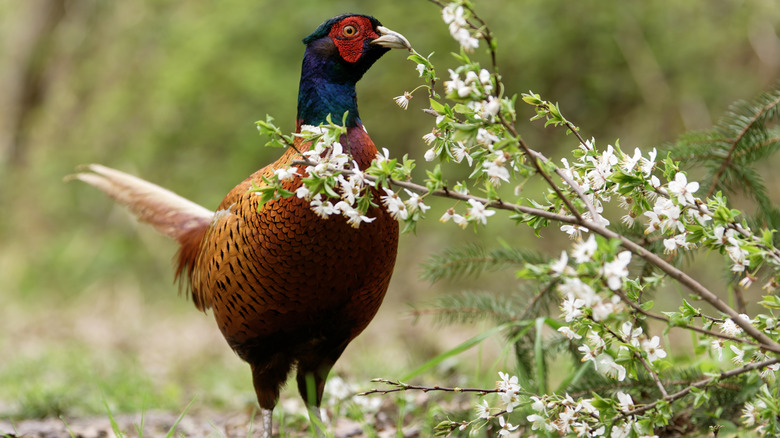
While creating a bird-friendly garden at home is a wonderful way to encourage avian visitors, losing your plants to hungry ring-necked pheasants who make a lot of noise isn't part of the goal. If this species is digging up your yard or making you lose sleep, there are plenty of ways to solve the problem. As a non-native species often used for hunting, local wildlife departments might be responsible for their presence since they often have game-stocking programs. If there is a sudden influx of the bird, it's worth contacting your state's wildlife management to discuss options for removal.
Because ring-necked pheasants are ground feeders, removing accessible food options can also discourage them. Move bird feeders up into trees and trim back dense foliage in your flower beds or along your fence so they have fewer places to forage or roost. This is in addition to other ways to keep birds out of your garden, including keeping upside-down crates over any seedings you don't want the pheasants to have access to. While it's unlikely that the birds can knock over a crate, placing something heavy (such as a plant pot or bucket) on top of it helps keep it from being shuffled over. Finally, you can use motion, noise, and light to scare off these birds, but switch up your efforts so they don't get used to what you have and start ignoring it. Pinwheels, wind chimes, and even balloons can do the trick.