

The Best Time To Fertilize Peonies (And How To Get More Beautiful Blooms)
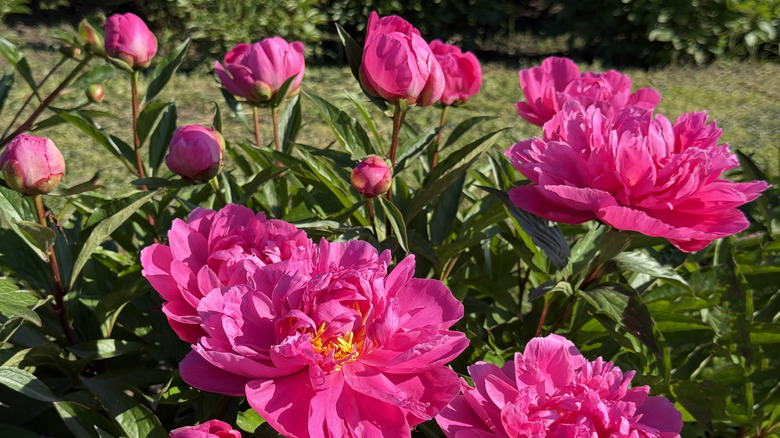
Prized by gardeners for its beautiful, big blooms, peony (Paeonia spp.) shines from late spring through summer, depending on the region and variety. A perennial in zones 3-9, peonies can produce plenty of attractive, deer-resistant flowers year after year. All they need is time and the right care. If you're thinking that adding a heavy dose of fertilizer to the soil early in the growing season is the secret to getting your plants to bloom, think again.
Too much fertilizer, too soon, and particularly the wrong type of fertilizer, can block your peonies, keeping them from producing those coveted blooms. Depending on your soil's type and condition, the right time to fertilize is after your peonies have finished blooming for the season. In some conditions, you may never need to fertilize your peonies at all.
The best way to know if your peonies need some food is to test the soil to see what nutrients are present. To do that, collect soil samples and either send them to a lab or use an at-home soil testing kit. The test results will tell you the concentrations of phosphorus and potassium in your soil, plus its pH. If the soil is heavy and full of nutrients, you may be able to skip fertilizing altogether. Only fertilize if you need to.
How to get the best peony blooms
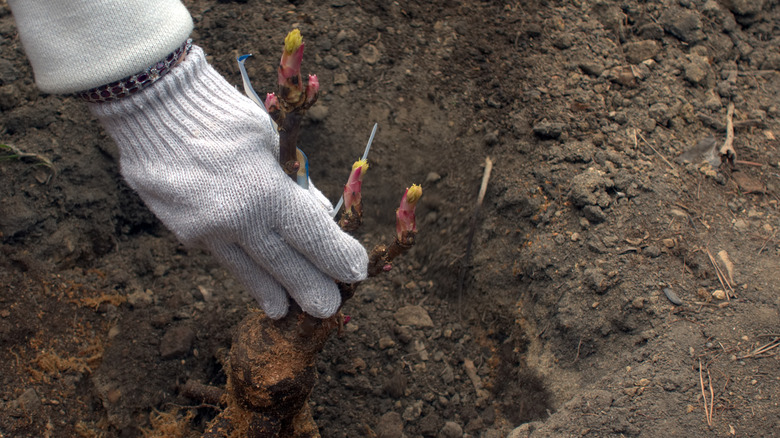
What's the trick for getting a bounty of beautiful peony flowers? Having patience and ensuring your peonies are planted in the right spot. Newly planted peonies may need up to four years to start producing flowers. Peonies are also full-sun plants, meaning they need at least eight hours of sun daily to produce blooms. If yours are planted in a shady spot, they'll be less likely to flower. Planting peonies too deeply in the soil also keeps them from flowering. For best results, the crown should be no more than two inches underground.
Too much fertilizer, particularly too much nitrogen fertilizer, will also block those peony flowers. The plant will grow a lot, but it'll be all foliage. On the flip side, too little fertilizer, or soil that isn't particularly nutrient-rich, will also keep your peonies from flowering. If the results of your soil test reveal that you need fertilizer, choose one with a lower nitrogen content and more phosphorus, such as a 6-24-24 fertilizer. Add a few tablespoons to the soil in the early fall, up to 18 inches away from the plant's crown, or around its drip line.