

The Gorgeous Self-Seeding Flower That Is Highly Attractive To Birds & Butterflies
A colorful flower garden is great, but what makes it even better is having a backyard filled with winged visitors. Not only are they enjoyable to watch, but birds and butterflies are extremely beneficial to have around. Most vegetable and fruit plants require pollination, so attracting butterflies, hummingbirds, and other pollinators can lead to a better crop. Many bird species feed on insects (including the unwanted ones), so bringing in more feathered friends can be an easy natural pest control remedy. Plus, who can resist their beautiful songs? To fill your garden with butterflies and birds, you'll want to choose flowers that serve multiple purposes, like foxglove beardtongue (Penstemon digitalis).
Foxglove beardtongue is a gorgeous clump-forming perennial that is highly attractive to birds and butterflies. It's a native plant that naturally grows along wood margins, woodland edges, and open forested areas across the eastern and central United States. In late spring, showy, white or lavender, tubular blooms emerge, luring in a variety of pollinators, including butterflies and hummingbirds. Their flowers often last through mid-summer, which are soon followed by pretty, red seed pods. Each of the pods is filled with seeds that songbirds relish. What the birds don't eat will disperse nearby, ensuring you'll have new butterfly and bird-attracting flowers for years to come.
How to grow foxglove beardtongue to attract birds and butterflies
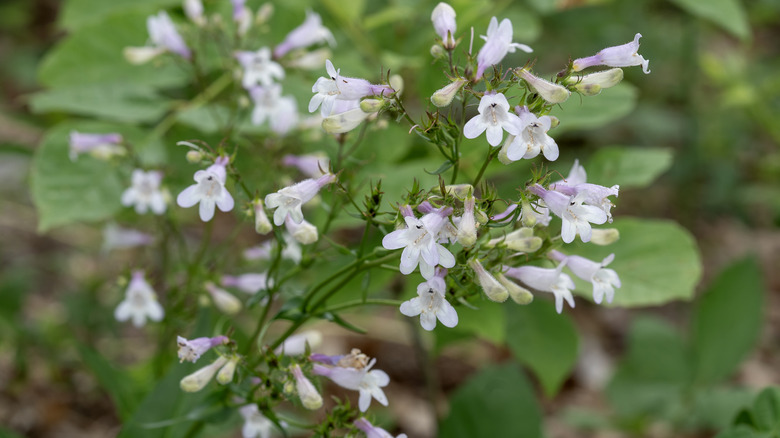
Even gardeners who lack a green thumb can easily grow foxglove beardtongue. It's low-maintenance and fast-growing, though it does have a few basic requirements. This plant can tolerate nearly any well-drained soil type, including clay. That said, it prefers moist to dry loams. Because it happily grows in full sun to part shade, it can be a great landscaping solution for shady areas. You can often find young foxglove plants in the nursery, but it's also easy to grow from seed. For starter plants, it's best to add them to your garden in spring once the there is no longer a risk of frost. If planting seeds, fall is the best time to do so. Alternatively, you can keep them in the fridge for three months to cold stratify the seeds and then sow outside once spring arrives. In Zones 3 to 8, foxglove beardtongue will return each year, along with some new plants from the scattered seeds.
Because foxglove beardtongue grows 2 to 4 feet tall, it makes a stunning border plant in pollinator and bird gardens. This tough plant is also a great one to add in harder-to-grow areas, like a rock garden. For a little more color, you can plant 'Husker Red', a variety that features rich, burgundy-colored leaves. Although the flowers themselves are typically white or purple, adding pops of red is a surefire way to attract more hummingbirds.