

If You Plant One Flower By Your Birdbath This Year, It Needs To Be This Long-Blooming Favorite
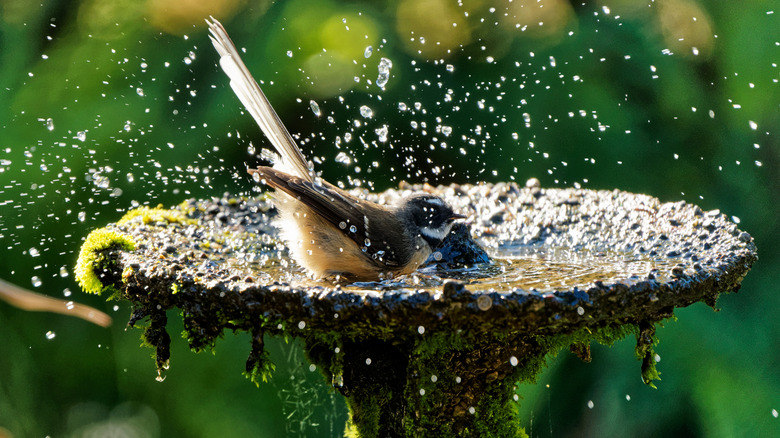
Purchasing a birdbath and placing it in your garden may be one step towards building a bird lover's paradise in your own backyard, but it is only the beginning. If you want birds to actually visit that bath, you have a bit more work to do. A good place to start is by planting flowers near your birdbath that will attract your favorite feathered friends.
Rudbeckia hirta, better known as black-eyed Susan, is a short-lived perennial that typically grows in the Eastern U.S. Because birds are such visual creatures, the cheery yellow flowers of the black-eyed Susan are hugely attractive to them. Birds will flock to your birdbath when you place these colorful flowers around it. Once birds discover the fresh water you've conveniently placed nearby, they won't be able to resist! The sturdy stems of black-eyed Susans also provide smaller birds a place to rest. The plant blooms from June to September, during which time it may attract nectar-eating birds like hummingbirds, along with other pollinators. Later, after the flowers have dried up, small birds like chickadees and goldfinches will be drawn to the seed-filled brown cones left behind.
How to care for black-eyed Susan in your garden
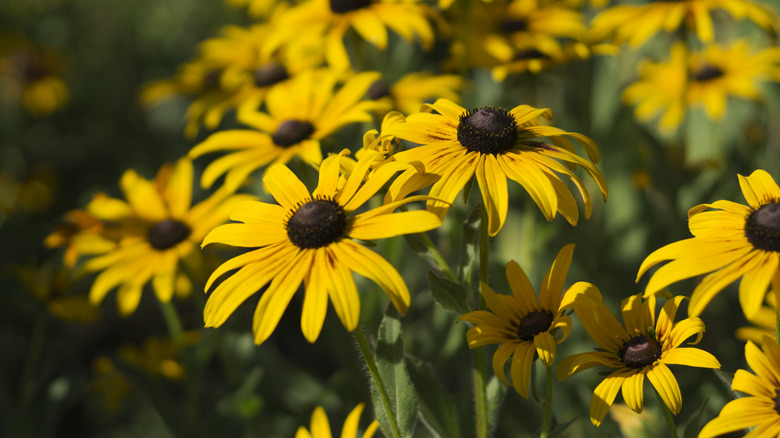
Though they may look similar, there are plenty of differences between a black-eyed Susan and a sunflower. Black-eyed Susans are gorgeous flowers that are hardy in USDA Zones 3 to 9 and love the sun, so they are best planted in a location with plenty of sunlight. They will tolerate partial sun, but may not produce as many flowers in such a location. New plants should be placed in the ground in the spring after the last frost has passed. When to plant black-eyed Susan seeds depends a bit on your location, but in general, seeds should be sown about 6 weeks before the predicted first frost for your area. They prefer well-drained soil, but can adapt to many soil types and are heat and drought-tolerant. Black-eyed Susans even make great cut flowers, and cutting them for bouquets will encourage even more flowers to bloom.
If your goal is to attract birds, you shouldn't cut your plants back after they have gone dormant in the fall. This will allow birds to feast on the dried seeds and continue to use the drying stems as protection during the winter. Leaving the seed cones intact also provides the added benefit of allowing your black-eyed Susan to self-seed — which means even more sunshine yellow flowers come spring.