

What Happens If You Use Pine-Sol As A Weed Killer?
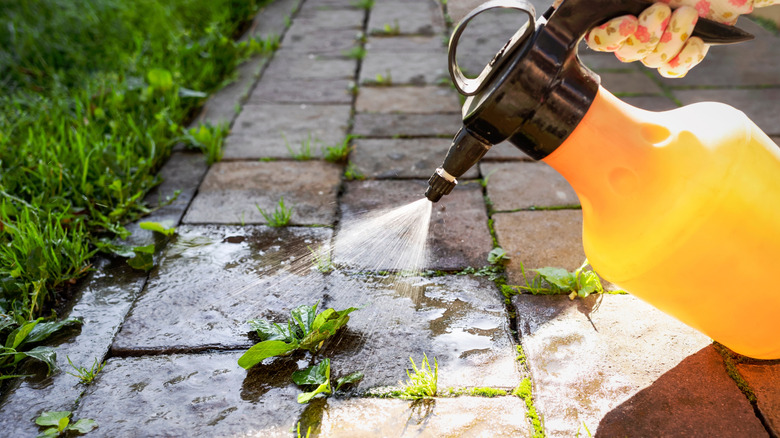
If you're searching for one of the best weed killers for all kinds of lawn weed woes, you might be tempted to reach for a common household product to get the job done without relying on a separate, store-bought solution. Pine-Sol, a multi-surface cleaning formula, is a commonly recommended household solution. It's touted on social media and in online articles as an effective weed killer, and since just about everyone has a bottle of this cleaner at home, it sure seems like a handy option. However, Pine-Sol may not be the effective weed-killing answer you're seeking, and it may have some other unintended consequences when applied to your lawn or garden.
Alexis Rochester, Investigative Chemist at Chemistry Cachet, spoke exclusively to Hunker about the effectiveness of Pine-Sol on frustrating weeds, acknowledging that "it is not very effective." She shares that Pine-Sol's "ingredients can damage the leaves of the weeds, causing them to wilt and die, like the way vinegar works to kill weeds." Rochester acknowledges, however, that "you would need a very concentrated dose to see effects."
If you do want to try Pine-Sol as a homemade weed-killing solution, it's important to know that it's best applied on small weeds, not large growths. "Pine-Sol might possibly kill small weeds due to it being moderately acidic and containing surfactants and solvents," Rochester says. However, don't expect the common household cleaner to completely resolve your weed woes. "It might knock back small weeds temporarily, but it's not as effective as vinegar-based weed sprays, which are more acidic," she adds.
Be careful about where you apply any homemade weed killer
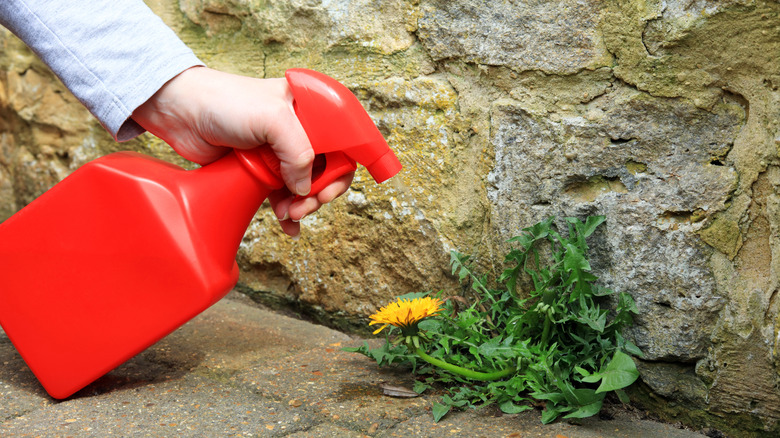
Hoping to stick with a homemade weed-killing solution for your lawn or other areas, like the cracks in concrete or between patio pavers? Speaking exclusively with Hunker, Rochester recommends trying a different DIY option to effectively eliminate those unwanted growths. "Using a DIY weed killer with a vinegar base is still the better choice to kill weeds in a pinch," she explains.
Before you whip up a vinegar-based weed killer (like a natural baking soda and vinegar spray) and start spraying it on any weeds you come across in your home's outdoor spaces, it's important to understand the benefits and drawbacks of using homemade weed killers. Typically, homemade weed solutions can impact both weeds and your lawn. "Any homemade weed killing option is non-selective," Rochester says. "This means it doesn't target certain weeds or plants, it will harm the leaves of anything you spray, including grass." As a result, if you spray your DIY weed solution broadly rather than use it selectively, you just might wind up causing unexpected damage to your lush lawn or garden's other plants. Instead, choose your application areas wisely, Rochester says: "Homemade weed killers are best to use in areas like sidewalk cracks or in rocks. You don't want to use them to treat lawns or flower beds because [they] will harm any plant."