

The Self-Seeding Perennial That Transforms Your Garden With Nonstop Blooms
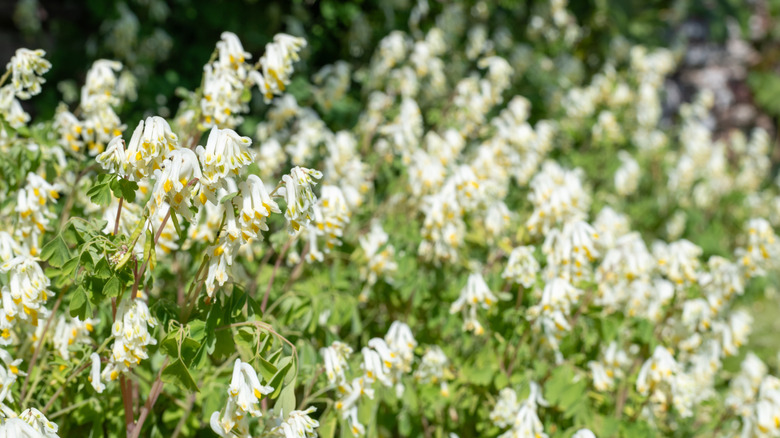
There are some gorgeous self-seeding flowers that come back every year, but many of them are annuals. If you want a self-seeding perennial, a flower you should add to your list is white corydalis (Corydalis ochroleuca or Pseudofumaria alba). This short-lived perennial is native to parts of Europe, and it grows lovely white or pale yellow flowers that last from late spring through early fall. Although it isn't native, white corydalis is generally not considered invasive in the U.S., which is good news for gardeners hoping to grow this lovely plant.
White corydalis has lovely green foliage that looks somewhat delicate, but the real star of the show is the bell or tube-shaped flowers. The flowers are primarily a bright or creamy white with yellow centers, and they grow on thin stems that stretch to only one or two feet high. Each plant only spreads a foot or two horizontally as well, making them a good fit for smaller gardens. Depending on where you live, they may bloom as early as May or June and continue on through October and even into November. Once the flowers fade, white corydalis produces seeds that will self-sow readily, meaning even a small collection of corydalis flowers will grow over time.
If you're looking for seeds or seedlings online or at your local garden center, you should keep your eyes peeled for both botanical names. Although Pseudofumaria alba is currently considered the correct name, you may still see its old name, Corydalis ochroleuca, in use. Both names refer to the same plant, so don't stress over finding a particular one! It can be confusing when plants are reclassified and their names change, but don't let that stop you! White corydalis flowers are gorgeous enough to be worth the slight confusion.
How to grow white corydalis
White corydalis plants thrive in the mild to cool weather of zones 5 through 7, but you may be able to grow them in containers if you live somewhere with more extreme temperatures. To keep your white corydalis in the best shape, plant them in well-draining soil. It doesn't need particularly rich or loamy soil and will grow in rocky soil of moderate quality, making it a good choice if you're designing a rock garden. Once it's established, white corydalis doesn't need too much care, so you can mostly sit back and enjoy its beautiful blooms. Water it when the soil dries out, and try to keep it cool. It can develop powdery mildew in hotter regions, so make sure it has proper air flow. White corydalis doesn't often have pest problems, but it can become a target for slugs and snails on occasion.
You don't need to deadhead or prune white corydalis, but you can cut the flowers back for a few reasons. If they dry out during a hot summer, cutting them back can allow the plant to focus on sending up new ones once it has more water. You may also want to clip a few simply to use in your summer flower arrangements, since they look so sweet and delicate. However, clipping the flowers can also be used to control their reseeding. If you want some new flowers, but don't want them to overwhelm your garden, consider cutting some of the stems off before they can produce seeds.