

Plant These Two Flowers Together In May For A Butterfly-Filled Garden In Summer
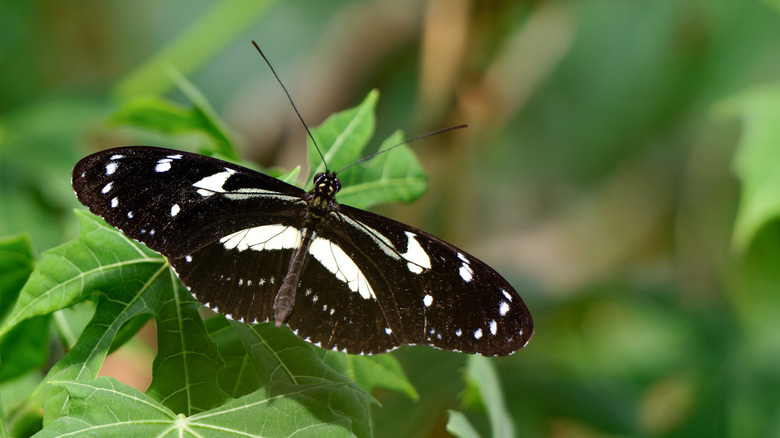
If you want a garden alive with bright blooms and flitting butterflies by summer, May is the time to act. Planting the right flowers doesn't just boost your garden's beauty. It also creates an appealing buffet for pollinators. Not sure where to start? Shasta daisies (Leucanthemum x superbum) and petunias (Petunia spp.) provide a vibrant display for gardeners and are easy-to-grow options that attract butterflies.
Grown together, Shasta daisies and petunias are visually stunning. Flowers of different shapes, sizes, and colors are appealing to both people and butterflies. Petunias are colorful and low-growing, available in pinks, purples, yellows, and with multi-colored petals. While petunias tend to remain under 18 inches tall (depending on the variety), certain varieties of Shasta daisies can reach up to 4 feet. So, planted together, they can create a layered display. Colorful petunias can also provide a vibrant contrast to the Shasta daisies' white petals with a yellow center.
Both Shasta daisies and petunias are popular amongst home gardeners because they are bright, long-blooming, and low-maintenance plants. They are pretty and quaint-looking, ideal for border beds and relaxed, cottage-style gardens. If you plant young plants early, you and local butterflies can revel in the pretty flowers by summer. These two are both nectar-providing plants, so they attract adult butterflies.
Factors to consider when planting Shasta daisies and petunias
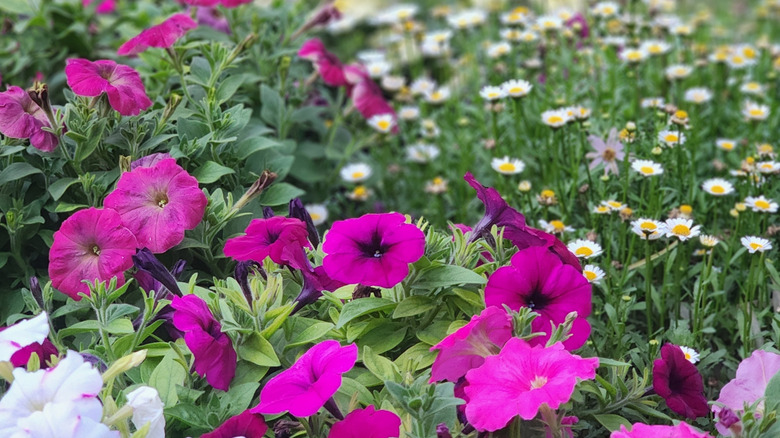
Both of these flowers prefer full sun. So, their planting location appeals to butterflies since they rely on warmth from the sun to maintain their body temperature. You'll want to make sure that the Shasta daisies don't shade out the petunias when they're grown side-by-side. Place the daisies toward the rear of garden beds and petunias toward the front so they can get enough sunlight. Shasta daisies and petunias prefer well-draining soil, so they enjoy the same ground conditions. Both can be grown as ground cover or in containers, so there's flexibility in terms of placement too. Petunias can be grown as perennials in zones 9 to 11, and are annuals elsewhere, while Shasta daisies are hardy in zones 4 to 9.
If you want to attract butterflies throughout the season, these two are great flowers to plant in May for summer blooms. Just ensure they go in the ground after the risk of frost has passed. Both need to be started earlier than May if you want to grow from seed. So, buying established starter plants is the best way to get flowers by summer. These easy-care plants aren't prone to serious pest issues, likely why they're a favorite amongst gardeners. However, aphids and slugs can be a common problem when growing petunias and Shasta daisies. To prevent pests and other issues like root rot or fungal disease, ensure well-draining soil and prevent over-watering. Both plant types can do poorly if there's too much excess moisture.