

The Big Mistake Everyone Makes When Growing Rosemary

There's a lot to love about growing rosemary. It produces gorgeous purple flowers, boasts interesting foliage, and who doesn't love having fresh herbs for their meals? Plus, it's an easy-to-grow herb that can help keep pests out of your garden. Rosemary is also known for its drought tolerance, however, which means that one mistake gardeners often make is underwatering it. Like every plant, proper moisture is necessary for roots to transport the nutrients that help it grow and thrive.
Unfortunately, underwatering can be somewhat tricky to diagnose, especially with rosemary plants. Its needle-like leaves don't wilt the way other herbs and most broadleaf plants do. For added confusion, some signs are the result of either overwatering or underwatering, including stunted growth, leaf loss, and an increase in pest or disease issues. If your plant has any of these symptoms, you'll need to investigate further.
With underwatered plants, the soil may shrink toward the middle, especially in potted plants, so you may notice a gap near the edge of the pot. It's also a good idea to check the soil with your finger. If the top couple of inches are dry, it's likely ready to be watered. To be sure, you can examine the roots: Underwatered rosemary will have white roots and extremely dry soil, while overwatered plants may have mushy brown roots, indicating root rot.
How often should you water a rosemary plant?
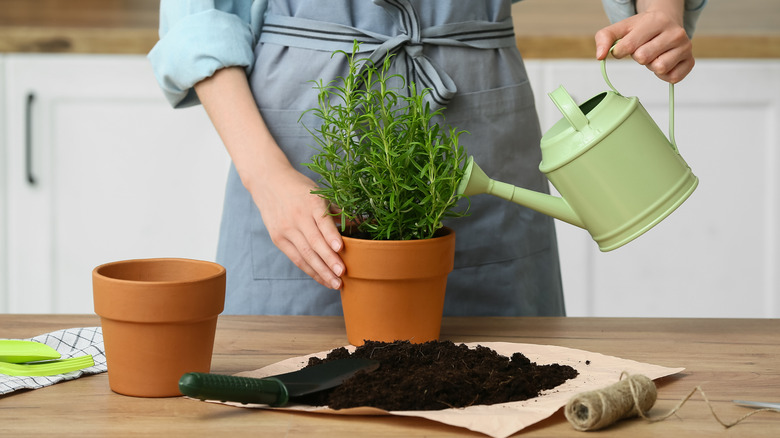
How often you should water rosemary depends on its age and how you're growing it. Young plants will need to be watered more often than established plants. For the first few months, you'll need to moisten the soil every three to five days. Once it has an established root system (about 3 to 4 weeks for cuttings, longer from seed), you can reduce watering to every one to two weeks. That said, don't rely on a watering schedule alone. Mature rosemary plants like their soil to dry out, so always do the finger test before grabbing the watering can.
One common problem with rosemary plants is overwatering. In order to avoid this, some gardeners will only give their plants small sips of water each time. When you give your herb just a tiny bit of water, however, there sometimes won't be enough liquid to soak into the soil and down to the roots. So, make sure the soil and root ball are completely saturated. Herbs like rosemary also suffer if they're grown in the wrong container. If the pot is too small, the soil can dry out more frequently than expected.
How to revive an underwatered rosemary plant
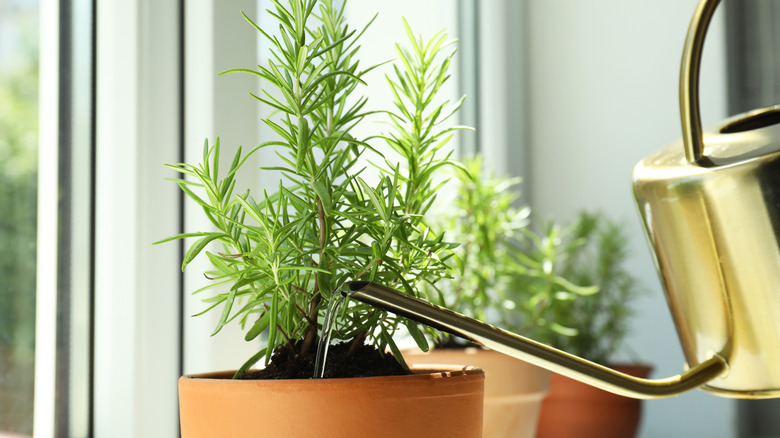
If you think your rosemary is underwatered, don't panic: With a few tweaks, there's a good chance your plant will bounce back to life. First, trim off any dead or damaged stems and leaves. For container plants, check to see if it's rootbound — in that case, it's time to upgrade to a new pot. If so, give it a good watering before moving your rosemary to its new home. To make sure it's fully saturated, you may need to submerge the container in water. Remove as much old soil as you can, untangle the roots, and place your plant in a new, clean pot with drainage holes and fresh soil. Remember that potted plants can dry out quickly.
To care for your rosemary plant in the future, make sure to check the soil moisture every couple of weeks. Wait for the soil to dry out before thoroughly watering it. When growing in the ground, your plant likely won't need much supplemental watering unless there's a prolonged dry spell. Keep an eye on it during the hot, dry months in your area. In addition to making sure your plant gets enough water, make sure not to overcorrect by watering it too much. Additionally, you may want to move outdoor containers to a covered location during particularly rainy periods, and make certain any in-ground plants are in well-draining soils.