

The Rare Vintage Vase To Snag Immediately If You See It At A Thrift Store
We may receive a commission on purchases made from links.
Vases have a rich and unique history, originating as mere utilitarian objects before cultures around the world turned them into pieces of art, storytelling, and wealth. The most expensive vase sold to date, a colorful porcelain work from 18th-century China, was auctioned for $41.6 million. While you (probably) won't find a vase quite that valuable at your local thrift store, it's always possible to stumble upon a rare vintage find at estate sales that's selling for a few bucks. Some of those hidden gems come from the Fenton Art Glass Company.
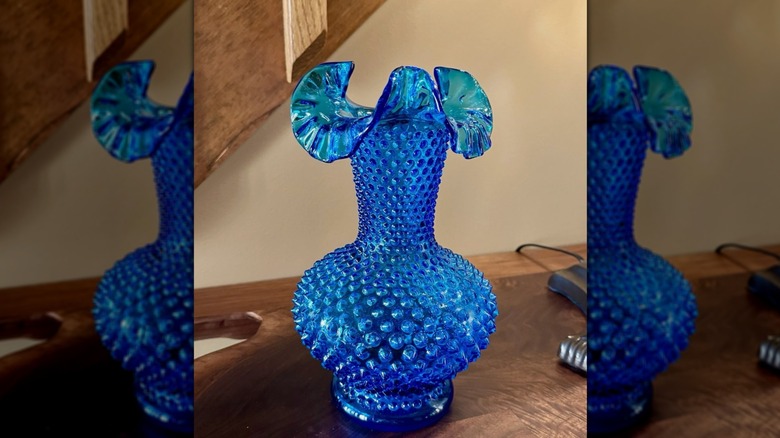
Founded in 1905, Fenton became the largest producer of handmade colored glass in the U.S. before ceasing operation in 2011. The West Virginia-based manufacturer found early success with its 1907 creation of carnival glass, which gave items an iridescent sheen. Fenton later found a niche in the '40s producing hobnail glass, identifiable by its nubby exterior. Hobnail milk glass particularly suits a charming farmhouse style, while carnival glass leans into the glitz and glam of Art Nouveau décor.
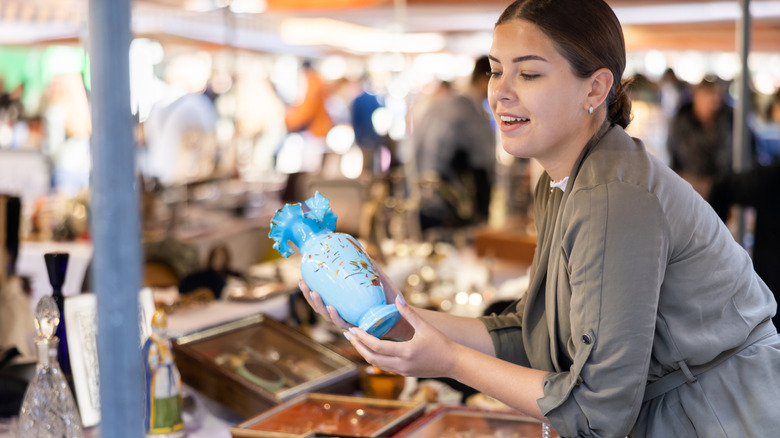
Today, you can track down Fenton glassware in multiple places. Secondhand stores, estate sales, and online auction sites are all viable options. A TikTok user purchased two Fenton vases at a garage sale for $3 and flipped them for a profit of more than $800. Not all Fenton vases are that expensive – some are listed as low as $15 – but the right vintage souvenir can lead to a nice payday or, if kept, elevate a flower arrangement in your home.
Why are Fenton glass vases such a valuable vintage find?
Even though Fenton isn't a high-end brand like Tiffany and Murano, it remains popular among glassware enthusiasts due to its century-old history, eye-catching designs, and handmade craftsmanship. The price of a vintage Fenton vase depends on its age, rarity, and condition – factors that apply to most antiques. Naturally, older artifacts in better condition tend to be more valuable. When it comes to Fenton specifically, the color of the glass can also affect its value, as some colors weren't as widely produced as others, making them rarer. Lastly, size is a price determinant in the world of glassware, as larger items typically sell for more.
All of that is a whopping amount of detail to wrap your head around while perusing miscellaneous items on thrift store shelves. On the bright side, it's possible to identify a Fenton vase without in-depth glassware knowledge. In 1970, Fenton began labeling its pieces with a maker's mark directly on the glass. Paper stickers were used as markings prior to 1970; however, those could easily be lost or removed over time.
In lieu of a maker's mark, certain design details may indicate a vase is a Fenton original. Shimmering carnival glass, a textured hobnail pattern, and ruffled, flower-like rims are characteristic of, though not exclusive to, Fenton. Of course, Fenton vases came in countless shapes and colors over the brand's one hundred-plus years, but such a vast collection lends itself to everyone, whether you're looking for a vase to tie a room together or simply resell.