

The Clever Reason People Are Sticking Aluminum Foil To Their Walls
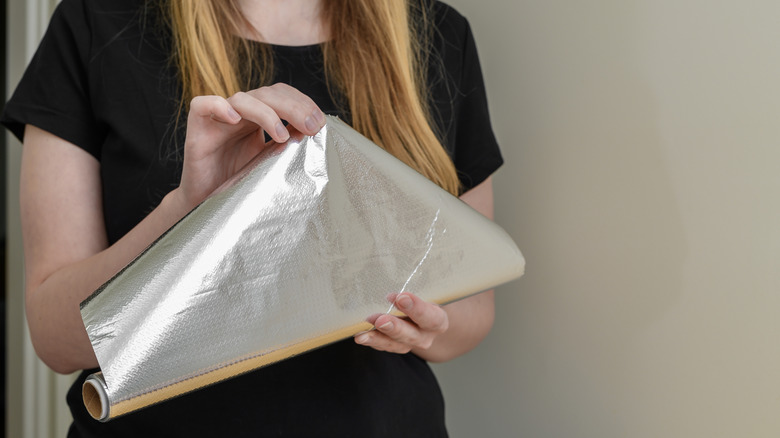
If you seem to have a moisture problem in your home, don't panic just yet! After noticing their walls seemed to be literally sweating, some people have come up with a solution: In one Reddit thread, commenters suggested using a small piece of aluminum foil and some tape to discover the source of the damp in less than a day. If you're lucky, you might not have a major structural issue that requires an expensive contractor — and, depending on the results of this clever trick, it may be possible to solve the issue with a simple dehumidifier.
This genius aluminum foil hack is very easy to set up. First, dry off a section of the wall to the best of your ability. This might mean using a cloth to remove any visible condensation, then aiming a space heater at the area until it feels dry to the touch. Once that's done, cut a piece of aluminum foil that's no bigger than the dry spot. Use a heavy-duty tape to attach it flush to the wall. You have to trap the air for the test to work properly, so be sure to tape down the foil's entire perimeter, not just its corners. Leave the foil for a day — longer if you can — then come back to check where the majority of the moisture has accumulated. If it's on the outside of the foil, it means you have a condensation issue in the room. If it's between the foil and the wall, it means the damp is coming through the wall itself.
What to do after finding the source of the moisture
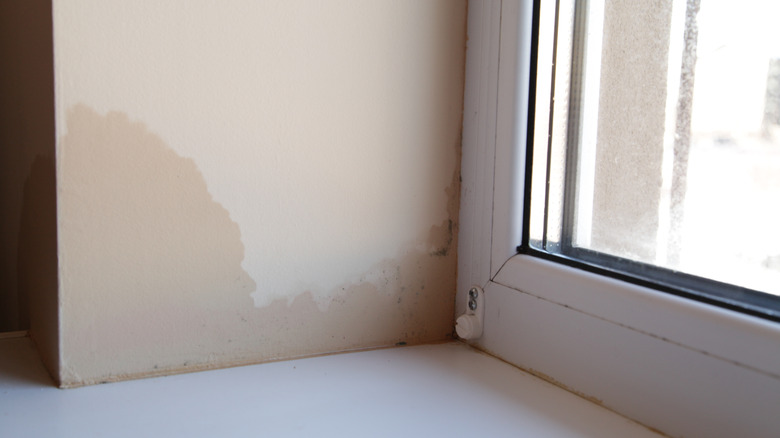
Moisture on the outside of the aluminum foil will be the easiest to fix. Condensation on your windows and walls is typically the result of poor ventilation. So, to get rid of it, you need to reduce the airflow in the space and dry out the room. This might be as simple as leaving the door or window cracked while you're doing laundry or taking a shower, allowing moisture to escape. You can also invest in a dehumidifier to make things easier; some of these machines even comes with automatic shut-off features, so you don't need to worry about running them when you aren't home. Alternatively, you could look into how to dehumidify a room without a dehumidifier.
Moisture on the inside of the tinfoil is a little bit more serious. If damp is seeping out of the walls in your basement, there could be an issue with your home's foundation: It may be cracked or hasn't settled properly, meaning it's in need of repairs to seal things off again. This can be an expensive fix. Other culprits include poor grading in your yard — which causes water to pool along the outside of your walls rather than being directed to street drains — as well as simpler issues, like a missing or broken downspout.