

This Plant Attracts Hummingbirds & Stops Weeds From Taking Over Your Garden Beds
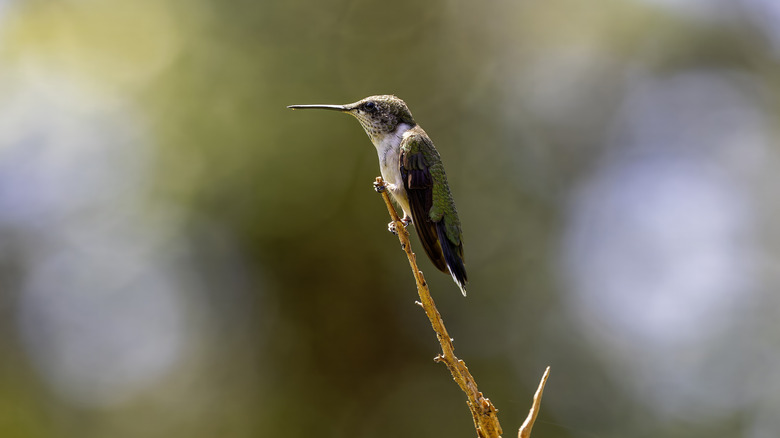
If you're hoping to attract hummingbirds without a feeder, flowers are one of the best ways to do it. They can provide nectar and attract insects, both of which hummingbirds love to eat. There are plenty of flowers that attract hummingbirds, too — but did you know that some of them come with other benefits? Bugleweed (Ajuga reptans) is a perennial in the mint family that hummingbirds love, but it also grows densely enough to keep weeds at bay.
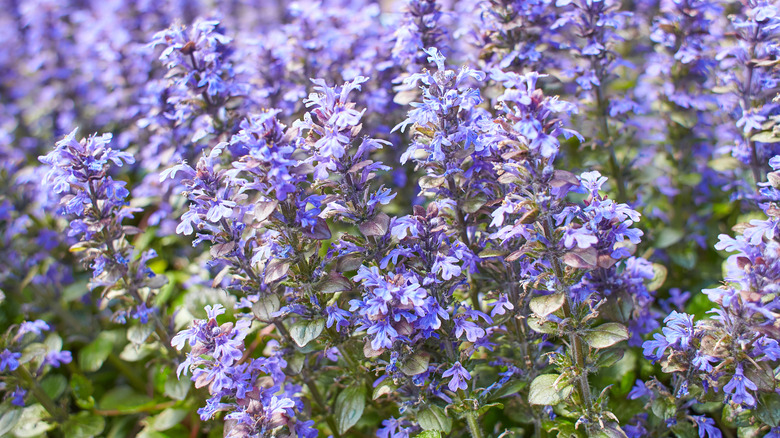
Bugleweed flowers are typically blue or purple, although they can be white as well. The individual flowers are small, but they grow clustered together on flower spikes that rise to roughly a foot over the leaves. The flowers are tube-shaped and full of nectar for hummingbirds to drink. Bees enjoy the flowers, as well. Spreading around the flower spikes are flat leaves that can be dark green, silvery, or even purple. The leaves form a thick matt, which is what prevents weeds from popping up around them. Bugleweed is generally easy to grow, so even beginner gardeners can enjoy them.
However, as with any non-native plant that grows thickly, there is a risk that bugleweed may be considered invasive in certain regions; before growing it, you should check the plant's current status in your area. You can use barriers or grow it in a container to control the spread. Clipping the flowers before they produce seeds can also help keep it in check. Just be sure to leave the flowers long enough for the hummingbirds to enjoy! Use the clipped flowers as beautiful cut-flower decor, and leave the leaves to keep the weeds away.
How to care for bugleweed plants
Keeping your bugleweed healthy will help it keep weeds at bay and grow plenty of flowers for the hummingbirds. Bugleweed is hardy in USDA zones 3 through 10, so you only need to worry about climate if you live in the more extreme hot and cold areas of the U.S. If you do live in one of the few zones it isn't hardy in, you can grow bugleweed in a container. It'll look great in a DIY upcycled container garden – just remember to move it back outside for the hummingbirds to drink from. In either your garden or a container, bugleweed grows best in moist, well-draining, loam soil. Mixing compost into the soil can improve your garden soil needs help. However, avoid planting them in slow draining soil or areas where water tends to pool, as they can develop fungal infections if the soil is too wet.
Bugleweed plants are tolerant of a range of lighting types, from full shade to full sun. However, it grows best in partial or dappled shade. In full sun, the leaves may weaken and lose some of their color, while too much shade can result in fewer flowers. You'll want strong leaves to suppress the weeds and plenty of flowers for the hummingbirds to enjoy, so finding the right balance is important. Make sure your bugleweed is getting a mix of shade and sun for the healthiest growth.
Once established, bugleweed is hardy and adaptable, so you can mostly sit back and enjoy watching the hummingbirds visit. After the hummingbirds have had their fill and the flowers are beginning to wilt, deadhead them to increase airflow and reduce the risk of fungal infections. Water them when the soil is dry and fertilize them lightly in spring.