

10 Unexpected Ways To Use Rice Around Your Home (Beyond Just Cooking)
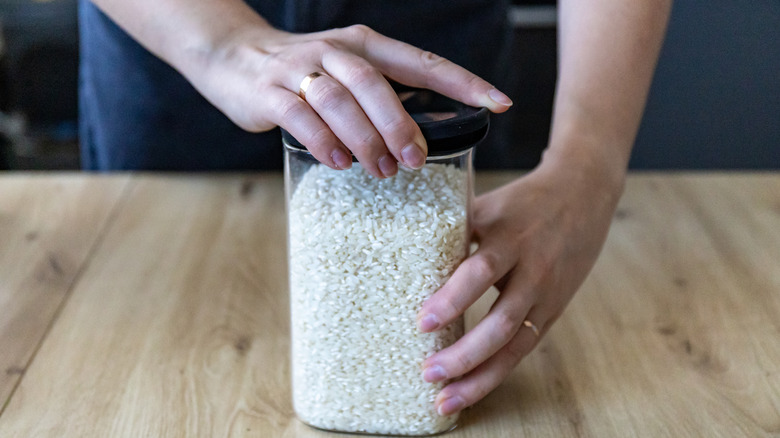
Rice is one massively popular ingredient. As the primary food staple for over half of the world's population, it's a true household essential that can be found in plenty of pantries. Rice is so widely used for countless recipes around the world because it's a highly versatile grain. Plus, rice is easy to keep on hand since it can be stored for long periods of time (almost indefinitely, for some varieties) and it is inexpensive. But its versatility isn't limited to the kitchen — you can grab this grain and put it to use around your household in some very surprising ways. There's a wealth of unexpected ways to use rice outside of the kitchen, and it can transform into a cleaning solution, DIY craft ingredient, and even rust prevention tool.
Rice is just as versatile outside of the kitchen as it is in your favorite recipes. Both in its dry, uncooked form and boiled or steamed, you can use this grain in a wide range of different ways. It can be slightly abrasive and tough enough to give stubborn stains a thorough scrubbing; it can also be transformed into a DIY diffuser, sticky and effective glue, or even an at-home "dry cleaning" solution. So, the next time you reach for the rice that's stashed inside your pantry, you might want to think about giving it a try in one of the following unexpected but oh-so-helpful use cases.
Cleaning oddly-shaped bottles and glassware
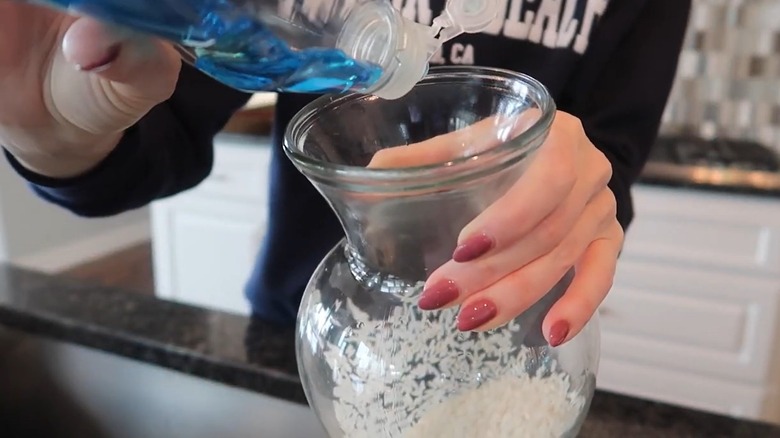
If you have vases, water bottles, or other containers with particularly unique shapes, it's highly likely you've had a tough time getting the interior clean. Your typical bottle brush or sponge might not effectively clean items with narrow or oddly-shaped openings — but rice can. A handful of dry, uncooked rice and soda water is all you need. Add the rice in either by hand or via a funnel, then fill about one-third of the container with soda water. (Use dish soap and warm water if soda water isn't available.) Shake thoroughly, and the rice should be able to loosen residue stuck inside.
DIY a room deodorizer
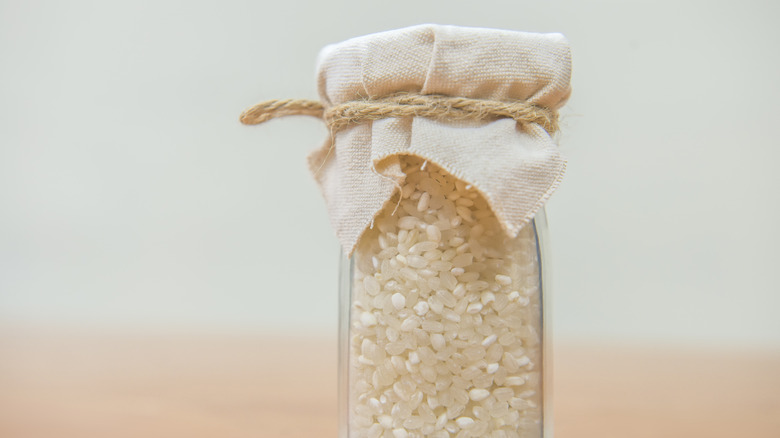
Have a funky or unwanted odor lingering in any room of your home? Break out your uncooked rice, because those little grains can help in rooms like bathrooms to get rid of odors by absorbing them. With rice, a glass jar, and your favorite essential oils, you can make a DIY odor remover. Pour 1 to 2 cups of uncooked rice into your jar and add 10 to 20 drops of an essential oil. Give the rice and oil a stir, then set the jar wherever you're dealing with odors. You can opt to cover the jar with a piece of airy fabric tied in place.
Prevent salt from clumping
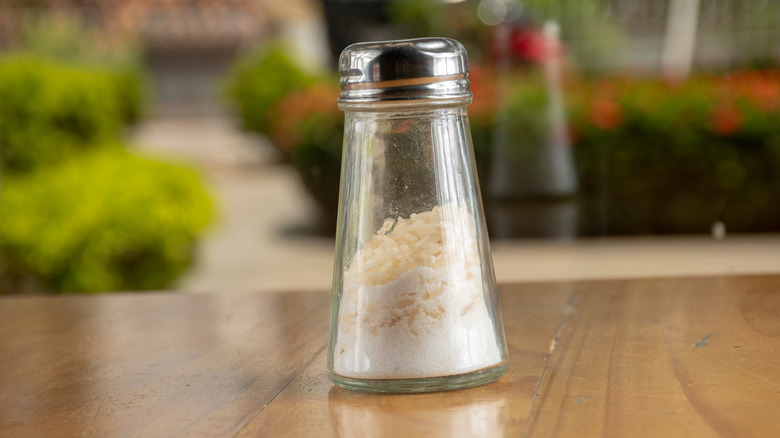
If you've noticed the salt inside your salt shaker has been clumping up, you've got a moisture issue — salt is hygroscopic, which means it absorbs water vapor from its surroundings. So, if your home has been particularly humid or the weather has been damp lately, it can take your salt from smooth-flowing to clumpy and unusable. To prevent this, grab the rice in your pantry. Add a little rice into your salt shaker alongside your usual table salt, and since rice is a faster absorbent than salt, it'll soak up surrounding water vapor before your salt can.
Dry and preserve flowers
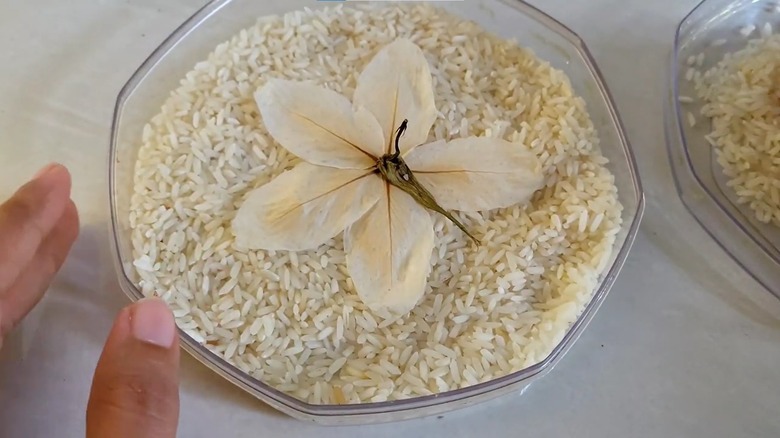
Speaking of rice being highly absorbent, you can enlist this versatile grain in another unexpected way at home: If you're drying flowers, you can stick them in a bed of rice for it to essentially "suck" all of the moisture out of the plants. There are two ways you can do this. Add rice to a resealable container, then lay the flowers on top; then add a second layer of rice to cover them. Seal the container and let the grains work their magic for one week. Alternatively, place the rice and flowers in your oven at 170 degrees Fahrenheit for about 2 hours for far faster results.
Clean surfaces and cookware
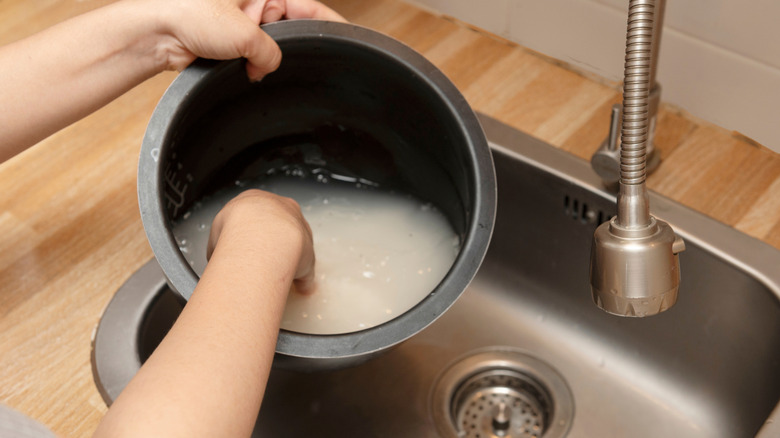
While it's common to wash your rice before cooking and then toss the cloudy, milky-white water afterwards, you might want to think twice before doing this. When you rinse off rice, what's left behind is a starchy residue — which transforms your water into a slightly abrasive cleaning solution that's capable of scrubbing away stubborn debris or gunk and mineral deposits. You can use it to clean glass, metal, and so much more across your home. It's even safe to use on tricky cookware like cast iron, as rice water is just abrasive enough to clean without wrecking your carefully-applied seasoning.
Prevent hand tools from rusting
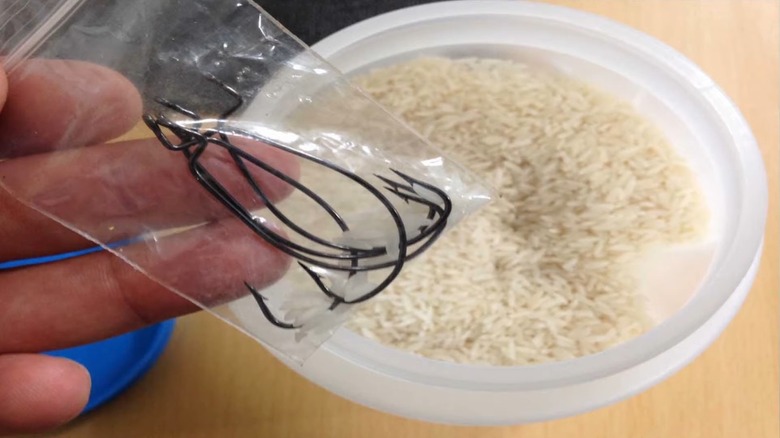
Tools like screwdrivers and wrenches can show different signs of wear over a lifetime — but rust is one that's quite unwanted. However, with uncooked rice in hand, you can prevent rust. Like we mentioned above, rice can control moisture by soaking up any surrounding vapor your tools might encounter. You can fill a container with rice and store your tools metal-side-down inside. Alternatively, add rice into toolbox drawers or storage containers. This works for fishing tackles, too. However, if your hand tools or tackles are already showing signs of rust, storing them in rice won't fix the oxidation that's already happened.
Give stuffed animals a quick dusting
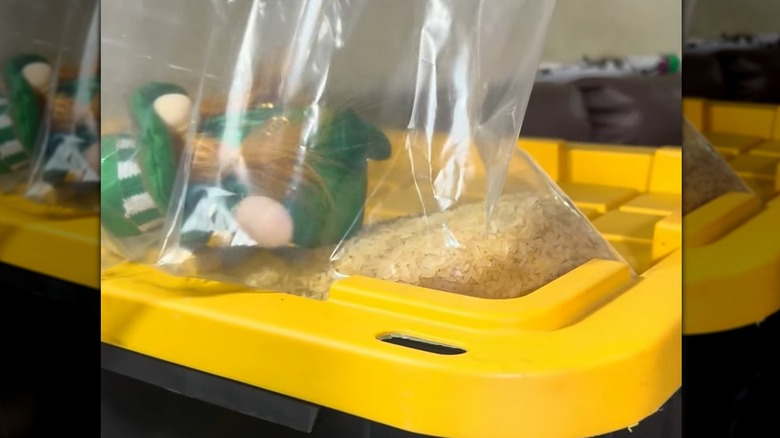
Stuffed decorations or toys that have been in one spot for a while will definitely gather dust, and a feather duster might not be as effective to remove dirt from every area. Thankfully, rice can help freshen up their appearance without any water. Place the stuffed animals into a bag along with 1 to 2 cups of uncooked rice; then, shake the bag. This unexpected way to use rice works because the rice can soak up any oils sitting on the toy's surface thanks to its absorbent nature. Plus, the grains help shake off the dust in hard-to-reach areas.
A nutrient-rich plant fertilizer
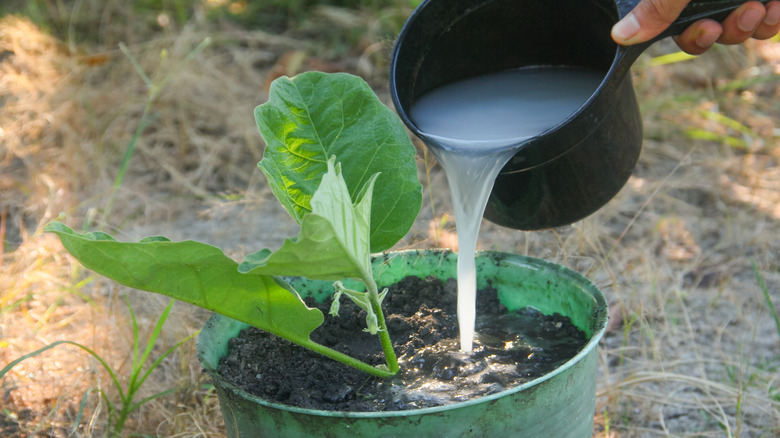
You don't need the actual grains of rice for this tip, just the water you've washed or rinsed them in. After you rinse off all of the starch on your uncooked rice, you'll wind up with rice water — which just so happens to be filled with nutrients that could benefits your plants. Use rice water to water your houseplants or any other plants in need of a little TLC, and you can give them a short-term boost. The trick works with both white rice water and brown rice water, though brown rice water typically contains even more nutrients that can enrich your plants.
Dye Easter eggs
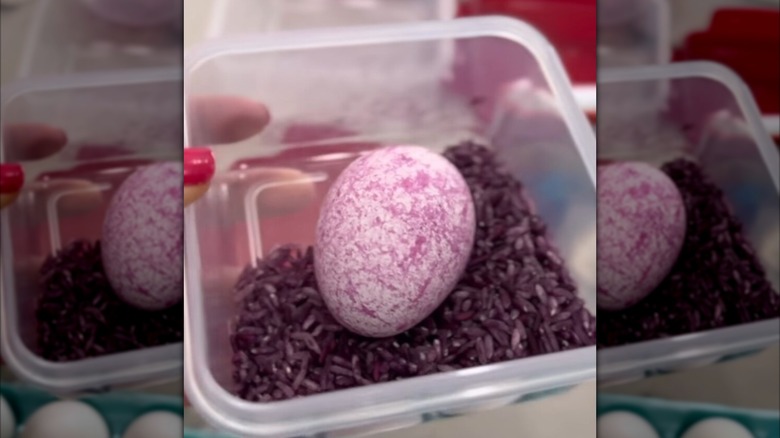
For a less messy way to dye Easter eggs, rice is the answer. While traditional egg dyeing involves vinegar and water (which are prone to splashes and spills), you can use uncooked rice to create a speckled egg effect. Fill a Ziploc bag with about two cups of raw rice and add 8 to 10 drops of food coloring. Close the bag and give it a shake to evenly mix up the color. Then, add your egg and shake again (but more carefully this time) until the white shells adopt a pretty speckled color. Food containers with covers will work for this, too.
DIY a sticky glue
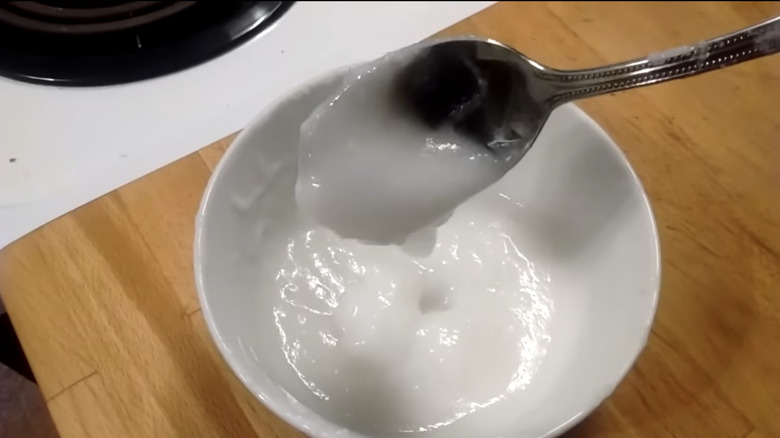
If you're interested in DIY-ing your very own glue, you can turn to rice. Put 2 tablespoons of cooked rice and 2 to 3 tablespoons of water into your blender and purée the mixture until smooth (if needed, you can continue adding water until it's smooth). Then pour the thin, runny substance into a pot or pan and cook it over low heat for a minute or two until it thickens. Alternatively, you can make the glue entirely on the stovetop. Instead of the blender, you can use a fork to mash the rice and add water until it reaches that smooth, gluey consistency.