

Why Builders Walked Away From American Craftsman-Style Homes After The 1920s
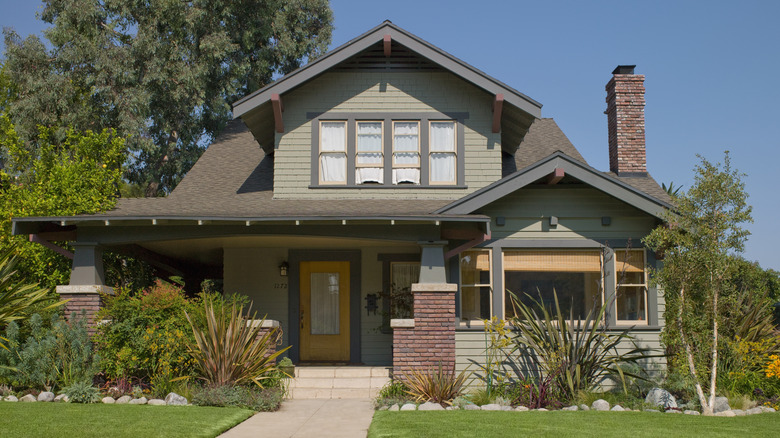
The American Craftsman-style home is a product of the Arts and Crafts art movement of the late 19th and early 20th centuries, which promoted a handmade response to the mass industrialization of the period. The major elements of the Craftsman homes include low and sloping rooflines, long eaves, expansive front porches, and exposed timbers. Inside, there is a great emphasis on built-in elements, including lighting and bookshelves, as well as prominent fireplaces, exposed beams, and dark wood notes on the walls. They are incredible pieces of architecture that speak to the artistry of the period. However, after the 1920s, their production all but ceased as they didn't suit the needs of ordinary people following the Great Depression.
The peak of Craftsman-style home production took place during the 1910s to 1920s. First appearing in Southern California, the houses took on a bungalow look that proved popular for residential construction. The style quickly took off around the country, with each region putting on their own design spin. The rise of a more affluent middle class in the 1920s made these types of handmade homes more accessible. But that all changed in 1929.
The Great Depression altered the financial status and housing situation for the majority of the United States. A study by the Charlotte-Mecklenburg Historic Landmarks Commission noted that while the wealthy continued to build extravagant homes, the middle class were forced into more economical homes like the Cape Cod cottage, a popular house style across the U.S. Craftsman-style homes were simply too ornate to build affordably.
Why didn't Craftsman-style homes regain their former popularity?
After the Great Depression and World War II, the economic situation of the USA looked exceptionally bright. As such, it is safe to assume that Craftsman-style houses would have come bursting back onto the scene. Only, they didn't. Instead, other unique styles started to take hold. A-frames offered uniqueness and affordability, though ultimately builders ditched A-frame homes after the 1970s. The intricacies of a Craftsman-style home couldn't compete with these trendier, customizable, and easier-to-build styles.
With the rise of luxury McMansions in the 1980s through 2000s, it seemed that there was no chance of a Craftsman-style revival to ever occur in the United States. However, recent data from Realtor reveals that there has been a market shift back towards the history and character a Craftsman home offers. The report indicated that Craftsman homes aren't just being purchased, but they are once again being built for custom home buyers.
The reasons are simple: The cookie-cutter qualities of modern construction are not cutting it (pun intended) anymore with buyers. People are aching for character, warmth, and charm, of which the Craftsman house has an abundance. So, will we see a revival of this old style? It is too soon to tell. One thing is for sure, however: The Craftsman-style is definitely getting noticed again.