

Only '80s Kids Will Remember These Classic Household Items
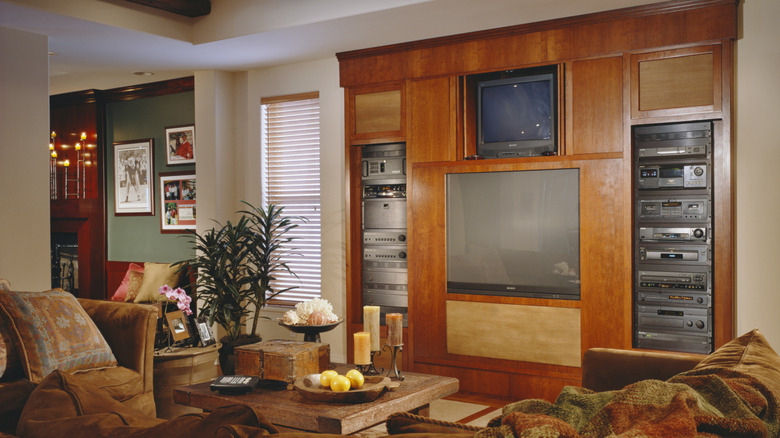
Thinking back to the 1980s — if that's something you're able to do — you might find that it takes a while for a picture to develop in your mind. It's not that the decade was forgettable, but perhaps that there are only so many memory slots for disjointed excess. If the 1970s expressed over-the-top-ness as Bianca Jagger on a white horse in Studio 54, the '80s expressed it as just about everything else, from curtains to colors to computers.
Not everything was excessive, of course. Some iconic things found in 1980s homes were just new, transitional, or both. What possessed manufacturers to adorn microwave ovens with faux woodgrain? Everyone loved wood and everyone wanted a microwave, so shouldn't one usher in the other comfortably? Of course, sometimes style is just style, and doesn't have a motive or a cultural history. The Southwestern patterns (on everything from throw pillows to couches) and geometric shapes and starkly terrifying beauty of Patrick Nagel prints didn't necessarily have a point... except maybe "like this while you still can."
Rotary Phones
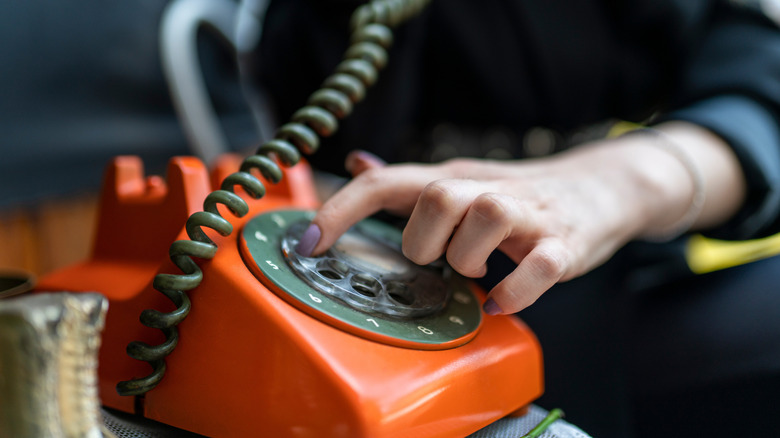
The eighties were the last hurrah for the rotary telephone, a phenomenon that's almost impossible for people to understand if they haven't experienced it. Touch-tone telephones had been on the market for nearly two decades before finally overtaking the residential market. You eighties kids will also remember the phone with the super-long cord that could stretch all the way to your bedroom for urgent late-night chats and long romantic silences that lasted until your mom picked up another receiver and demanded to know why you were still on the phone.
Woodgrain TVs... and everything else
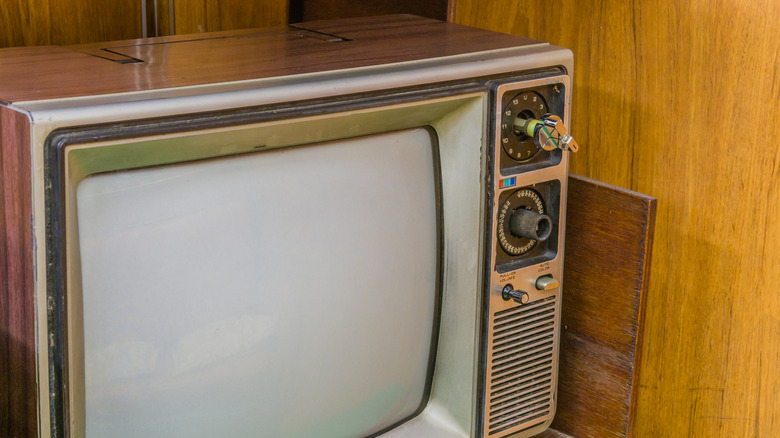
People have always liked wood. Eighties folks liked wood so much they didn't even care if it was really wood. Ask anyone who had object permanence in the '80s if they had a television with a woodgrain cabinet, and you'll probably get an answer along the lines of "I never thought about it, but yes, and the microwave and toaster oven were woodgrain too. And the VCR and..." This would be a good time to get a drink or hit the bathroom; that '80s kid is going to be a while.
Nintendo Entertainment System (NES)
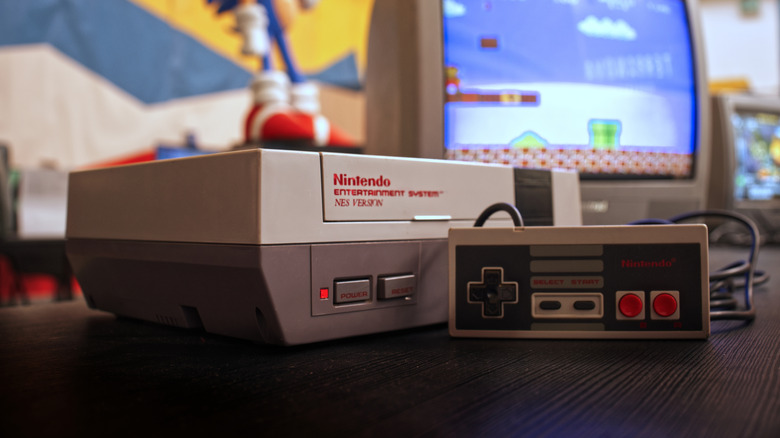
Whether you associate the '80s with Atari or NES depends on your tribe. Nintendo obviously had the longer-lasting cultural impact in spite of never quite breaking free from the controlling proprietary mindset of the cartridge-based media era. (The company even somewhat optimistically used its own screws to assemble consoles and cartridges.) The iconic "ground theme" from the 1985 Super Mario Bros. game was the soundtrack to the lives of many '80s kids who either had an NES at home or had a friend who owned one.
Drapes with swag and swagger
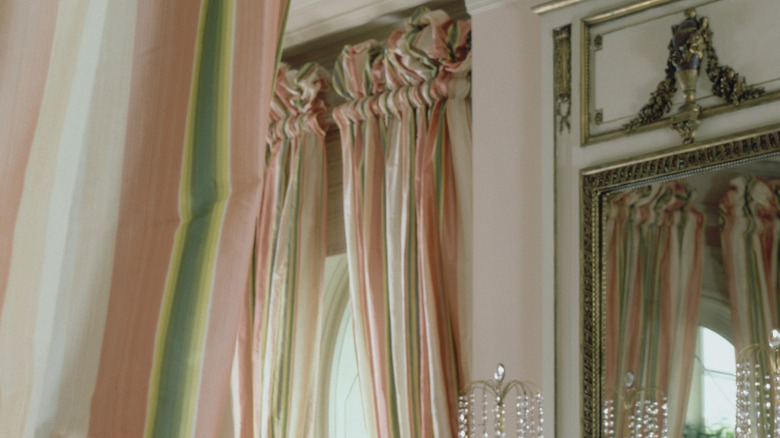
The grandiosity of 1980s drapery can't be overstated. There's a certain type of person who equates formality and luxury with having every possible bell and whistle, all at once, and in the '80s that type of person was everyone. People might not have been able to tell a valance from a swag, but if the curtain rod could handle it, why not have both? Drapery even included something called jabots... a sort of neck adornment from musketeer attire somehow adapted to dress up curtains when the square mile of fabric wasn't doing the trick.
Rack stereo systems
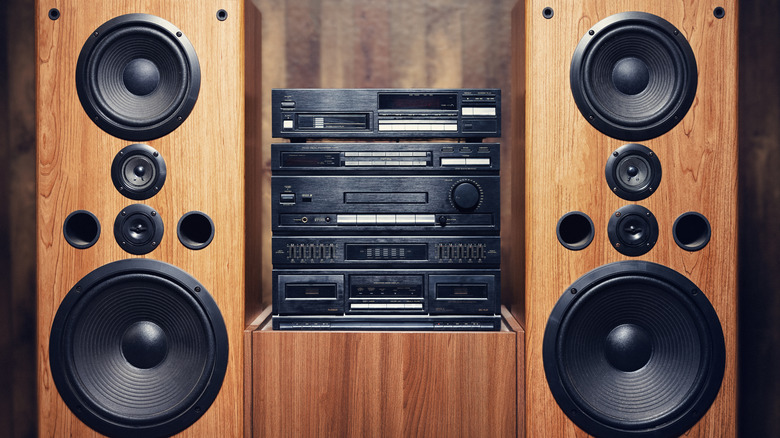
While there's simply no need for bulky entertainment centers anymore, in the 1980s, people wanted their home entertainment cabinetry and sound systems to be visible. And very visible at that, not the precious (as in Gollum and metals) show-offery of today's audiophiles. No, these component systems seemed to cost as much as a car, take up as much room as an industrial stove, and feature speakers almost as tall as you. This trend toward making everything a separate component was somewhat the opposite of another '80s trend, the boom box.
Boom boxes
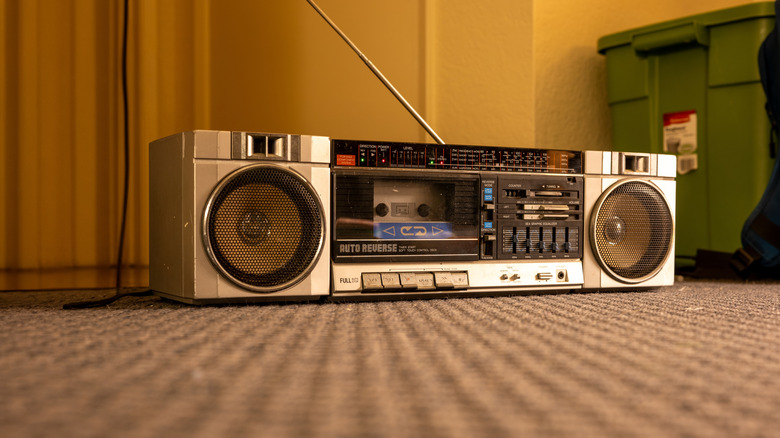
The boom box was a bit of 1980s electronic wizardry that took all the components of a massive stereo system and crammed it into a single unit that weighed slightly less than, and occupied slightly less space than, a traditional stereo component rack. Possibly invented by chiropractors, the traditional boombox was hoisted onto the shoulder and used to blast attention-getting music like that kid in his dad's Fiero who always left his door open at the gas station so you could hear his 'Men Without Hats' deep cuts.
Glass tables
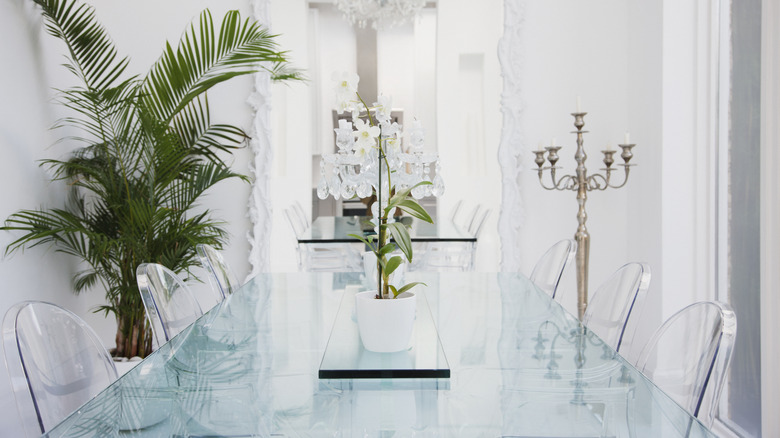
In hindsight, glass tables had to be some sort of prank. It is not difficult to imagine two product development guys betting about whether one could sell his boss the idea of a clear tabletop. But, while the look is obviously iconic 1980s, glass tables had actually been around for decades. Somewhere. And some of the best affordable modern coffee tables are still glass. One benefit of the glass tabletop was that you didn't need to waste money on fancy place settings, since the appearance of outright chaos was unavoidable at any cost.
Colors and patterns that relocated Miami to Arizona
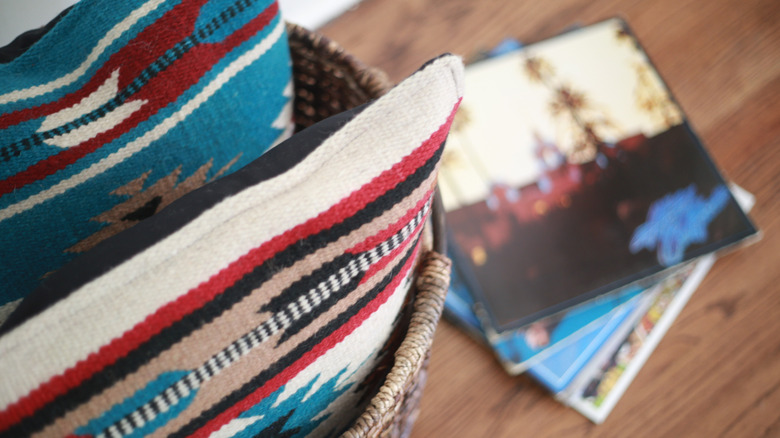
For reasons passing understanding, almost every throw pillow in the 1980s (along with half the curtains, couches, wallpaper borders, and framed art) featured vaguely Southwestern patterns in shades of mauve and teal that suggest 1980s Miami, if anything. The patterns usually featured zig-zagging lines, triangles, and diamonds that combined to have the same basic effect as a visual migraine, but twice as distracting. There were other elements of the Southwest that found their way into '80s homes — cow skulls and flame-stitch patterns, for example — but pastel-adjacent takes on Navajo patterns were iconic.
Patrick Nagel prints
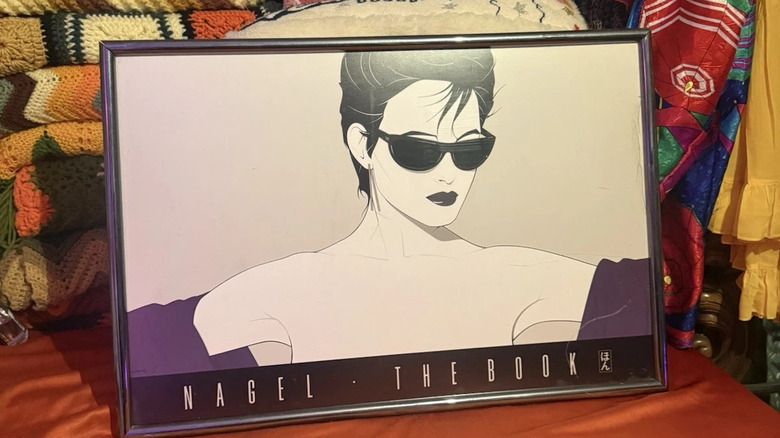
Lots of things got framed in the 1980s, from Lambos driving into pink and orange sunsets to Keith Haring posters to random geometrical shapes and paint spatter. But nothing says the 1980s quite like a Nagel woman... dark-haired, mysterious, occasionally with a hat. If you were struggling to place a Nagel woman in time, you wouldn't have to look much further than her showy geometric earrings, which are as '80s as it gets. And in case you're wondering, her name was Rio. (Well, not really, but it should have been.)
Black lacquer furniture
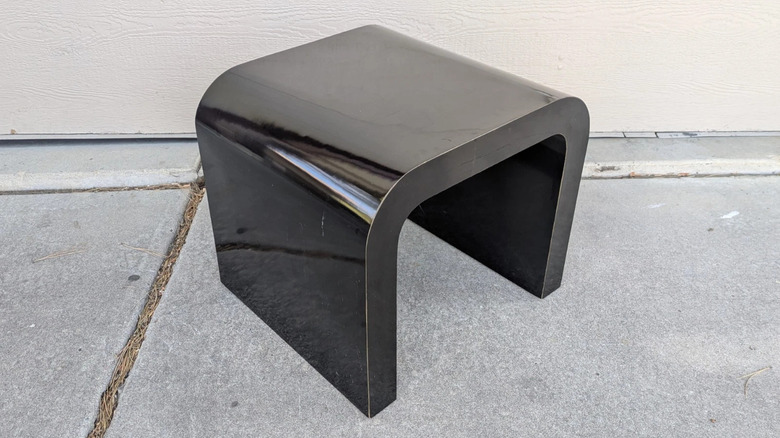
Unless your family had an impressive income in the 1980s, the phenomenon of black lacquer furniture might be a memory from magazines and TV. It was the height of glamour, with influences ranging from Chinoiserie and Japonisme lacquered pieces to Hollywood Regency revival. You'll occasionally see the style tied to the kooky and colorful Memphis Milano movement, now distilled into beloved vintage Memphis-style pieces sold on Etsy, but the heritage seems more the road not taken from Art Deco to midcentury modern. This one skipped the midcentury and maybe traveled all the way to postmodern.
Waterbeds
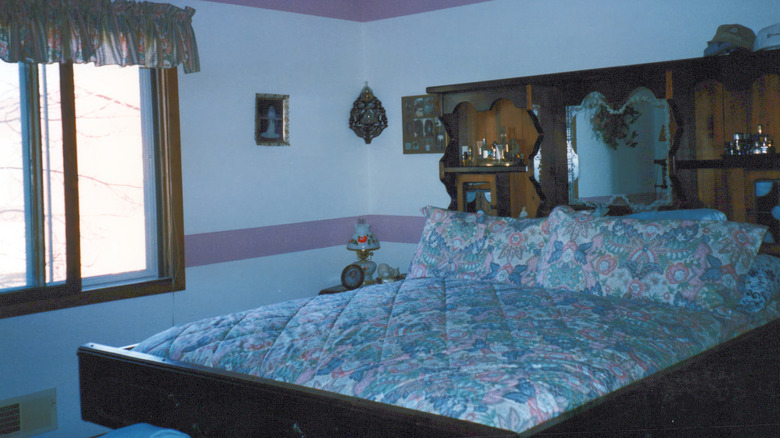
Here's an idea: Why not sleep on a giant bag of water — oh, say, about 1,500 pounds of water on a floor designed to hold about 1,500 pounds? Every little move will be written by fluid dynamics into your dreams until you finally come to your senses and sell it to that Steve guy with the Corvette. Only a decade old as the 1980s began, waterbeds only lasted around another decade before the epic downsides — flooding, bacterial growth, and being known as the guy with the waterbed, to name a few — brought sleepers back down to mattresses.
Answering machines
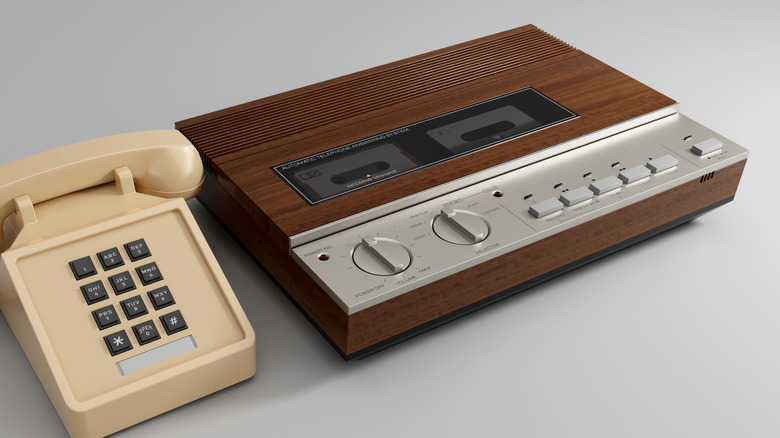
OK, get this: Voicemail — you know, that thing on your phone you mom keeps talking to when you don't answer — used to have an actual box, like a mailbox, but electronic and inside your house, attached to the phone line. That box was called an answering machine, and while it had been around a while (early versions recorded to reel-to-reel tape) it hit its stride in the 1980s, the decade of Gordon Gekko, and contributed to today's synchronous communications paradigm in which everyone is presumed to be reachable by everyone at any time.
The most manual personal computers imaginable
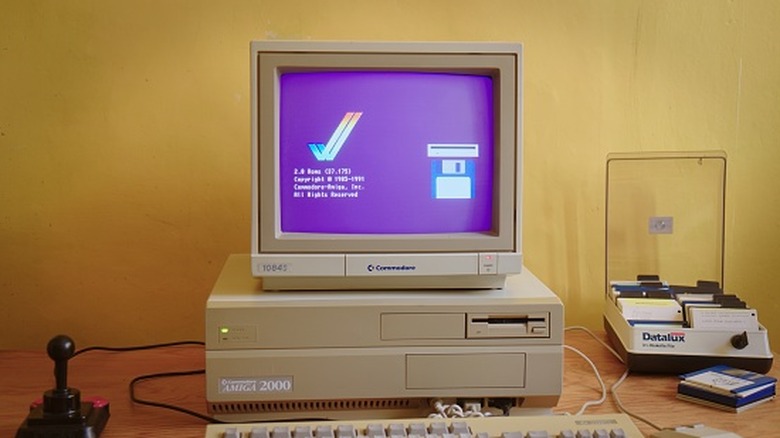
The 1980s were also when personal computers became personal, with a number of iconic models — the Apple Macintosh, the Commodore 64, the IBM 5150 PC — disguising the revolutionary potential of the technology as Oregon Trail, PrintShop, and BASIC loops. The earliest of these were unbelievably un-computer-like devices in their lo-fi IO ... acoustic couplers to connect to networks, tape drives that were only slightly faster than writing things down, and printers that spat out thermal paper indistinguishable from the receipts of today. Good times.