

Plant This Stunning Blue-Purple Flower For A Garden Full Of Monarch Butterflies
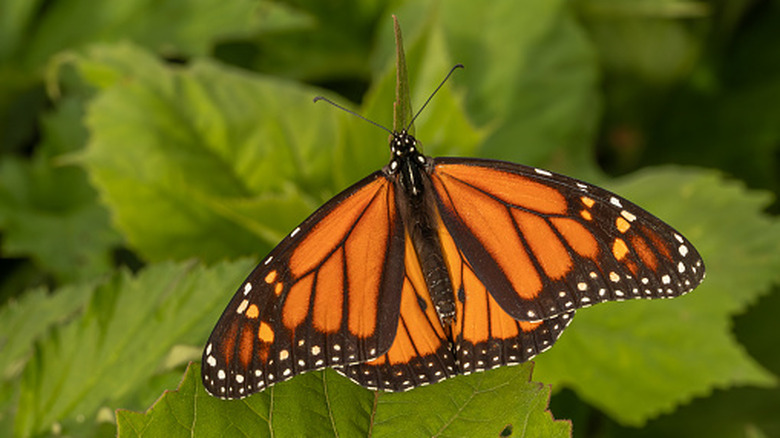
Even those who aren't avid gardeners can often recognize the iconic black and orange wings of a monarch butterfly. In addition to being known for their vibrant colors, these unique pollinators migrate, sometimes traveling thousands of miles across North America. You may even remember watching the monarchs flit around in your yard as a kid. Now, unfortunately, we don't get to enjoy their beauty quite as much. Because of factors like habitat loss and widespread pesticide use, their populations have been declining over the past couple of decades. Fortunately, you can easily help monarch butterflies by planting their favorite nectar-rich flowers, like blue mistflower (Conoclinium coelestinum).
Blue mistflower is one of the best native plants that attract butterflies you can plant in your garden. Monarchs and other butterflies are attracted to bright colors, like purple. So, the fuzzy clusters of purplish-blue flowers are sure to catch the eye of any passing butterfly looking for fresh nectar. Once they arrive, they'll be happy to see there are numerous little flowers to drink from. Even better, blue mistflower blooms from July to October. Monarch butterflies typically begin migrating to Mexico around mid-August, so blue mistflower can be a saving grace for butterflies looking for late-season food. In addition to the joy of creating a butterfly haven in your backyard, blue mistflower is also a great option for filling in those seasonal gaps.
How to grow blue mistflower to attract monarch butterflies
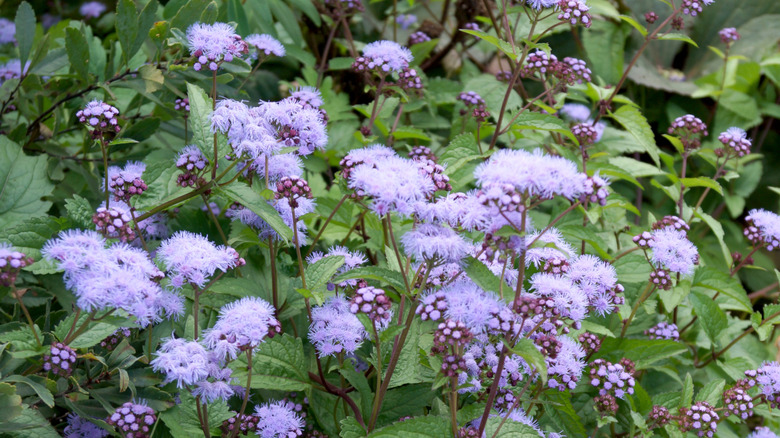
Bringing more butterflies and pollinators to your yard is easy to do with gorgeous natives like blue mistflower, as long as you care for them properly. Choose a spot in your garden that gets full sun to partial shade. This species loves water, so plant it in humus-rich soil and water it regularly so it doesn't dry out. Because of its high water needs, it's the perfect addition to a beautiful rain garden or for planting alongside a water source. If growing from seed, sprinkle the seeds in your chosen location in late fall. Then, gently press them into the soil. Keep the area moist, and you should see little seedlings pop up within a couple of weeks. In zones 5 to 10, blue mistflower will come back to life each spring. If your biggest goal is to attract monarch butterflies and other pollinators, make sure to pair it with other native companions like cardinal flower, black-eyed Susan, or Joe Pye weed.
Blue mistflower doesn't just grow rapidly — it also spreads aggressively. It spreads by both seeds and underground rhizomes, so it can become a nuisance if it's left to its own devices. So, it's important to keep it under control if you don't want it taking over your yard and garden. To do so, remove any unwanted seedlings in the spring. Once established, you can divide the plants to control the spread or propagate them into new ones.