

The Designer Trick That Makes A Narrow Living Room Feel Way Bigger
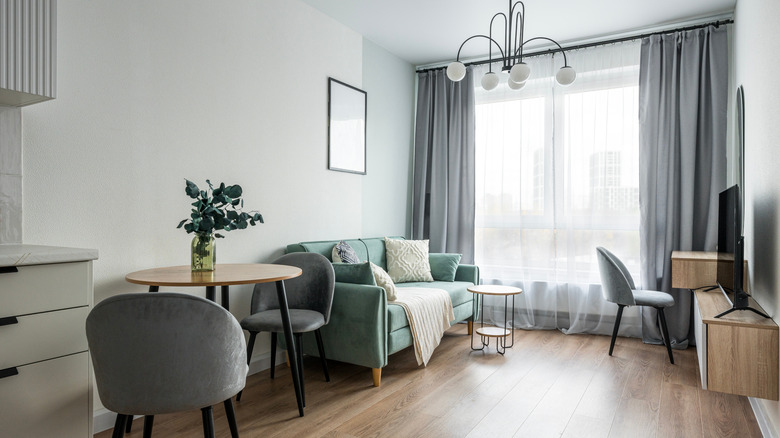
One thing I've been asked over and over again in my 13 years as an interior designer is how to make a small area feel bigger, especially a major hub like a living or family room. Many of the clients I work with in my city are renters with a laundry list of restrictions or homeowners maintaining historical houses over 100 years old, both challenging me to design a more open space while preserving the home's original character and form. Changing the existing footprint of a room is nearly impossible without a large-scale remodel, so it usually boils down to making the most of the available area with one straightforward concept. The trick to giving a living room (or any small room) the impression of more space is by creating a vertical presence. The effect of this age-old designer trick is to draw the eye up, making the space feel taller and more expansive.
Imagine filling a small space with undersized artwork, minimal or no window treatments, and low-to-the-ground furniture. The inevitable result will feel squatty and cramped, the last thing you need when you're already dealing with an undersized footprint. By incorporating elements that take advantage of vertical space and create upward momentum, you can counteract the claustrophobic vibes of a tiny, narrow living space. This includes floor-to-ceiling elements like built-in furniture, focal points above eye level, impactful wall- and ceiling-mounted features, smart line-blurring paint tricks, and even a special treatment to the fifth wall: The ceiling. And rarely does just one of these features properly carry the weight of expanding the space all on its own. Plan to layer multiple vertical elements for maximum roominess.
Tall elements draw the eye up and make the room feel bigger
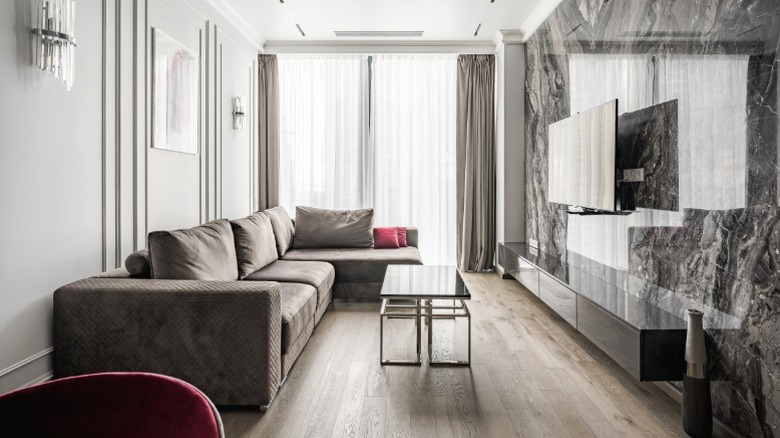
The first trick I use to make a narrow living room feel larger revolves around what's actually brought into the space. Most standard living room furniture (and some decor) like sofas, media consoles, and tables sit lower to the ground. In a small space that can only physically fit so much, it's easy to see how people neglect the types of pieces that help raise the visuals of the room. These could be items like tall bookshelves, oversized or arching floor lamps, full-length mirrors, large artwork, potted trees (real or artificial, depending on your green thumb), and other freestanding pieces that stand higher than eye level for visual variety. Major bonus points for incorporating built-in floor-to-ceiling elements to really maximize the optics of height in one continuous line.
Floor-to-ceiling draperies are another extremely effective element to draw the eye up and improve the feeling of spaciousness. The rippling softness breaks up the hard lines of the room's architecture, while the vertical elongated silhouette of the panels causes your eyes to perceive the ceilings as taller. You can hang your curtain rod just right in a narrow living room by going high and wide, making the window seem as large as possible.
Wall- and ceiling-mounted lighting can also play a big role in making a small space feel bigger, as they appear on the upper part of the room. Large chandeliers are an incredible design statement as well as a sure-fire way to draw the eye up and create the illusion of spaciousness. Similarly, wall sconces or art lights create visual interest above eye level for more vertical impact.
Use ceiling treatments and paint for vertical visual appeal
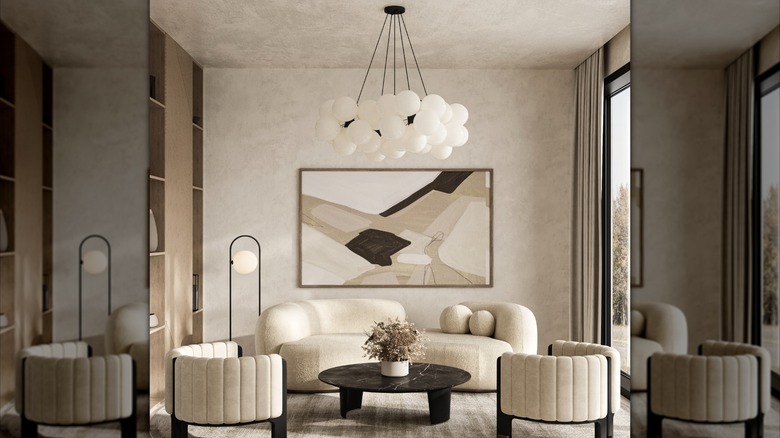
For homeowners or renters able to make modifications to their narrow living rooms beyond furniture and decor, there are a few additional tricks I like for giving the impression of spaciousness. One is to give some love to the ceiling. By creating a ceiling design detail rather than just painting it a predictable shade of white, you bring the room's highest element into play, a slam dunk for drawing the eye up. Add a wallpaper in subtle patterns or colors to grab your attention while keeping an airy feeling. Alternatively, paint the ceiling in a beautifully unexpected neutral or soft color — a welcome departure from the typical white for interest and vertical impact.
Additionally, other paint techniques can help blur the defined lines of the narrow space, in turn tricking your eyes into reading the space differently. Realize the benefits of color drenching by painting the walls, ceiling, doors, and trim in the same shade. Lacking any of the usual distractions, visual stopping points, and confining lines, the space allows the eye to keep moving and read it as larger than it is. Similarly, the color-capping paint trend that's adding a splash to living rooms involves painting with two or three tonal shades to give the space a gradient or ombre effect. Since the break point between the slightly different colors is typically done at a high picture rail or before substantial crown molding, the technique incorporates the connection between the ceiling and walls, making it a nice line-blurring middle ground between painting the ceiling and color drenching. Without the hassle or budget of a remodel, making a narrow living room feel bigger is as simple as incorporating attractive design elements above eye level.