

The Ancient Technique That Turns A Peace Lily Plant Into A Hanging Statement Piece
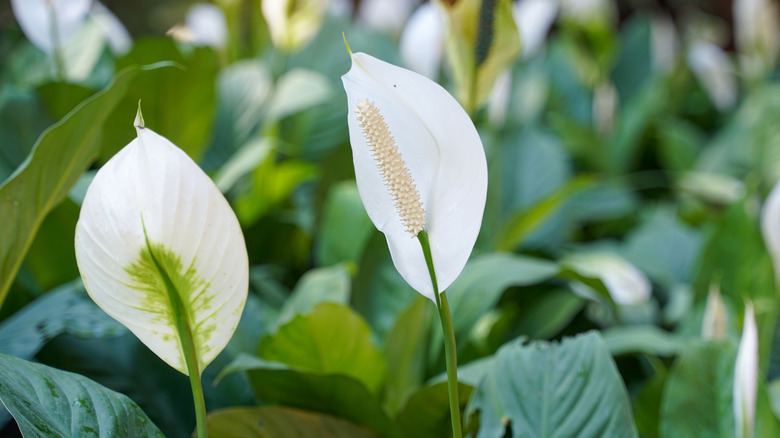
There are so many unique ways to display plants, from DIY hanging gardens to cute repurposed containers — but one that might have escaped your notice is kokedama. This ancient Japanese gardening technique allows you to grow a plant not in a pot, but inside a moss-wrapped ball of soil. There are many plants that you can grow this way, and one fantastic option is the peace lily (Spathiphyllum spp.). Peace lilies are known for being easygoing and low maintenance: You can grow them in water, in the shade, and in containers, so it may not surprise you to know that you can also grow them in moss.
Aside from looking stunning with their roots wrapped in moss, there are a few other other benefits to growing peace lilies this way. Kokedama are completely natural and match well with soothing, nature-inspired decor. Peace lilies, which are generally considered relaxing plants, are also a great fit for those spaces. Kokedama are a good option if you're low on space and worry about a bulky pot taking up valuable room, too. Hanging your kokedama conserves floor and shelf space, and you may not feel like the space is being wasted when it's part of such a lovely display.
Using a kokedama as a hanging planter can be particularly useful if you have pets: While they aren't as poisonous as true lilies, peace lilies are still toxic to pets if they chew on the leaves. Getting your peace lily off the floor and out of reach can help protect your furry friends from potential harm. Not to mention that it looks lovely, giving your room a delicate-looking and elegant bit of natural decor.
What to know before creating a kokedama
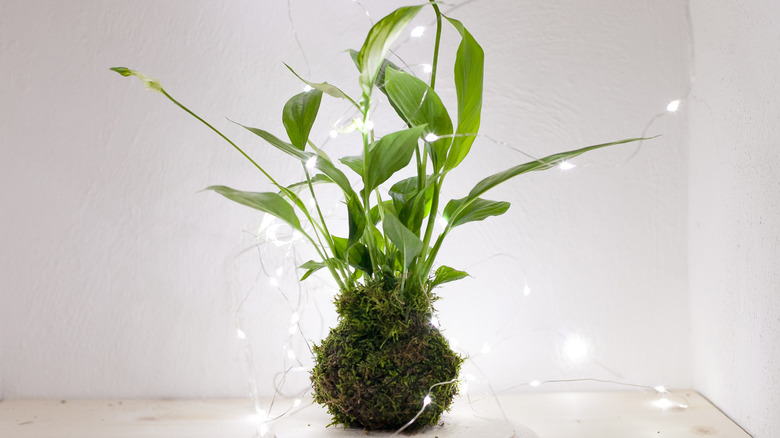
Before you create your kokedama, you'll need to know how to care for peace lilies in general. First, make sure to place your peace lily in bright, indirect light so it won't burn. While your kokedama would look incredible hanging in a window, it can dry out in intense sunlight. A window that only gets direct light in the morning, or one that has a curtain you can use to diffuse the sunlight, would be perfect. To water your kokedama, take it down from its hanging spot and soak it for between 10 minutes and half an hour. If you aren't hanging your kokedama, remove excess water as it drains, as peace lilies dislike being left sitting in a puddle.
Don't be afraid to experiment to make the kokedama fit your aesthetic. Sphagnum moss is popular as it retains water well and is available in easy-to-use sheets. This will give your kokedama a more traditional vibe, while something like cushion moss creates a softer look, especially when paired with your peace lily's white flowers. What you hang your plant with also makes a difference. Undyed twine or simple waxed thread contributes to a natural aesthetic, but you can also use a more decorative option — just as long as it won't degrade in water.
When choosing your peace lily, opt for compact or dwarf varieties such as 'Little Angel,' 'Piccolino,' 'Sonia,' or 'Patricia.' Cultivars that grow slowly or stay relatively small are ideal, as they'll outgrow the kokedama more slowly. They'll also give you more flexibility on where to hang them, since you won't need to leave as much room for the stem and leaves. If you have a small bathroom window, a compact peace lily in a kokedama is the perfect plant to hang in it.