

The '80s Kitchen Item No One Seems To Use Anymore
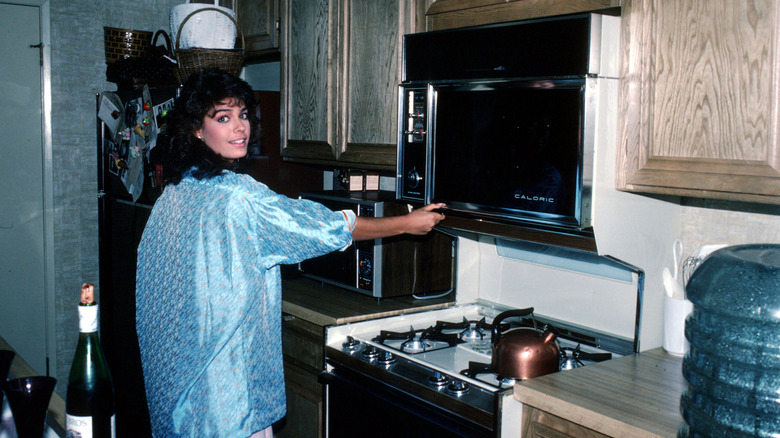
Maybe it's one of those things you've never thought about, but once it's mentioned, the memories come flooding back to you. Picture a woodgrain microwave oven. Maybe also a toaster, or the control panel of a dishwasher. If you were conscious in the 1980s, you can clearly picture the woodgrain-look kitchen appliances, interspersed among the beige or harvest gold stove, dishwasher, and refrigerator.
Woodgrain — both the real thing and the faux woodgrain metal you'd typically find on appliances — was wildly popular in the 1980s. It had been building for a while, from the "woodie" station wagons of the 1960s to the Atari CX2600 systems that launched in 1977. Wood paneling ambled into homes during the 1960s and '70s, and the '80s kitchen became a sort of proving ground for an uneasy truce between new technology and homey warmth.
However, woodgrain kitchen appliances aren't making a comeback (yet). That little vision you had a moment ago is still a little too fresh in some minds, a dated albatross hanging around their necks. Vintage '80s woodgrain appliances aren't hard to find, exactly, and that's because these appliances are still kicking. They're from the days of bombproof appliances made of better materials and unencumbered by computer control boards, ridiculous levels of complexity, and planned obsolescence. But woodgrain was, like the living albatross, a symbol of the positive and good things to come. Killing it was the problem.
Why woodgrain keeps hanging around
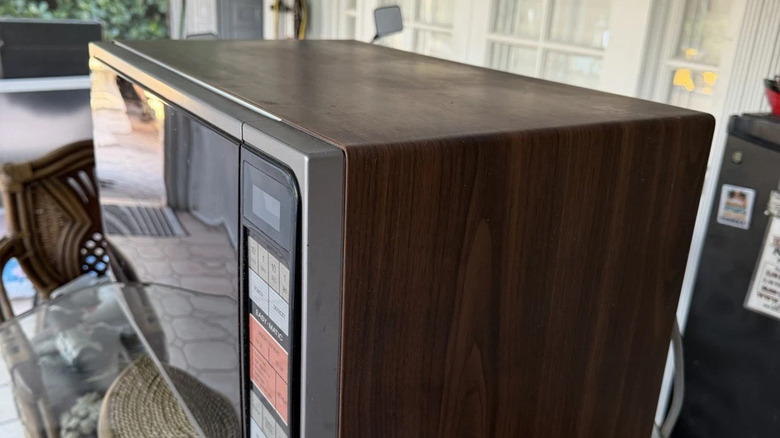
In the throes of these conversations, we tend to throw woodgrain stuff in general in a "cheesy" category, but in day-to-day lives, there are many woodgrain things we appreciate. The particular woods we value may change every couple of decades, but there's usually some amount of wood that we love to have in our homes at any given moment. "Incorporating the natural beauty of wood into our home creates a warm and tangible connection to the outdoors that can evoke the serenity of woodlands through biophilic design," says interior designer Sarah Barnard.
So, it's somewhat unsurprising that you can still find woodgrain kitchen goods — albeit as predictable things like custom panels for dishwashers and other major appliances. But, notwithstanding the occasional garish "seasoned wood" dishwasher cover, these tend to be fairly sedate affairs, probably designed to match the wood cabinets in our kitchens and to elicit certain states of mind as only wood can do.
Sally Augustin, Ph.D. and practicing environmental/design psychologist, shared with Psychology Today about biophilic design and the intersections of design, science, and human psychology, and she says that the woodgrain pattern itself is the prompt or stimulus for positive states of mind. "When we see wood grain, our stress levels fall, it's a particularly good design choice when relaxation is the goal," she writes, "whether that's a dentist's waiting area or a family room where the whole family, with their varying entertainment preferences, plans to spend time together."
Will woodgrain appliances make a comeback?
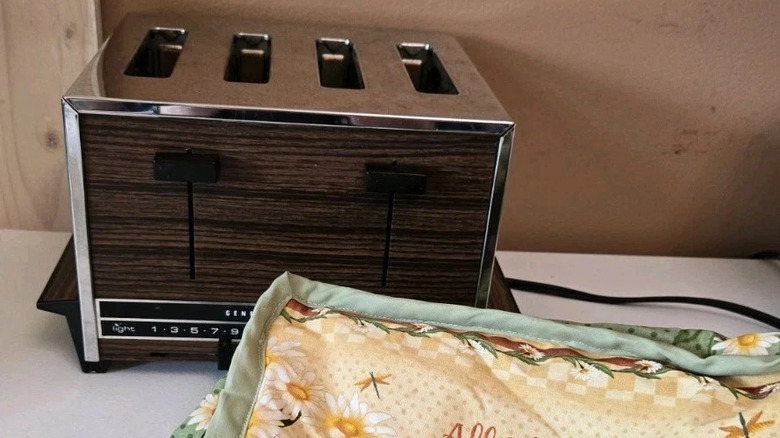
There's no sign yet of woodgrain countertop convection ovens, wine refrigerators, or those steam ovens that are threatening to replace your microwave, but a couple of things make us think it's not out of the question. Color is back, natural textures are becoming richer, and given our recent habit of drenching everything, it was only a matter of time before wood drenching became a thing. Wood itself is, as usual, part of our design consciousness. Interior designers are starting to advocate for a modernized approach to wood paneling, and even pine and dramatic wood textures like burl wood trend from time to time.
Whether woodgrain appliances re-enter the picture also has to do with quantity and quality. First is the quantity of woodgrain required for positive psychological effects. Design doctor Sally Augustin says the optimal amount of wood is roughly 45% of surfaces, after which returns begin to diminish. That leaves room in a kitchen with, for example, wood floors and painted cabinets (let wood be wood — stop ruining it with paint, says our master woodworker) to add some woodgrain accents.
In terms of quality, Augustin told Psychology Today that "artificial wood can lead to the same sorts of psychological benefits as real wood — as long as those artificial wood patterns truly look like real wood." Nobody's making a toaster out of real wood (yet, anyway), but think of the recent improvements in printed woodgrain on, for example, LVP flooring. Could a woodgrain microwave be far behind?