

Why Gardeners Are Putting Aluminum Foil In Their Gardens — And What It Actually Does
We may receive a commission on purchases made from links.
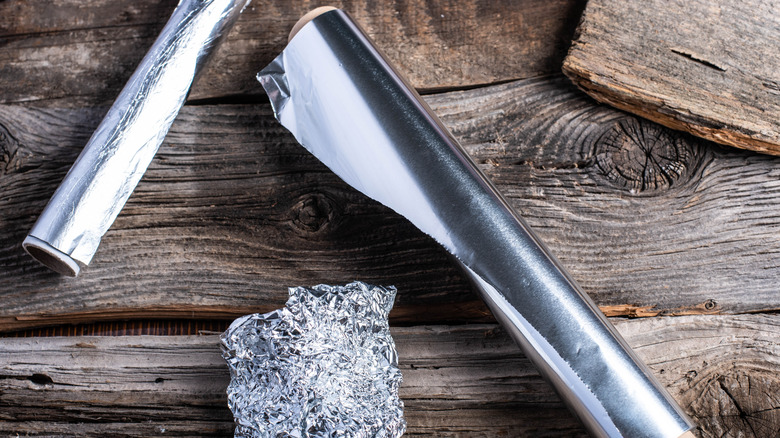
Aluminum foil comes in handy when you're cooking, whether you're baking a potato or roasting a pan of vegetables. The shiny, crinkly stuff is also useful out in the garden, as a way to keep pests away and protect delicate seedlings. From aphids to cutworms to birds, aluminum foil may block or deter garden invaders, shielding your precious plants and allowing you to enjoy the fruits — or vegetables — of your labor.
Gardeners often use aluminum foil in two ways. First, the foil can act as a mulch, since its reflective surface confuses pests, such as aphids, making the garden an unwelcoming space for them. Second, wrapping the delicate stems of seedlings with foil creates a barrier that insects, such as cutworms, can't chew through. Since you can purchase a 30-square-foot roll of foil, such as Reynolds Wrap Everyday Strength Aluminum Foil Roll, for less than $4, it's a budget-friendly way to manage pests. It's also a pesticide-free choice, perfect for gardeners who want to use more natural pest control remedies.
Before you deck your garden out like the Tin Man, remember that it's not a foolproof method and it won't work on all pests. Think of aluminum foil as an additional tool in your pest-fighting arsenal. You'll see the best results if you use it in combination with other pest management options, such as keeping the soil healthy, weeding regularly, and attracting beneficial insects and animals.
How to use aluminum foil to deter or block garden pests
To use aluminum as a pest deterrent, tear off a few sheets of foil and scrunch them up into balls, then hang those balls in your garden. When the foil balls move in the window, light bounces off of them, scaring away pests such as pigeons. If you happen to be out of aluminum foil, try hanging other types of reflective materials in your garden, such as old CDs, compact mirrors, or maybe even a small disco ball or two.
Another way to deter pests is to use foil like a mulch. To make the foil sturdier, wrap it around a piece of cardboard before laying it on top of the soil near the plants you want to protect. The smooth, metallic surface of the foil mulch is also unappealing to birds, who will avoid pecking it with their beaks and even avoid the area in some cases when the reflection spooks them.
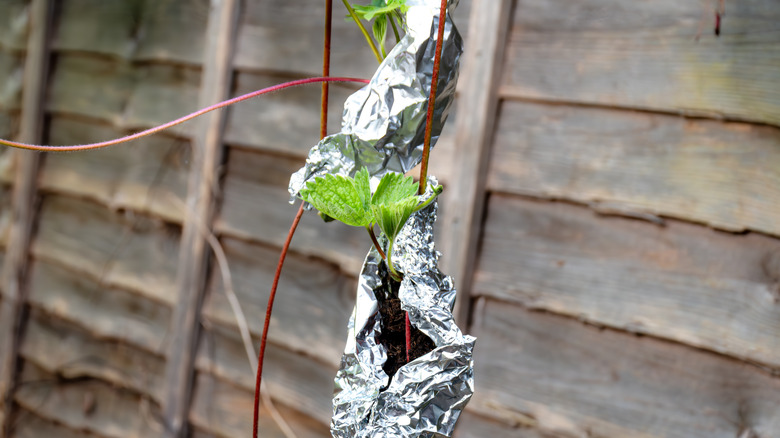
To keep cutworms away from newly planted seedlings, tear off strips of aluminum foil and use them to create little collars for the plants' stems. Cutworms are caterpillars that wrap themselves around the stems of tomatoes, cabbages, peas, and potatoes, among other plants, feeding on the plants and causing significant damage. Wrapping the foil around the stem from about one inch below the soil to about three inches above, keeps the caterpillars from coming into contact with the plant stem. If you happen to run out of foil, substitute empty toilet paper rolls to protect against cutworms.