

Add Privacy To Your Glass Doors Without Curtains Or Blinds With An Easy DIY
We may receive a commission on purchases made from links.
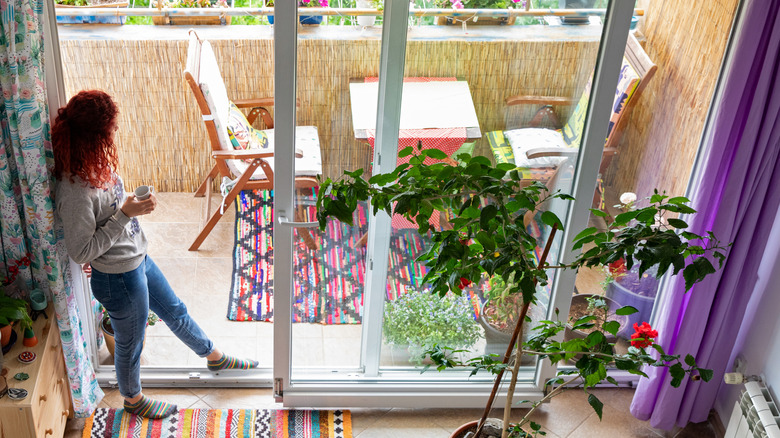
Whether your floor space is at a premium or you enjoy flooding your home with natural light, there are many good reasons for buying glass doors. You could splurge on a set of French doors, or opt for sliding ones that are way cheaper to install and are a space-saving option since they slide on a track instead of swinging in or out. While advancements have been made in glass doors' energy efficiency and cleaning door tracks is relatively easy, the lack of privacy is a major downside. You could hang curtains or blinds, but applying decorative static-cling window film is a better way to add privacy to glass doors with an easy DIY.
From stained glass to rice paper, lattice patterns to basic frost, there's no end to window film options. Along with finding the right design, there are several other factors you should consider to pick the best window film for your home. Consider how much light you want to block, the number of rolls you'll need, and of course, your budget.
If you fall in love with a more expensive decorative window cling, it may make more sense to install it on a single glass door instead of two giant sliding ones. Some products are advertised to block ultraviolet light and control excess heat, which could matter more than the look if you're trying to keep a room comfortable and your bills in check. And when privacy is your primary concern, you may want to skip a decorative design and head for a product like Kespen One Way Daytime Privacy Reflective Window Tint.
How to install lattice window film on your sliding glass doors for privacy
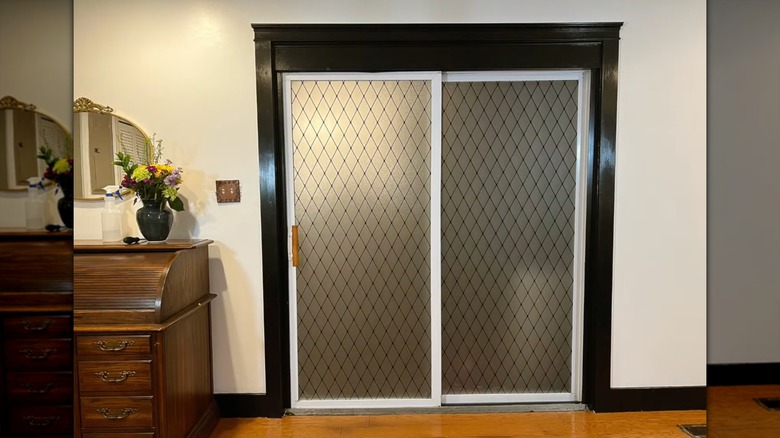
There's a lot that goes into choosing and installing window film for privacy, and you need to approach this project with patience, the right tools, and help from a friend. The first step is to clean your glass doors to an impeccable shine, as dirt and debris make window film stop clinging. Once the doors are dry, measure each carefully before using the grid on the roll's removable backing to help you make straight, exact cuts. Many manufacturers' instructions recommend leaving at least an inch of clearance on all four sides. To get the best results, you should also strongly consider using a wallpaper smoothing tool kit that contains the squeegees, sharp craft knives, and flexible measuring tape you'll need to complete this glass door DIY.
After your film is cut to size, start by liberally spraying your glass doors using water with a small amount of dishwashing liquid mixed in to create a suction effect between the glass and film. Then hang your window film at the top of each glass door, remembering to overlap the frame slightly. Have a friend hold the bottom as you glide it into place, gently using your hands and squeegee to press any bubbles out from the center to the nearest edge. This step may also squish out some soapy water, so keep a towel nearby, especially if you have wooden door frames that could be damaged by lingering moisture.
The final step is to cut off any excess. Use your squeegee as a straight edge while making long, smooth, confident cuts with your craft knife.