

What To Do If You Find A Tick Nest In Your Yard
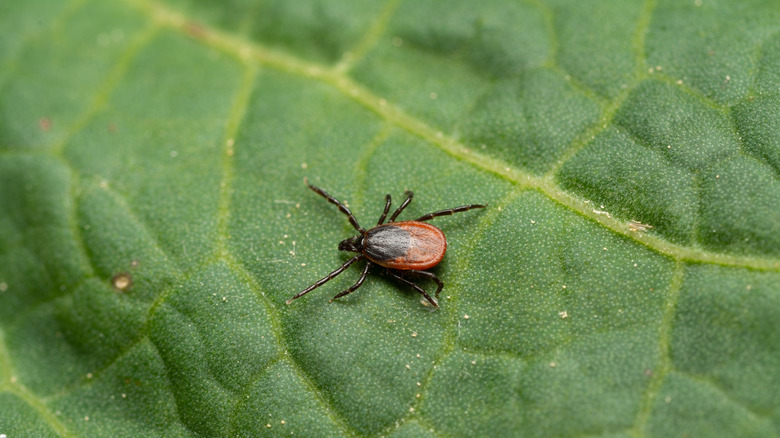
You're strolling along the edge of your yard and notice something strange on the ground. It's about an inch in diameter and made up of tiny red or black dots. That strange, sticky cluster may actually be a tick nest. In the late spring or early summer, female ticks produce a single nest, known as an egg mass. It can contain thousands of eggs and mark the start of a serious infestation. Not only that, but people and pets can contract several diseases from a tick bite — including Lyme disease and Rocky Mountain spotted fever – depending on the type of tick.
If you spot an egg mass or tick nest in your yard, don't panic and don't touch it, even if you're tempted to remove it. In fact, you're better off calling a professional. "... have the area checked by a pest management professional, who can provide recommendations on the best course of action," Frank Meek, a board-certified entomologist, told Prevention. At the same time, you can make your yard inhospitable to the little pests through natural pest control remedies to protect yourself, your family, and your pets from tick bites. Either way, don't forget to always perform tick checks on yourself and others after you've spent any time outdoors.
Making your outdoor space less tick-friendly
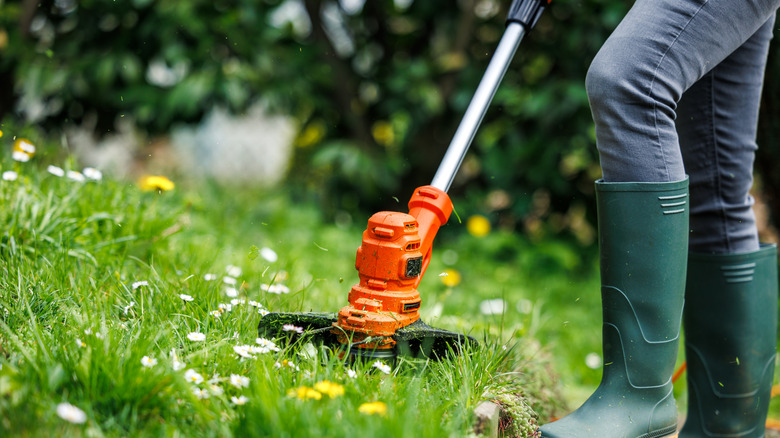
Due to their small size and location at ground level, you may need to be eagle-eyed to spot a tick nest or egg mass in your yard. Since you risk destroying the nest of a beneficial creature if you're not 100% sure the mass you're looking at belongs to ticks, leaving it alone is usually the best course of action. Focus on landscaping your yard and applying pest control treatments so that, if it does turn out to be a tick nest, the larvae don't survive long after hatching.
Ticks love shade and moisture. Keeping your lawn trimmed and weed-free will make it harder for them to thrive in your yard. If possible, trim shrubs and tree branches to increase the amount of sunlight that reaches the area. Additionally, remove fallen leaves as quickly as you can so that ticks have nowhere to hide. You might want to consider adding tick-repelling plants, like marigolds or sage, to your garden as well.
According to experts, the best pesticide to kill ticks is permethrin. That said, it's still important to look for a pesticide that targets the type of tick most common in your area. A spray may be more effective in certain cases, while granules or dust products can work better in others. This is where a professional can help, ensuring that the right pesticide is used and applied correctly.