

Why Builders Walked Away From Split-Level Homes After The 1970s
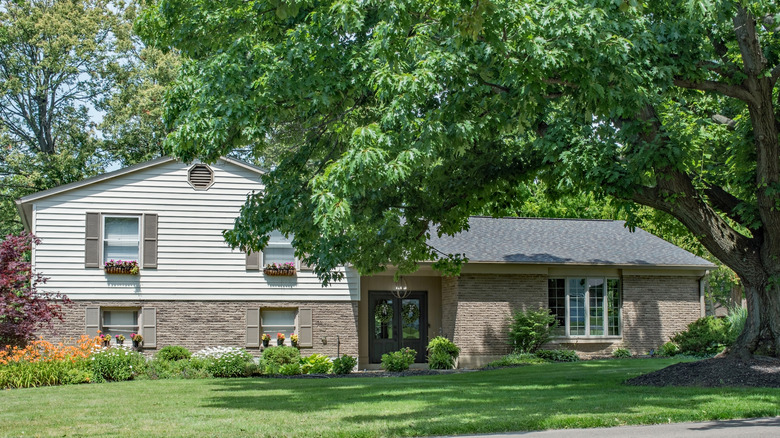
Anyone who has lived in or traveled through suburban America will have seen a split-level house. Though this style of house began to appear as early as the 1930s, it saw its heyday in the post-World War II real estate boom of the 1950s and 1960s. By the 1970s, however, builders had begun to walk away from the asymmetrical design and low-sloping roofline of split-level homes. The reason? The resurgence of open concept living.
Like A-frame houses, which builders also ditched during the 1970s, split-level homes are uniquely constructed. The design focuses on staggered levels — usually three, but sometimes more, depending on the type of split-level — connected by half-flights of stairs. A standard split is divided into a main level that contains common spaces like the living room, dining room, and kitchen, and an upper and a sub level containing bedrooms, garages, family rooms, and basements. This design makes split-levels distinct from bi-level homes, which are just two floors connected by an entryway staircase.
By the early 1980s, the type of segmented living offered by the split-level was becoming less popular amid the resurgence of open-concept spaces. People wanted larger homes or luxury condos by the 1990s, leaving behind the humble spatial efficiency of the split-level house.
Is a split-level revival happening?
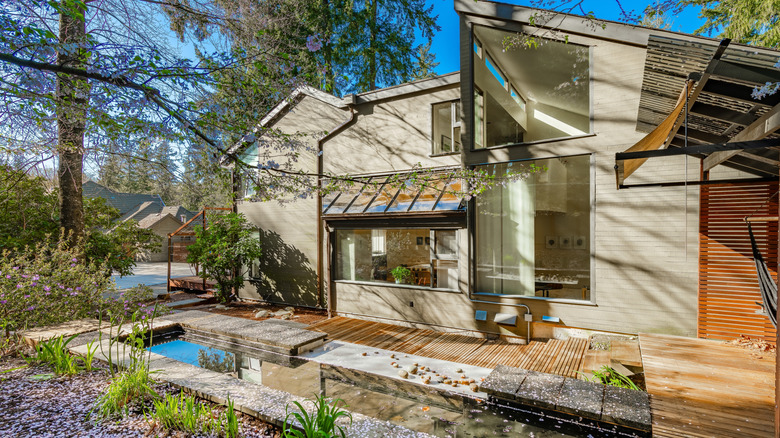
Because they are considered an outdated housing style, new split-level homes aren't being built at the rate they once were. There are numerous reasons for this, not the least of which are the list of significant disadvantages presented by split-level living. Apart from containing more sets of stairs than the average home, split-level houses' asymmetry and broken-up spaces have led to the perception of being difficult to remodel and sell. However, there is reason to believe that the split-level is seeing a revival.
Again, while very few new split-level homes are being built, younger buyers are seeing the existing amount of mid-century options available and viewing them as a unique entry point in the housing market. Because of the perception surrounding the aforementioned disadvantages, the split-level is among the more affordable home types available to buyers.
There is also the fact that open-concept living spaces are on the wane. The trend towards closed space alternatives has been gaining traction since the pandemic. People want more definitive personal spaces rather than everything being fluid and open. So, while there might not be many split-levels being built, there is enough of a historic inventory and buyer interest to say they are once again a popular housing option.