

Tired Of Cracked Concrete? This Eco-Friendly Patio Option Is Tougher & Looks Great
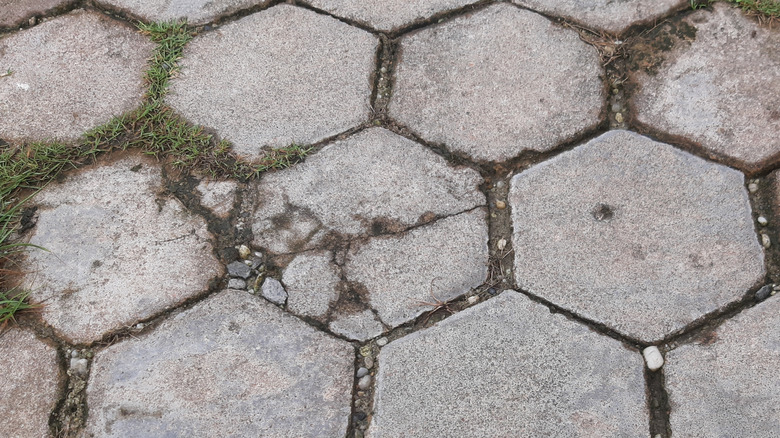
A beginner's guide to concrete would report two immutable facts about the mixture: it hardens and it cracks. Concrete is a mixture of cement and aggregate that hardens into a tough durable material. Its been used for centuries and will be used for centuries more. The question here is whether it is the best material for your patio? Also ancient in origin are clay pavers. The Romans used them to create their famous roadways. But does that heritage mean they would be a better surface for your patio? If you are tired of repairing cracked concrete, then clay pavers could indeed be a better, tougher, and more eco-friendly patio surface than concrete pavers, or even a poured slab.
Even so, the concept of "better" is all relative. Concrete pavers are reasonably durable, attractive, and less expensive. Clay pavers are generally considered more elegant, are extremely long-lasting, but 20- to 25% more expensive overall. While a poured concrete slab will be the least expensive patio solution and extremely durable, but clay pavers, which are made of natural materials, are not only sustainable but look great for a long time. Concrete, on the other hand, is made of synthetic materials and difficult to recycle.
To determine which of these options is the best for you, you'll need to create your own personal value equation. Cost, appearance, durability, and environmental considerations will need to proportionally fit into your own personal perspective. Both types of pavers are installed in essentially the same manner.
Pros and cons of concrete vs. clay pavers
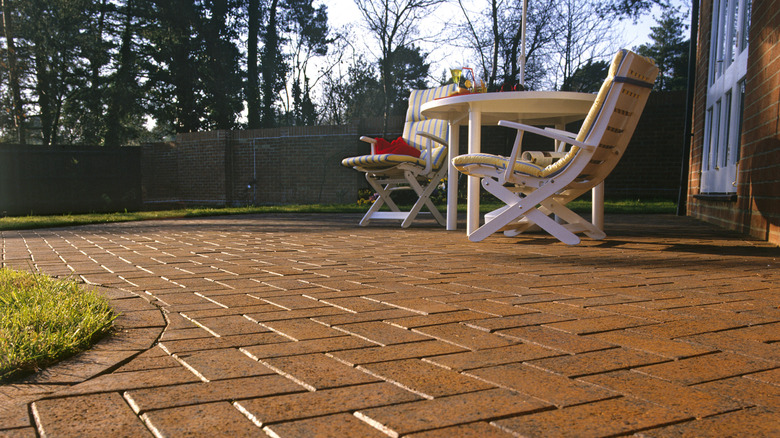
When it comes to determining which type of paver looks best, it's ultimately all a matter of opinion. With that said, clay pavers are nearly universally considered the most elegant of the options. The red and orange terra cotta hues are timeless and warm, and the pavers, which are often rectangular bricks, can be arranged in a variety of attractive pattern. Meanwhile, concrete pavers are poured and molded into a wide variety of shapes.
Clay pavers, on the other hand, only come in the natural colors of the clay they are made from; the reddish brown and orange terra cotta hues are what you get. The good news is that clay pavers will retain their color over the years (and they last longer than concrete pavers). If you're looking for more options, concrete pavers do come in many different colors. However, the color only exists in a thin layer of the molded paver, meaning that as a concrete paver ages, that layer can erode away. As with nearly all concrete dyes and added colors, the UV rays of the sun will bleach and change the intensity of the color over time.
Understandably, concrete pavers are a popular choice for patios, but given their penchant for cracking, eroding, and fading, they aren't necessarily the be-all and end-all. Clay pavers are a clear step up in quality and longevity. On top of that, they are more environmentally friendly than concrete and have a classic look. A clay paver patio just might be your best option.