

Turn Your Worn-Down Patio Area Into A Shady Paradise With This Budget-Friendly DIY
We may receive a commission on purchases made from links.
Whether you've just completed a new patio in your yard or you have one that's been there for a while, you've probably noticed that it isn't very user-friendly on sunny days if it doesn't have shade. You can remedy the situation by planting shade trees or bushes, but they take time to grow and may not cover the entire patio. You could also construct a garden arbor or trellis, or attach an awning to the side of your house, but projects like that that can be expensive and may require a contractor. Here's a quick, inexpensive solution you can DIY, and it involves only shade cloth and some four-by-four posts to support it.
A shade cloth like this 8x10-foot Shatex Sun Shade Cloth costs only $22.99, so it won't break the bank, and, like a tarp, it comes equipped with grommets for easy attachment. Unlike a tarp, however, a shade cloth is made with mesh fabric rather than impermeable plastic or canvas. This allows air to circulate to keep you cooler and allows water to pass through, so it won't sag and stretch during a rain storm.
The other materials you need for this project are 4x4 posts, concrete mix or steel post brackets, a shovel or post-hole digger, and hooks to hold the shade. If you want to adorn the bases of the posts, you can do this with plastic planters, as YouTube user kenziemac suggests.
Shade clothes require strong supports
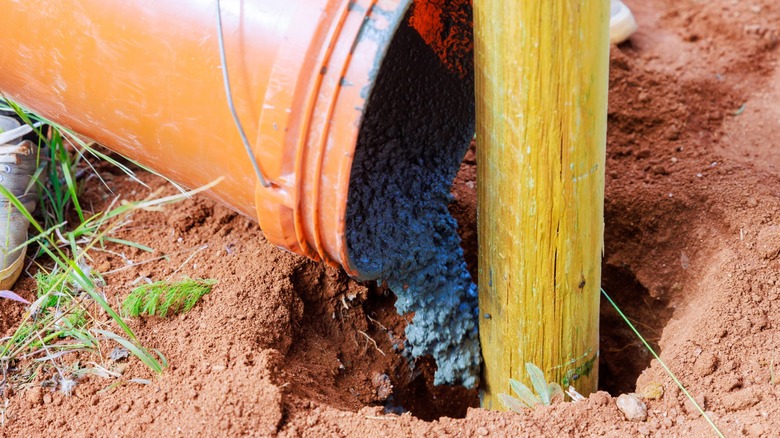
Depending on the configuration of your patio, you may be able to attach one side of the shade cloth to your house, but you'll need posts to support the other side, and you'll need four or more posts if the patio is in the middle of the yard. The easiest way to make the posts secure is to dig post holes at the patio edge and set them in concrete. If you don't like concrete, you could also set them in expanding foam, but that's a bit more expensive.
The holes you dig must be deep enough to give the posts the stability they need to support the shade cloth. About 2 feet should be sufficient for most soil types, but for loose soil conditions and high winds, 3 or more feet is preferable. That means if you want 8 feet of headroom — the same as a standard ceiling — you need 10- or 12-foot posts, and they should be pressure-treated to prevent them from rotting underground.
You may not be able to dig holes if you have a concrete patio that extends all the way to a fence or the property line. In that case, you can set a post on concrete using a steel support base, such as a Simpson Strong-Tie Wood to Concrete Retrofit Base. You'll need shorter posts, which are less expensive, so that helps offset the cost of the bases.
Decorate to enhance your outdoor experience

You've already improved your patio by adding shade, but why stop there? The posts can also support string lights, decorative flags and other embellishments to add atmosphere and interest to your landscape. The posts themselves, rather than standing bare, can be covered by planters in which you can grow ornamental flowers. User kenzimac offers an easy way to accomplish this with a good-size plastic or resin outdoor planter, such as the Suncast Sonora Plastic Wicker Indoor or Outdoor Decorative Garden Flower Planter.
Cut a 4 X 4-inch hole in the base of the planter, slip it onto the top of the post and let it drop to the ground. Set rocks in the bottom for drainage, then fill the planter to the top with dirt. Now you can grow aromatic plants that will make your patio smell incredible, or vines that will creep up onto the post and hide it.
You can also use the posts to improve privacy by hanging a second shade cloth vertically between them. Not only will this protect your safe space from prying eyes, it will provide more shade by blocking the sun when it isn't directly overhead.