

The One Flower Birds And Butterflies Can't Resist Next To Your Birdbath
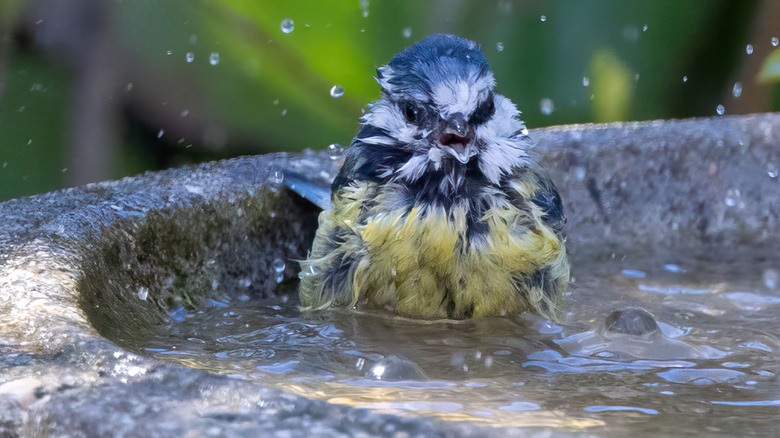
Offering a source of water is among the key ways you can help support birds in your area. This is where a traditional birdbath or a creative alternative can come in handy. As long as the bath is clean and filled with the right amount of water, birds will likely scope the area and use this resource for both drinking and bathing. But to ensure visitors to birdbaths, it's a common practice to plant flowers around the area that birds might appreciate. One such option are zinnias (Zinnia spp.), and these pretty plants have the added benefit of attracting both birds and butterflies to your yard or garden.
Zinnias are prized by many gardeners for good reason. Not only are zinnias easy to grow and maintain, but they also produce an abundance of blooms. A lack of variety is not a concern with these plants, as cultivars range from 8 inches to 4 feet tall while also producing white, yellow, orange, red, pink, or purple blooms. As a bonus, zinnias are also native plants to southern portions of North America down through South America where they attract numerous types of birds and pollinating species throughout the growing season.
How zinnias attract birds and butterflies to your birdbath
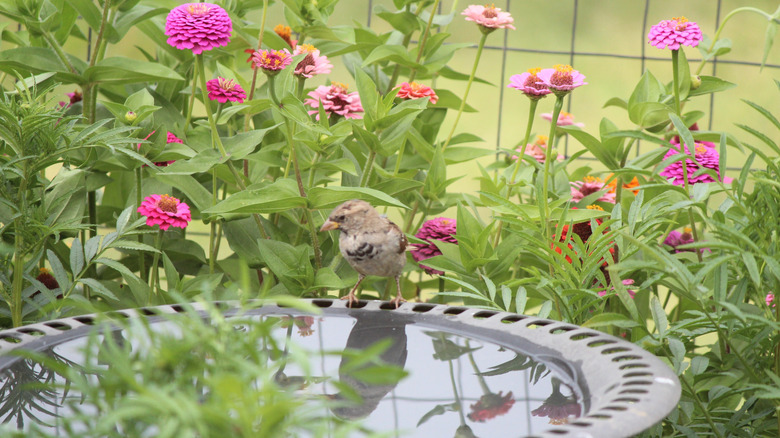
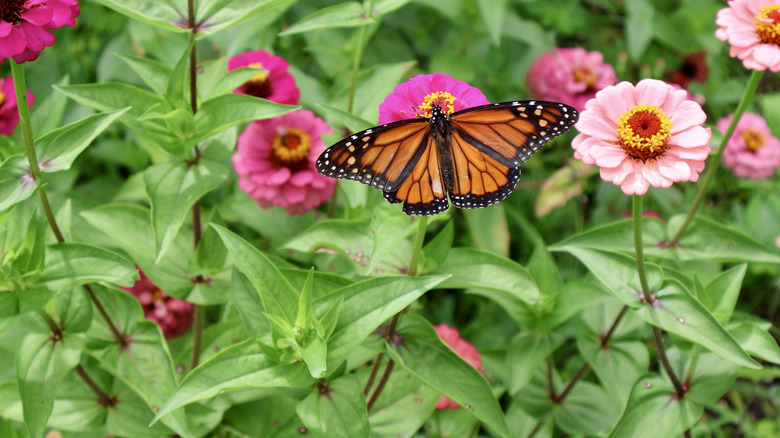
There's no question that zinnias can add value to any yard or garden due to their attractive qualities and low maintenance. Yet zinnias also have you covered if you're looking for ways to lure birds to a birdbath and provide sustenance for pollinators. First, the nectar in zinnias can provide a source of food for butterflies and other pollinating species such as hummingbirds, especially during the summer months.
Songbirds also value zinnias, but it's not the nectar that lures them. Instead, certain types of birds eat the seeds, including finches, sparrows, and mourning doves. Avoid deadheading too many of these plants in an effort to increase blooming or else birds will have less to feed on. All birds that visit your backyard birdbath may benefit from other zinnia features, such as shelter and privacy.
The options for picking the right zinnias can be overwhelming, as there are at least 20 known species of zinnias as well as hundreds of cultivars. There are a few ways to help narrow down these options if you want to attract butterflies in addition to birds. As a rule of thumb, taller varieties generally attract butterflies best because they're easy to land on. You'll also want to stick with those that have disc florets for easier access to nectar. Some of the more helpful cultivars for butterflies include 'Benary's Giant,' 'California Giant,' 'Lilliput,' and 'Zahara,' according to PennState Extension. You might also plant these next to other bird-attracting flowers around birdbaths.
Tips for planting and maintaining zinnias by birdbaths
While typically planted as annual flowers, zinnias are also considered hardy in USDA Hardiness Zones 3 to 10. For best results, plant zinnias as borders around your birdbath so that pollinators and songbirds can spot them easily and take advantage of these sources of food. At the same time, you'll want to take care not to plant multiple zinnias too close to one another. That's because a lack of air circulation can make them prone to powdery mildew. To this end, you'll also want to ensure zinnias are watered at their bases only, and preferably in the morning hours. These plants need well-draining soil and warm conditions to thrive.
Zinnias are notorious for their preference of full sun, but keep in mind that birdbaths should not be placed in direct sunlight in the middle of the day because of the risk of making the water too hot for birds. In fact, birdbaths require a shady spot during the summer, which may not be ideal for zinnia growth. Consider positioning both the birdbath and new zinnia plants in an eastward-facing location for morning sunlight, as zinnias may tolerate some shade during hotter parts of the day. When supplied with enough sun and moist but not saturated soil, you can expect these rapid-growers to bloom between spring and fall.