

What To Do If You Find A Carpenter Bee Nest In Your Yard
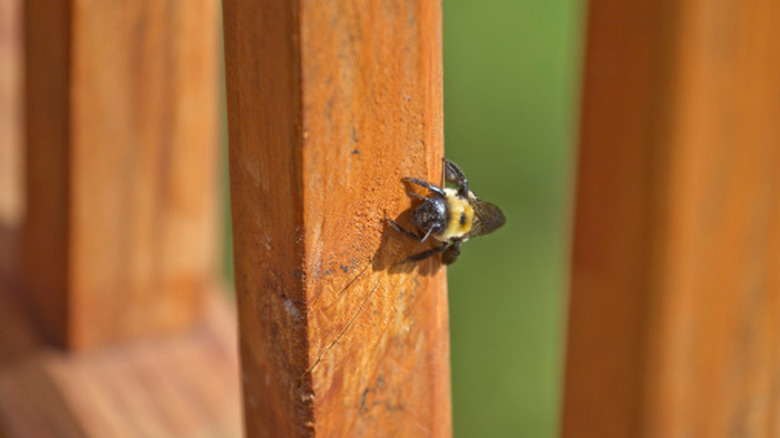
During spring and summer, it's perfectly normal to see bees flocking to your yard, especially if you've created an oasis for them in the form of an on-trend garden that brings more butterflies and pollinators. But while most bees stop by to pick up pollen and continue their hard work of helping beneficial flowers you've planted reproduce, some can have unexpected effects. One such bee is the carpenter bee, which can build nests in your yard in some unwanted places. And if you've started seeing small circular holes appear on wood surfaces outside your home, complete with little piles of sawdust next to them, you just might have carpenter bees taking up residence in your yard. If you find a nest, repellents, sealing openings, and swapping soft woods for hardwood can discourage these bees, but you should avoid insecticides.
Carpenter bees are different from honey bees or bumblebees. In most of the U.S., particularly the Northeastern states, the eastern carpenter bee (Xylocopa virginica) is the kind you'll likely encounter. While these bees are pollinators — important pollinators who play a role in helping local plants grow — they can also leave behind damage. Female bees (once mated) are the ones who typically do damage to wood, boring tunnels into the wood of decks, patios, furniture, and even home siding to create nests. These bees are key players within their local ecosystem, but their tunneling nature can pose serious problems, especially if they're revisiting the same wood pieces. All of the holes they bore can also expose your yard's wood goods and structures to issues like moisture and rot over time.
Carpenter bees are beneficial, but they can cause damage
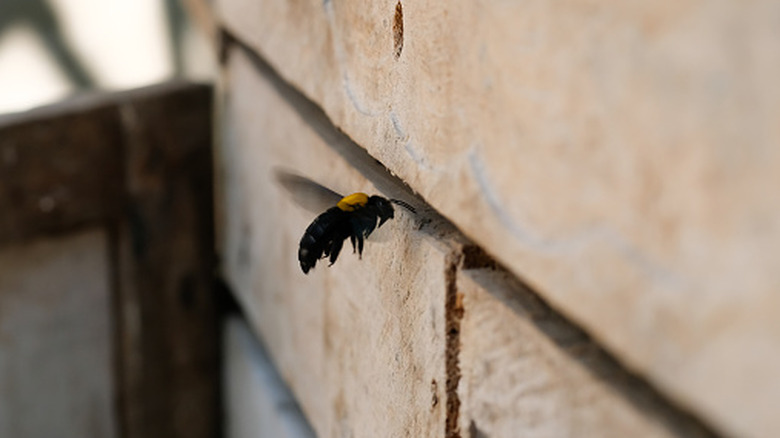
Handling carpenter bees' nests is a tricky task. After all, they're crucial pollinators. But because the female bees can damage wood, you do want to prevent them from nesting in your yard. You can't remove their tunnel-like nests without killing the bees or their larvae, so it's best to manage their environment so the bees can continue their important pollination work without wrecking your deck. Carpenter bees aren't aggressive, and since they are beneficial insects, insecticide isn't often recommended as the best way to handle a nest. Both insecticides and traps kill the bees, so they aren't effective at stopping them from doing what they're naturally programmed to do.
If you already see signs of carpenter bee nests, you may be able to discourage repeat nesting and potentially reduce damage by applying carpenter bee repellent products and plugging any existing holes in wood surfaces or items. Prevention is crucial, too: Carpenter bees favor soft woods, so you can swap soft wood items out for different types of wood, like hardwoods. Additionally, you can fill any openings in wood surfaces with steel wool and caulk them shut. To stop future nests, you can add a protective coating to wood surfaces with paint or sealant. Painted, sealed, and pressure-treated wood surfaces can steer carpenter bees away from your yard's wood. If you have an extensive carpenter bee infestation, you'll likely want to enlist professional help. A pest control expert can help you deal with the in-wood nests and balance the beneficial nature of the bees themselves to help solve your problem.