

Why You Should Think Twice Before Using A Feather Duster Again

We may receive a commission on purchases made from links.
For decades, feather dusters were considered staples in home cleaning. Invented in the late 1800s, these tools were even once regarded as status symbols. As home cleaning accessories have evolved, though, the once-ubiquitous feather duster has arguably fallen out of favor. If you still have a feather duster of your own, consider replacing it with other cleaning tools, like microfiber dusters and cloths, which trap dust more effectively for a much cleaner home.
As the name suggests, feather dusters are constructed with a wand full of feathers. The types of feathers have changed over the years, with some of the first dusters made of turkey feathers. With an easy-to-grab handle, the goal is to allow users to move dusting feathers around on a variety of surfaces. There's a huge downside to feather dusters, though. Yes, you will inevitably move dust from the surfaces you clean, but you're more likely to spread these particles around and through the air instead of actually removing them.
To truly clean dust from your home, it's better to use cleaning tools that can trap dust particles, rather than moving them around. Doing so is arguably even more important if you or another person in your home has dust mite allergies or lung conditions like asthma. Ditching feather dusters for more effective tools can help reduce the feeling that your house is always dusty.
Ditch your old feather duster for a more effective alternative
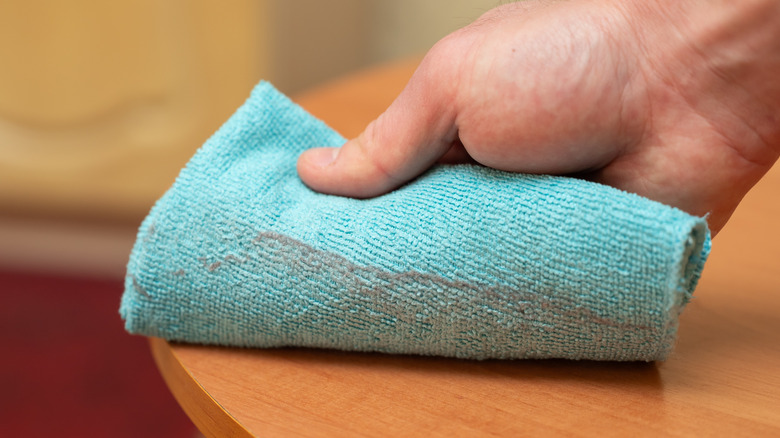
Popular alternatives to feather dusters are dry dusting wands. These types of products mimic the action of feathers and are just as easy to use. But unlike feather dusters, dry dusting products actually have the ability to trap dust. Disposable dry dusting products are one option, but you can cut down on waste by opting for reusable microfiber dusting wands instead. The Mr. Siga Lint Free Microfiber Duster is one such example. Rather than their disposable counterparts, these can be washed after each use.
Another alternative is to clean dust with the help of damp cloths. Doing so can trap the dust even more effectively to further reduce the chances of it spreading through the air. In these cases, you don't need to buy disposable dry dusters. You can instead use certain items you have around your home and dampen them with a little bit of water before use. Options might include retired cotton t-shirts, microfiber cloths, or sponges (it's even one of the genius ways to use old socks).
Finally, no matter which feather duster alternative you choose, make sure your dusting action happens from top to bottom. It's always a good idea to vacuum floors afterward, too. Dusting is something you should always do before you vacuum, as it helps to ensure you can trap the most dust particles possible without having to re-do any surfaces that didn't get so clean the first time around. For best results, dust and vacuum at least once a week.