

What To Do If You Find A Roach Nest In Your Home Or Yard
We may receive a commission on purchases made from links.
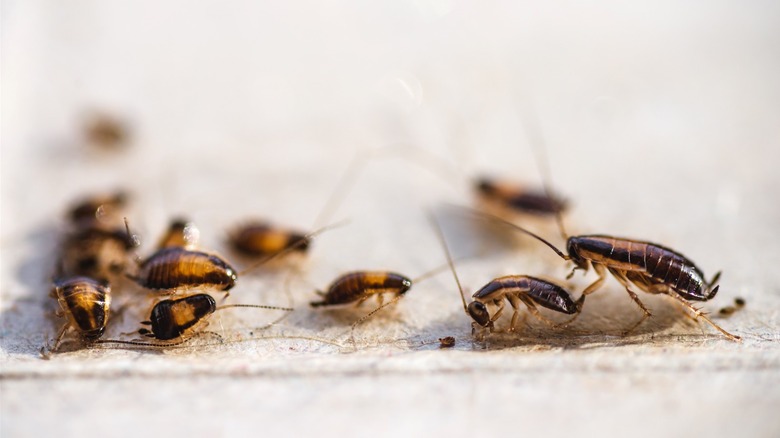
Nobody wants to share their homes with any insects, especially a family of roaches. Although cockroaches aren't inherently dangerous, they are some of the grossest bugs in your house. Their little legs can cover some serious ground, potentially walking over spoiled food or outdoor waste and then transferring that bacteria to any fresh food or surfaces they crawl on. So, it's important to get rid of them as soon as you notice any cockroach activity around your house or yard.
Roaches are practically dinosaurs. They've been around for millions of years, and they continue to be incredibly resilient. Given that, the best way to get rid of cockroaches is to use multiple techniques. First, identify where the cockroaches are hiding, whether indoors or in the yard. If you aren't sure if what you've found is a roach nest, there are a few signs to look out for. Unlike ants or wasps, cockroaches don't build typical nests. Their hideouts are considered harborage sites or resting sites, which are hiding spots near food where they typically lay eggs and shed their exoskeletons. So, egg casings, discarded exoskeletons, and pepper-like droppings all indicate that a nest is nearby.
If you see one roach nest, there are likely more. To locate them all, place sticky traps in any areas where you've noticed roach activity, as well as dark or moist spots where roaches are likely to hide or move, like dark cabinet corners, under appliances, and around garbage cans. Once the traps are full, toss them in a baggie and throw them away.
How to get rid of a roach nest and prevent future issues
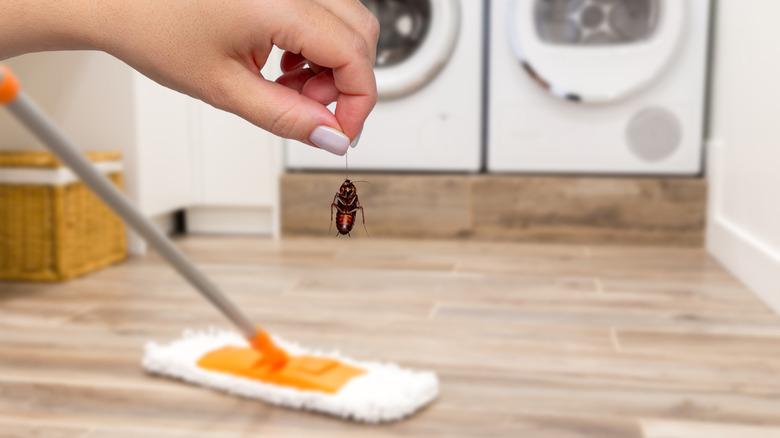
Because cockroaches can lurk in tiny cracks and crevices and even inside walls, commercial sprays and aerosols aren't always enough to get rid of them. Insecticidal baits, such as Hot Shot's Ultra Liquid Roach Bait, are typically the best DIY course of action, whether in stations or in a gel form you can apply to cracks and gaps where you suspect activity. The roaches will be attracted to the food containing a slow-release poison. Not only does it kill the cockroach that eats it, but it also kills any nymphs that eat the contaminated vomit or feces that the initial roach expels. Place your baits in the same areas that had full sticky traps.
Check on your roach baits every few days or so after setting them. Once the cockroaches have consumed all of the bait, replace them with new packs. Moving forward, you may need to continue replacing your baits every few weeks or so. Then, once the activity dies down, you can set them out as needed and use sticky traps to see if the problem is resolved.
To prevent future roach infestations, you'll need to address the things that attract roaches into your home. Clean up yard debris and clutter outside, and keep food sealed and your kitchen free of crumbs, spilled grease, and other potential roach food. Repair plumbing leaks, and use a flexible silicone-based caulk to seal up any cracks or holes that lead to the outside of the home. It's also a good idea to add screens to vents and chimneys to prevent roaches and other pests from sneaking in.