

Why You Should Think Twice Before Pulling That Tree Stump Out Of The Ground
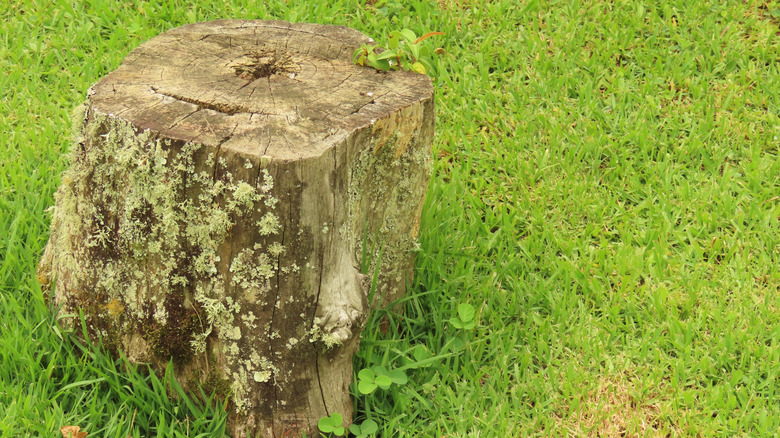
If you're dealing with a sizable tree stump in your yard, removing it completely is usually a pretty big job. Digging tree stumps out of the ground can require machinery and specialized equipment such as a backhoe or excavator, tools that are tough enough to tackle the stump, the former tree's root system, and could also potentially damage your lawn. Similarly, pulling a stump out of your yard is not an easy task; it can require heavy-duty equipment like winches and pulley systems, all used to tackle roots that can require more than 450 pounds of pressure to yank out of the soil. So, before you decide you want to pull a tree stump out, you might want to think twice.
There are plenty of reasons to remove tree stumps. For example, old stumps can attract pests or become a hazard for people and lawn mowers; they might even sprout new shoots as the tree attempts to grow again. However, if you're hoping to avoid mistakes while removing a tree stump, the best way is to enlist professional help – but that will cost you, and it can be an expensive process. On average, homeowners pay anywhere from $195 to $609 for stump removal, and pricing is determined by the size of the stump in question (arborists typically charge $2 to $5 per diameter inch). That cost is enough to make you reconsider pulling a stump out of the ground, and it's not the only potential drawback you'll want to consider.
Stump removal is difficult and risky work
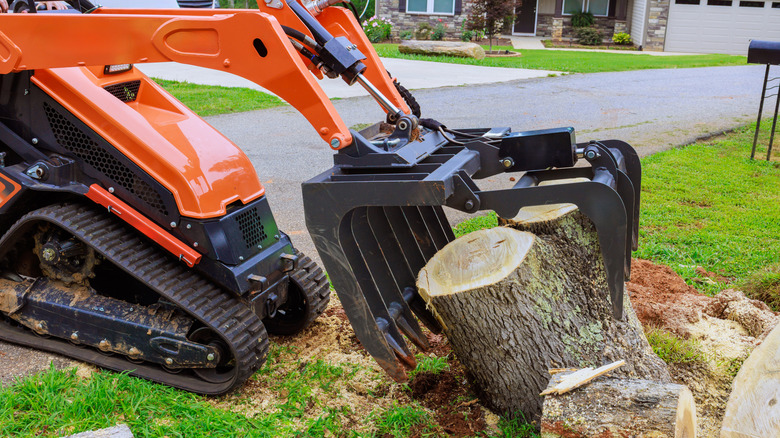
After a tree is cut down, the roots sometimes continue to grow and can bring pests and diseases into your yard or contribute to soil instability leading to erosion and sinkholes. That's why stump removal often calls for the removal of the tree's underground root system as well. The roots will likely have to be dug up manually, which is a labor-intensive task. While doing this job, professionals also run the risk of harming other plant or tree roots in your yard. Buried utilities such as underground sewer pipes are also at risk, so crews need to contact 811, the national before-you-dig service, to make sure the area where they plan to dig is clear.
Of course, once that stump and its root system are out of your yard, you'll likely be left with a large hole. Removing both tree stumps and their roots disturbs the soil, taking a good amount of entrapped soil within the roots out of the ground. This in turn impacts the topsoil and subsoil and how loosely or densely it's packed. This would may also change the nutrient content and soil's ability to drain water. These changes, should they occur in your yard post stump removal, might affect how future plants grow in that same spot. That's also why it's recommended that you don't plant anything new near the stump's original spot immediately after removal.
DIY stump removal is also complicated
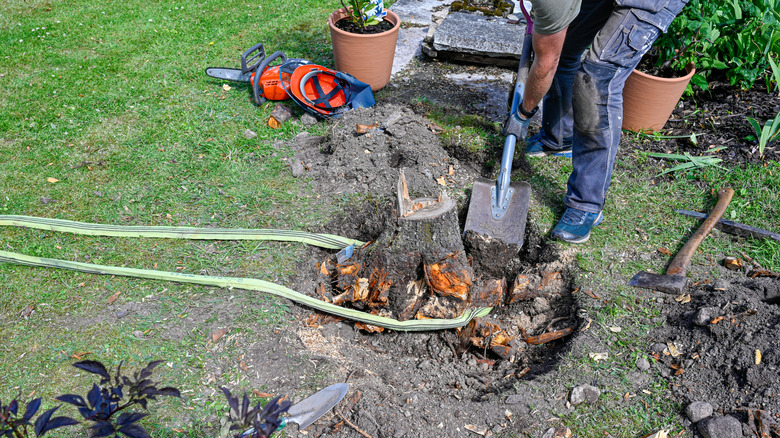
While having a professional arborist come and remove old tree stumps in your yard can be a costly and extensive adventure, attempting DIY stump removal can also be complicated. In addition to requiring you to dig up an area of your lawn (depending on the removal method you choose), the tree stump removal process sometimes requires chemicals that can impact your soil. For fast DIY stump removal, chemical stump removers are often recommended because they're affordable and less labor-intensive compared to grinding down the stump or attempting to pull it up yourself. However, these products can include high concentrations of salt, potassium nitrate, alkalis, and other ingredients that could alter your soil's composition and impact how grass or plants grow in your yard.
Whichever method you choose — DIY or professional — removing a tree stump from your yard is a task you'll want to think carefully about. The effort required, cost, and potential impacts to your lawn can all be more significant than you think. Plus, there are alternatives to stump removal you can consider that just might be simpler and involve less work, such as repurposing old stumps into cool backyard features.