

Say Goodbye To Traditional Drywall: Meet The Eco-Friendly Alternative That Looks Great
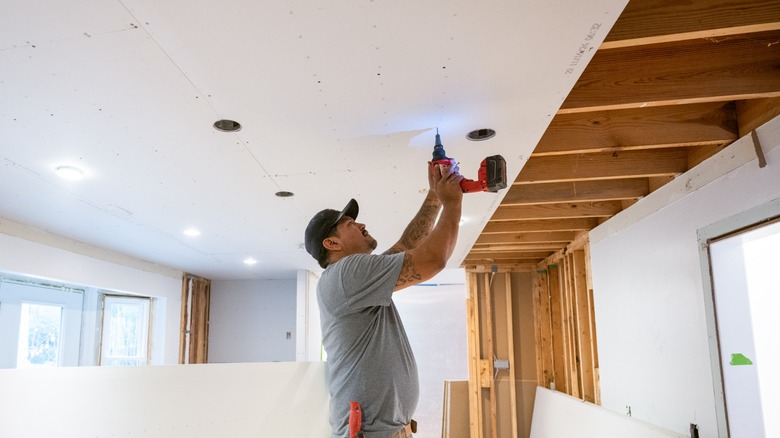
Anyone who has ever done any building or remodeling is familiar with drywall. This gypsum-based wallboard surged in popularity during World War II, and since then, it has occupied the number-one spot for interior wall coverings in North America. However, it may soon have to share that spot with a rival. Magnesium oxide board, also known as MgO board, has most of the qualities that made drywall popular, and it's a more eco-friendly — if more expensive — alternative.
MgO is durable, sustainable, and looks great. And, unlike drywall, it's kind on the environment. That said, it's not a perfect drywall substitute. One drawback is its weight. Although you can use the same installation techniques you do for drywall, MgO board is heavier, which adds to the difficulty of the job. The extra weight, though, provides the added advantage of superior soundproofing, so this turns out to be a quality with pluses as well as minuses.
MgO board doesn't have the same long history of use as drywall, which makes it difficult to evaluate its performance over time. This is especially important in humid climates, because depending on the manufacturing method, it can attract moisture and transfer it to other parts of the wall. There are concerns over testing and certification methods, and according to Modus, some insurance and warranty providers over in the U.K. refused to cover buildings in which it was installed as recently as 2020. Even with these issues, though, MgO board has a lot going for it.
How is MgO better than drywall?
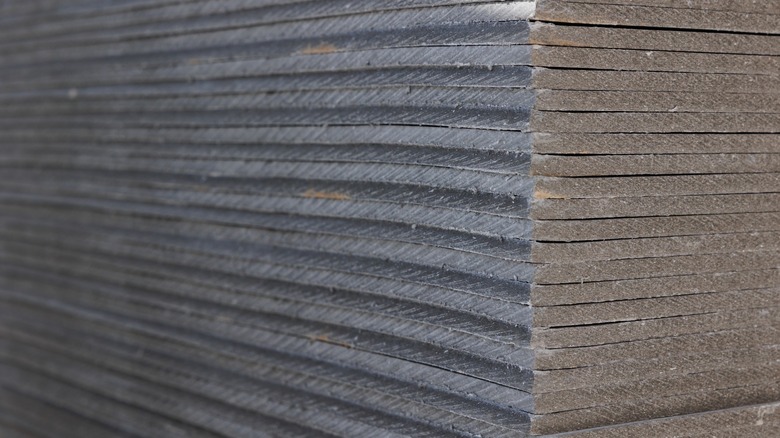
Manufacturers and retailers claim that MgO boards are more eco-friendly than drywall. The components used to make it, which include magnesium oxide, magnesium sulfate liquid, and inorganic materials such as perlite, are mostly natural, and used boards are recyclable. Meanwhile, drywall may contain VOCs like formaldehyde. Also, the mining of gypsum releases carbon dioxide and other greenhouse gases into the atmosphere, and people often dispose of used Sheetrock (a brand name for drywall) by throwing it in landfills. That's a problem because the sulfates it contains can turn into foul-smelling hydrogen sulfide gas.
MgO board is more durable than drywall and better resists damage, so you won't have to repair it as often as you repair drywall. It also lacks the propensity of drywall to absorb moisture and promote mold growth. Rather than soaking in, moisture can remain on the surface of an MgO panel and corrode fasteners, but in the experience of Reddit user catjewsus, that happens only when the boards are processed with chlorine.
You can cut MgO just like you cut drywall — by scoring with a knife and breaking along the score line — or you can use a saw. You install it by screwing it to the framing, and you finish MgO in a similar same way to finishing drywall — by taping and mudding the joints. If you remember to prime first to ensure good paint adhesion, the result is a smooth, finished wall ready for painting.